India's tribal development model showcased at UNHRC 63rd Session
Synopsis
At the UN Human Rights Council in Geneva, India made a pointed case that inclusive tribal development and cultural preservation are not mutually exclusive. With a ₹24,104 crore mission covering 75 of its most vulnerable tribal communities and 518 residential schools enrolling over 1.7 lakh students, India presented a model it argues is replicable — and offered it to a world of 476 million indigenous people still waiting for similar commitments.
Key Takeaways
India presented its tribal development approach at the UNHRC 63rd Session in Geneva on 23 September 2026 .
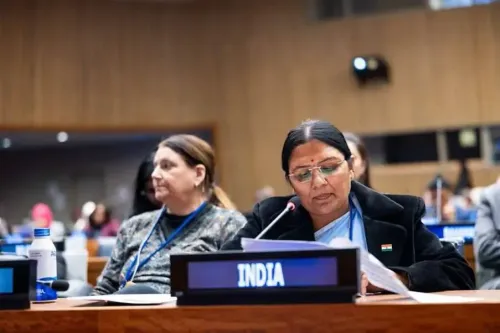
Arushi Lal Santania of RSKS India represented India at the Annual Panel on Indigenous Peoples .
The ₹24,104 crore PM-JANMAN programme targets 75 PVTG communities across 18 states and one Union Territory , launched in November 2023 .
India's Eklavya Model Residential School network covers 518 functional schools with over 1,70,000 Scheduled Tribe students , including more than 86,000 girls .
Globally, more than 476 million indigenous people across 90 countries remain underserved, according to the panel.
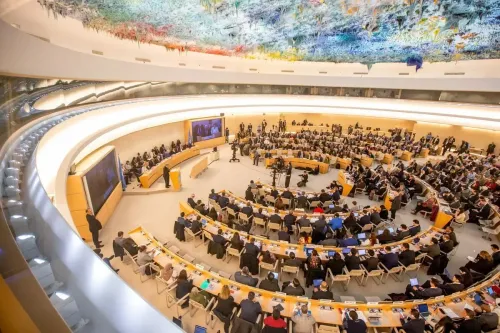
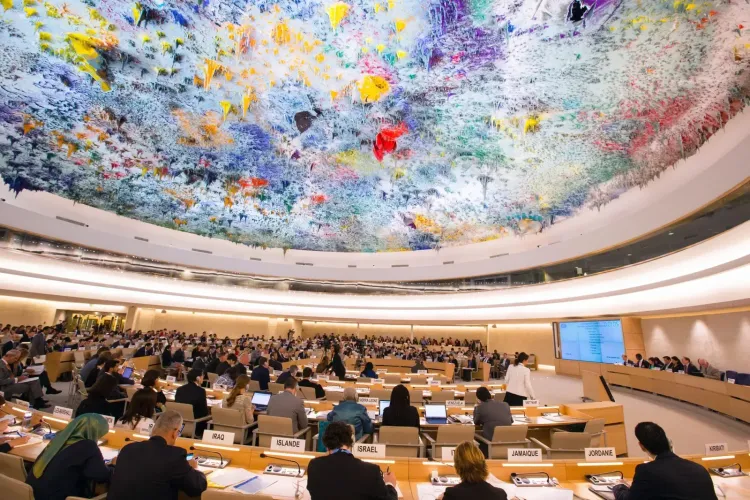
India presented its inclusive approach to tribal development at the Annual Panel on Indigenous Peoples during the 63rd Session of the United Nations Human Rights Council (UNHRC) in Geneva on Wednesday, 23 September 2026, with an Indian non-governmental organisation representative underscoring the country's efforts to link progress with dignity, cultural identity, and community participation.
India's Case Presented at the Global Forum
Addressing the Council, Arushi Lal Santania, Representative of the Rajasthan Samgrah Kalyan Sansthan (RSKS India), illustrated India's transformation through the lived reality of a tribal girl in a remote Indian village. She described how a generation once cut off from essential services is increasingly gaining access to residential education, healthcare, infrastructure, and stronger participation in local governance.
'India's experience shows that development can reach remote communities while respecting the identity, knowledge and cultural heritage that make those communities unique,' Santania said.
PM-JANMAN: The Flagship Programme in Focus
Santania highlighted the Pradhan Mantri Janjati Adivasi Nyaya Maha Abhiyan (PM-JANMAN) as a centrepiece of India's focused strategy. The ₹24,104 crore mission, launched by the government in November 2023, is designed to improve the socio-economic conditions of 75 Particularly Vulnerable Tribal Group (PVTG) communities spread across 18 states and one Union Territory. Interventions span housing, drinking water, education, healthcare, road and telecom connectivity, electrification, and sustainable livelihoods — addressing gaps faced by some of India's most isolated communities, many of whom live without pucca housing, clean drinking water, electricity, or road access.
Eklavya Schools and Community Governance
The RSKS India representative also drew attention to India's expanding Eklavya Model Residential School network. According to official data, 518 functional schools are operational, with more than 1,70,000 enrolled Scheduled Tribe students, of whom over 86,000 are girls. She further noted India's framework of community-based governance through Gram Sabhas and the Panchayats (Extension to the Scheduled Areas) Act, which she described as providing an institutional foundation for meaningful participation in Scheduled Areas.
The Global Context and India's Call to Action
Against a backdrop of more than 476 million Indigenous people across 90 countries worldwide, Santania emphasised that indigenous knowledge and cultural traditions remain invaluable assets for sustainable development and humanity's shared heritage. She urged governments, international institutions, and heritage bodies to deepen meaningful community participation in conservation, management, and benefit-sharing. Her concluding message was pointed: development must expand opportunity without weakening identity. This comes amid growing international scrutiny over whether fast-tracked development programmes adequately protect the cultural and land rights of indigenous communities globally.
Point of View
Particularly around forest clearances and displacement for infrastructure. The numbers — 518 schools, 1.7 lakh students, ₹24,104 crore committed — are credible data points, but the harder question is whether PVTGs are gaining agency or simply receiving services. The Panchayats (Extension to the Scheduled Areas) Act has existed since 1996; its implementation across states has been uneven at best. The global audience at Geneva will weigh intent against outcomes.
NationPress
23 Sept 2026
Frequently Asked Questions
What did India present at the UNHRC 63rd Session in Geneva?
India presented its inclusive tribal development model at the Annual Panel on Indigenous Peoples during the UNHRC 63rd Session on 23 September 2026. An NGO representative highlighted flagship programmes including PM-JANMAN and the Eklavya Model Residential School network as evidence of development that respects indigenous identity and cultural heritage.
What is the PM-JANMAN scheme and who does it target?
The Pradhan Mantri Janjati Adivasi Nyaya Maha Abhiyan (PM-JANMAN) is a ₹24,104 crore government programme launched in November 2023. It targets 75 Particularly Vulnerable Tribal Group (PVTG) communities across 18 states and one Union Territory, focusing on housing, drinking water, education, healthcare, road connectivity, electrification, and livelihoods.
How many Eklavya Model Residential Schools are operational in India?
According to official data cited at the UNHRC panel, 518 Eklavya Model Residential Schools are functional, with more than 1,70,000 Scheduled Tribe students enrolled, including over 86,000 girls.
Who represented India at the UNHRC Indigenous Peoples panel?
Arushi Lal Santania, Representative of the Rajasthan Samgrah Kalyan Sansthan (RSKS India), addressed the Annual Panel on Indigenous Peoples at the UNHRC 63rd Session in Geneva on 23 September 2026.
Why does India's tribal development model matter globally?
More than 476 million indigenous people across 90 countries remain underserved globally. India's presentation argued that its model — combining targeted government spending, community governance through Gram Sabhas, and culturally sensitive education — offers a replicable framework for inclusive development that does not erode indigenous identity.