India Unopposed in Winning Four ECOSOC Elections at the UN
Synopsis
In a significant diplomatic achievement, India has secured four unopposed positions in the Economic and Social Council (ECOSOC) elections, reaffirming its commitment to global governance. Former diplomat Preeti Saran's re-election to the CESCR underscores India's strategic influence in international affairs.
Key Takeaways
India won four ECOSOC elections unopposed.
Preeti Saran re-elected to the CESCR.
All elections were conducted by acclamation.
India's growing influence in international diplomacy.
Commitment to sustainable development emphasized.
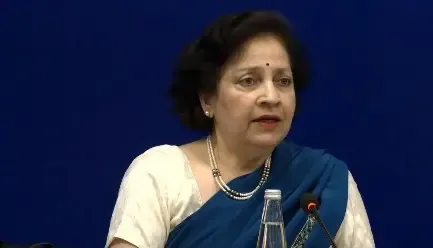
United Nations, April 9 (NationPress) India has achieved a remarkable feat by winning all four elections to the Economic and Social Council (ECOSOC) bodies without any opposition. Notably, former senior diplomat Preeti Saran has been re-elected to the Committee on Economic, Social and Cultural Rights (CESCR).
During the elections held on Wednesday, India also secured a position on the Commission on Science and Technology for Development, along with committees focused on Non-Governmental Organisations and Programme and Coordination.
All elections were conducted unanimously by acclamation.
Saran, who previously served as Secretary (East) at the Ministry of External Affairs, was re-elected in her personal capacity to the CESCR, having chaired the committee's session last year.
With a distinguished career spanning 36 years in the Indian Foreign Service, Saran has held various diplomatic roles, including India's envoy to Vietnam, and has worked in missions located in Toronto, Geneva, Dhaka, Cairo, and Moscow.
The CESCR comprises 18 independent experts responsible for monitoring the implementation of the International Covenant on Economic, Social and Cultural Rights.
This covenant guarantees essential rights for all individuals, including the right to adequate food, housing, education, health, social security, water, sanitation, and employment, as stated by the UN.
The Committee on NGOs holds significant influence as it evaluates applications for consultative status and requests for reclassification from civil society organizations, overseeing their participation in UN activities to ensure legitimacy.
The Commission on Science and Technology for Development addresses critical scientific and technological issues impacting development and sustainability, according to the UN.
Furthermore, the Committee for Programme and Coordination aids the ECOSOC by reviewing the activities and programs of UN agencies on a sector-by-sector basis, ensuring their compatibility and complementarity.
The council is pivotal in advancing the three dimensions of sustainable development: economic, social, and environmental.
Point of View
India's unopposed victory in four ECOSOC elections is a strong testament to the country's growing influence and expertise in international diplomacy. This achievement not only highlights India's commitment to sustainable development but also positions it as a key player in shaping global policies.
NationPress
14 Sept 2026
Frequently Asked Questions
What are the ECOSOC bodies?
The ECOSOC bodies include various committees and commissions that address economic, social, and cultural issues, facilitating international cooperation and development.
Who is Preeti Saran?
Preeti Saran is a former senior diplomat and has served in various capacities, including as India's envoy to Vietnam. She was re-elected to the CESCR during the recent ECOSOC elections.
What does the International Covenant on Economic, Social and Cultural Rights entail?
The Covenant enshrines rights such as adequate food, housing, education, health, social security, and the right to work for all individuals.
How does India’s victory impact global governance?
India's unopposed election victories signify its commitment to international cooperation and enhance its stature as a leader in global governance and sustainable development.