Iran drone strikes on UAE's Al Minhad airbase amid US-Iran Strait of Hormuz clash
Synopsis
Iran launched dozens of attack drones at the US-linked Al Minhad airbase in the UAE on Monday — a dramatic escalation that takes the Iran-US confrontation beyond Iranian soil and into Gulf territory for the first time in the current cycle. With the IRGC also striking US bases in Jordan, the Strait of Hormuz flashpoint is now a multi-front crisis.
Key Takeaways
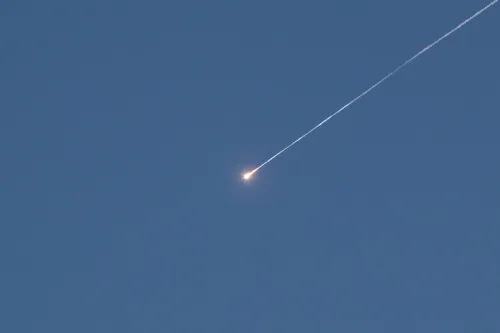
The Iranian Army claimed it fired dozens of attack drones at the Al Minhad airbase in the UAE on 31 August .
Iran said the strikes were retaliation for US attacks on Larak Island in the Strait of Hormuz , in which IRGC personnel and civilians were reportedly killed.
The IRGC separately claimed missile and drone strikes on US King Hussein and Al-Azraq bases in Jordan .
The UAE Ministry of Defence confirmed its Air Force intercepted a UAV approaching from Iran and said armed forces are on 'high state of readiness.' US Central Command said it struck Iranian launchers on Larak Island after observing IRGC forces preparing to launch rockets with sea mines into the Strait of Hormuz.
Independent confirmation of damage at Al Minhad and the Jordanian bases was not immediately available.
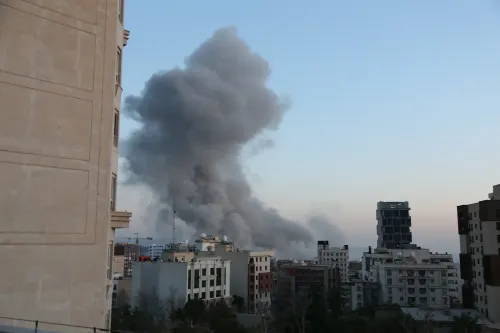
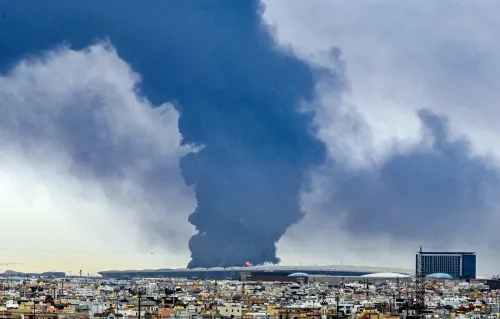
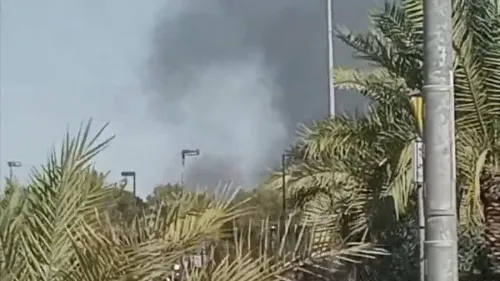
The Iranian Army on Monday, 31 August claimed it launched dozens of attack drones targeting helicopter locations and US military forces stationed at the Al Minhad airbase in the UAE, in what it described as retaliation for US strikes on Larak Island in the Strait of Hormuz. The escalation marks a significant broadening of the US-Iran confrontation beyond Iranian territory into Gulf airspace.
Iran's Stated Justification
In an official statement, the Iranian Army said the drone operation was conducted 'from early Monday morning' in response to what it called 'recent aggression by the aggressor enemy' and to avenge the deaths of Islamic Revolution Guards Corps (IRGC) personnel and Iranian civilians on Larak Island. The statement described the Al Minhad base as 'one of the important centres used for supporting and transporting foreign forces.' Iran's army further warned it would 'avenge the blood of all the martyrs of the imposed war from the American terrorist forces,' according to reports.
Separately, the IRGC also claimed it conducted missile and drone strikes against the US King Hussein and Al-Azraq air bases in Jordan, targeting what it described as technical, maintenance, and fighter-jet infrastructure, according to Iran's semi-official Tasnim News Agency.
UAE's Response
The UAE Ministry of Defence confirmed on Monday that its Air Force intercepted an Unmanned Aerial Vehicle (UAV) detected over the country's territorial waters, approaching from Iran. In a post on X, the ministry stated that 'the Armed Forces remain on a high state of readiness to address any potential threats, while air defence systems continue to monitor and safeguard the country's airspace around the clock.' The ministry urged the public to rely exclusively on official sources and avoid circulating unverified information.
How the Confrontation Escalated
The chain of events traces back to Sunday, when US Central Command forces struck two Iranian launchers on Larak Island, a small Iranian island off the coast of Bandar Abbas in Hormozgan province, east of Qeshm Island and south of Hormuz Island. US Central Command spokesperson Tim Hawkins said that 'Islamic Revolutionary Guard Corps forces were observed preparing to launch rockets with sea mines into the Strait of Hormuz,' adding that US forces were 'monitoring the area closely and remain prepared to protect the free flow of commerce' through the strategic waterway.
The IRGC subsequently said several military personnel and civilians were killed or wounded in what it characterised as a 'US-Israeli' attack on Larak Island on Sunday night. Iran's strikes on Monday — targeting sites in both the UAE and Jordan — represent the most geographically expansive Iranian military response in the current escalation cycle.
Strategic Significance
The Al Minhad airbase in the UAE has long served as a key logistics hub for Western military operations in the region. Any confirmed damage there would represent an unprecedented Iranian strike on Gulf Cooperation Council (GCC) soil — a threshold not previously crossed in recent Iran-US confrontations. The Strait of Hormuz, through which roughly 20% of the world's traded oil passes, remains the central flashpoint. This comes amid already elevated tensions following months of naval incidents in the Gulf.
What Comes Next
Verification of actual damage at Al Minhad and the Jordanian bases remains pending, as independent confirmation was not immediately available. The international community, including Gulf states, is watching closely for any US military response that could further widen the conflict. The situation is rapidly evolving.
Point of View
And could force the UAE into an explicit alignment with US forces. The multi-front nature of Monday's claims — UAE and Jordan simultaneously — suggests a coordinated signalling strategy rather than purely tactical retaliation. What is missing from most coverage is that independent verification of actual damage remains absent; Iran's claims, like US Central Command's, must be treated as contested until confirmed. The Strait of Hormuz dimension is the one to watch: any disruption to tanker traffic there triggers oil price shocks that ripple well beyond the Gulf.
NationPress
31 Aug 2026
Frequently Asked Questions
What did Iran claim it struck at the Al Minhad airbase in the UAE?
Iran's Army claimed it launched dozens of attack drones targeting helicopter locations and US military forces stationed at the Al Minhad airbase in the UAE on 31 August. Iran described Al Minhad as a key hub for supporting and transporting foreign forces in the region.
Why did Iran strike the Al Minhad airbase?
Iran said the drone strikes were retaliation for US military attacks on Larak Island in the Strait of Hormuz, in which IRGC personnel and Iranian civilians were reportedly killed or wounded. The Iranian Army characterised the US action as aggression and vowed further retaliation.
How did the UAE respond to the drone incursion?
The UAE Ministry of Defence confirmed its Air Force intercepted a UAV detected over UAE territorial waters approaching from Iran. The ministry said its armed forces remain on a high state of readiness and urged the public to rely only on official sources.
What triggered the US strike on Larak Island that started this escalation?
US Central Command said IRGC forces were observed on Sunday preparing to launch rockets fitted with sea mines into the Strait of Hormuz, prompting US forces to strike two Iranian launchers on Larak Island. The IRGC subsequently reported military and civilian casualties from that strike.
Did Iran also target any other US military bases in the region?
Yes. The IRGC separately claimed missile and drone strikes on the US King Hussein and Al-Azraq air bases in Jordan, targeting technical, maintenance, and fighter-jet infrastructure, according to Iran's semi-official Tasnim News Agency. Independent confirmation of damage at either site was not immediately available.