Iran's IRGC strikes US military assets in Jordan and Kuwait with missiles, drones
Synopsis
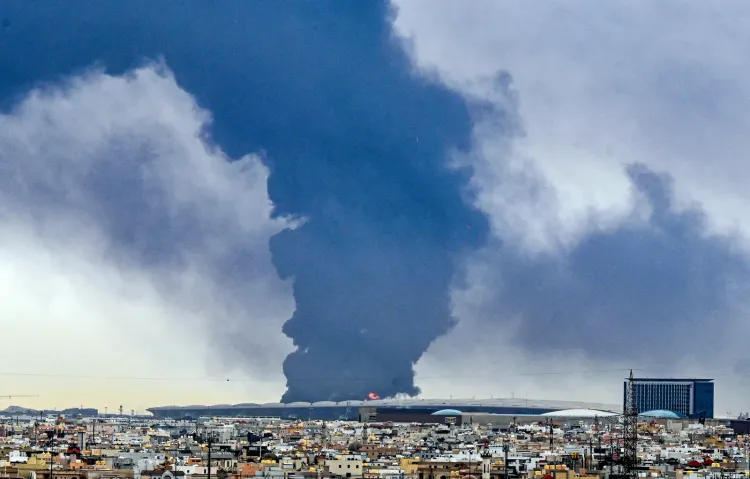
Iran's IRGC struck US military aircraft in Jordan and destroyed a radar system and drone hangar in Kuwait — all in a single night — while CENTCOM simultaneously confirmed its ninth straight evening of strikes on Iran. With the Strait of Hormuz now explicitly threatened and attacks spreading to third-country soil, this confrontation has moved well beyond a bilateral skirmish.
Key Takeaways
Iran's IRGC claimed ballistic missile strikes on Boeing C-17 and Boeing P-8 Poseidon aircraft at Aqaba airport , Jordan, on 20 July .
IRGC drone strikes at Ali Al Salem Air Base , Kuwait, reportedly destroyed a US early-warning radar and set MQ-9 Reaper drones ablaze.
US CENTCOM confirmed its forces completed the ninth consecutive evening of strikes against Iran on the same night.
CENTCOM said it targeted Iranian command centres, air defence sites, missile launch sites, and maritime capabilities to protect the Strait of Hormuz .
The IRGC warned the Strait of Hormuz will not be safe for oil, gas, and fertiliser shipments as long as US operations continue.
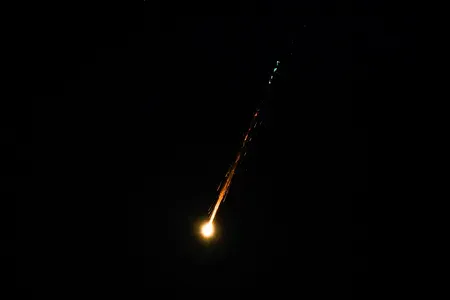
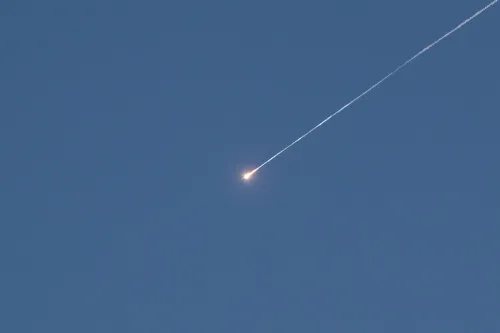
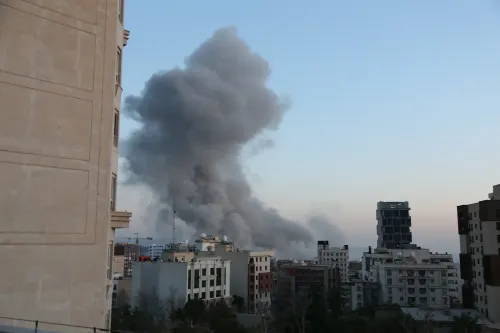
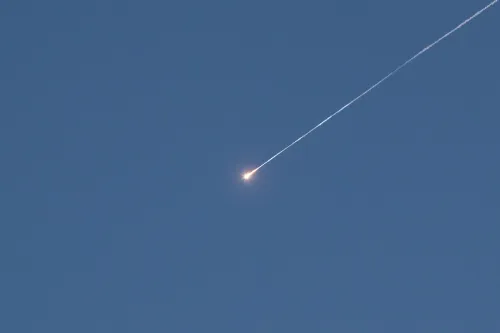
Iran's Islamic Revolutionary Guard Corps (IRGC) on Monday, 20 July claimed it launched retaliatory missile and drone strikes against US military assets and facilities in Jordan and Kuwait, escalating an already volatile confrontation between Tehran and Washington in West Asia. The strikes, according to IRGC statements, targeted aircraft, radar systems, drone hangars, and equipment warehouses across two separate countries.
What the IRGC Claims It Hit
In statements published on its official outlet Sepah News, the IRGC said it fired ballistic missiles at the Aqaba airport in Jordan's port city of Aqaba, striking Boeing C-17 Globemaster III and Boeing P-8 Poseidon aircraft and reportedly heavily damaging several of them.
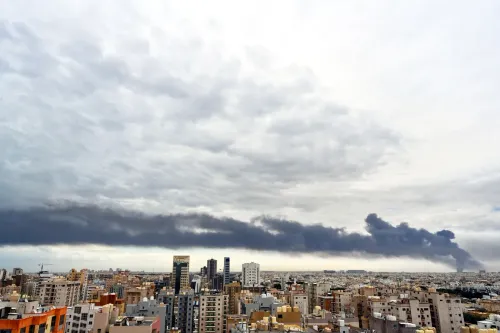
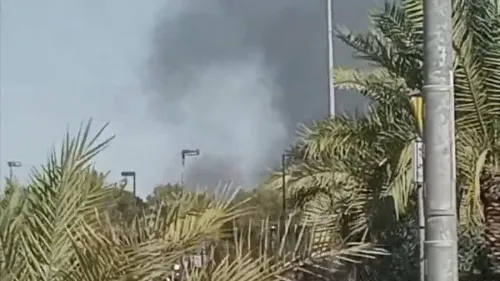
In Kuwait, the IRGC claimed its forces used drones to destroy a US early-warning radar system and struck a warehouse holding aviation equipment and spare parts, as well as a hangar of MQ-9 Reaper drones at Ali Al Salem Air Base, setting a number of the unmanned aerial vehicles ablaze. Iran's official Islamic Republic News Agency (IRNA) reported that the early-warning radar was 'completely destroyed.'
US CENTCOM's Parallel Strikes on Iran
In a post on social media platform X early Monday, US Central Command (CENTCOM) said its forces had 'successfully completed the ninth consecutive evening of strikes against Iran.' CENTCOM stated its assets had targeted 'Iranian military command centres, air defence and coastal surveillance sites, maritime capabilities, missile and drone launch sites, and communications networks' — actions it framed as aimed at diminishing Iran's ability to threaten commercial vessels transiting the Strait of Hormuz.
The parallel claims underscore the tit-for-tat nature of the current escalation, with both sides asserting offensive action on the same night.
Iran's Strait of Hormuz Warning
In a separate statement on Monday, the IRGC reiterated its warning that the Strait of Hormuz will not be safe for the shipment of oil, gas, and chemical fertilisers as long as the United States continues what it described as 'malicious actions' in the West Asia region. The Strait of Hormuz is one of the world's most critical energy chokepoints, through which a significant share of global oil exports passes.
Why This Escalation Matters
The IRGC described the strikes as retaliation for what it called repeated US 'aggressions' against Iranian territory. This comes amid at least nine consecutive nights of US strikes on Iran, according to CENTCOM's own account — a sustained military tempo that signals a significant shift from sporadic exchanges to what analysts may characterise as an active, ongoing conflict footing.
Notably, the targeting of US military assets in third countries — Jordan and Kuwait — rather than on Iranian soil marks a geographical expansion of the conflict's footprint. Both Jordan and Kuwait host substantial US military infrastructure, and strikes on allied-nation soil carry diplomatic implications beyond the bilateral US-Iran confrontation.
The situation remains fluid, with neither side showing signs of de-escalation. Further developments are expected as both Washington and Tehran have signalled intent to continue operations.
Point of View
It is sending a message not just to America but to the entire US alliance architecture in the Gulf. Meanwhile, CENTCOM's own language — 'ninth consecutive evening' — confirms this is no longer a crisis but a sustained military campaign. The Strait of Hormuz threat, if acted upon, would hit India's energy imports directly; New Delhi cannot afford to treat this as a distant bilateral dispute.
NationPress
20 Oct 2026
Frequently Asked Questions
What did Iran's IRGC strike in Jordan and Kuwait on 20 July?
The IRGC claimed it fired ballistic missiles at Boeing C-17 Globemaster III and Boeing P-8 Poseidon aircraft at Aqaba airport in Jordan, heavily damaging several. In Kuwait, it said drone strikes destroyed a US early-warning radar system and set MQ-9 Reaper drones on fire at Ali Al Salem Air Base.
Why did Iran launch these strikes?
The IRGC described the attacks as retaliation for repeated US 'aggressions' against Iranian territory. The strikes came on the same night that US CENTCOM confirmed its ninth consecutive evening of military operations against Iran.
What has the US said about its own strikes on Iran?
US Central Command posted on social media platform X that it had 'successfully completed the ninth consecutive evening of strikes against Iran,' targeting command centres, air defence sites, missile and drone launch sites, and communications networks to protect commercial shipping through the Strait of Hormuz.
What is the threat to the Strait of Hormuz?
The IRGC warned that the Strait of Hormuz will not be safe for shipments of oil, gas, and chemical fertilisers as long as the US continues operations in West Asia. The strait is a critical global energy chokepoint, making any disruption a significant concern for oil-importing countries including India.
Which countries are directly involved in this conflict?
The direct military confrontation is between the United States and Iran, but strikes have now extended to the territories of Jordan and Kuwait — both of which host US military infrastructure — broadening the geographic scope of the conflict.