Iran Conflict Disrupts US Strategy in the Indo-Pacific: Insights from Former Diplomat Kurt Campbell

Synopsis
The ongoing conflict in Iran is reshaping US strategic commitments in the Indo-Pacific region. A former Biden administration official warns that military reallocations to the Middle East jeopardize two decades of bipartisan efforts aimed at focusing on Asia's rising significance.
Key Takeaways
US strategic commitments in the Indo-Pacific are being challenged by the conflict in Iran.
Kurt Campbell emphasizes the importance of maintaining focus on Asia.
Military resources are being redirected to support operations in the Middle East.
Diplomatic initiatives crucial to Indo-Pacific strategy are being affected.
The situation raises concerns about US over-commitment in the Middle East.
Washington, March 20 (NationPress) The persistent turmoil in Iran is increasingly destabilizing US strategic commitments in the Indo-Pacific region. This shift occurs as Washington reallocates military resources and directs its leadership's focus back to the Middle East, as noted by a former top official from the Biden administration.
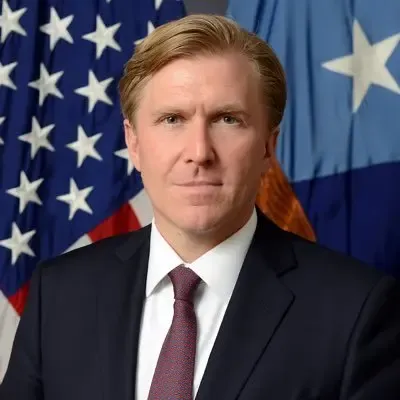
According to Kurt Campbell, who served as the former US Deputy Secretary of State and is recognized as a key strategist for the Indo-Pacific, "One of the crucial bipartisan objectives in the US government over the past twenty years has been to pivot military, diplomatic, commercial, and strategic efforts away from the Middle East towards what is considered the principal theater of the 21st century: the Indo-Pacific."
This strategic consensus, nurtured across various administrations, indicates a growing acknowledgment that the US has "overcommitted to impractical endeavors in Iraq and Afghanistan, diverting attention from the significant challenges and opportunities present in Asia."
Presidents Barack Obama, Donald Trump, and Joe Biden have all aimed to integrate this shift into their policies.
This initiative has encompassed reallocating military assets, fortifying alliances, and emphasizing Asia in critical strategic documents.
The underlying rationale is evident. Policymakers have pointed to "the ascent of China, the significance of US strategic allies and partners, the dynamic landscape of technological innovation, and the military modernization initiatives of nearly every nation" as factors necessitating ongoing American involvement in the Indo-Pacific.
However, Campbell asserted that the decision to collaborate with Israel in targeting Iran has interrupted this trajectory. He remarked in a policy note released on Friday, "In one swift action... President Trump—perhaps unintentionally—has reversed every aspect of this trend."
The immediate consequence has been a strain on leadership resources.
"Current military operations in and around the Gulf are demanding the attention of the highest levels of government leadership," he noted, emphasizing that such attention "exceeds even limited munitions as the most critical and scarce element of American global engagement."
The redeployment of military forces has further exacerbated the shift.
"Military capabilities that had been gradually amassed in Asia, including an aircraft carrier, anti-ballistic missile systems, and a rapid reaction Marine Expeditionary Unit, have been swiftly redeployed to support operations in the Gulf," Campbell stated.
Diplomatic efforts have also felt the repercussions.
Engagements crucial to the Indo-Pacific strategy—such as "a planned summit with China's leader Xi Jinping" and outreach to partners like Japan—have been delayed or redirected because of the ongoing conflict.
Nonetheless, some officials contend that the shift is only temporary.
"Certain senior administration officials assure us that these actions are merely short-term," the note indicated, expressing hope that "essential elements of high-level attention and strategic deterrence" will soon return to the western Pacific.
However, past experiences serve as a cautionary tale.
Campbell remarked, "Once entangled in the quagmire of a poorly defined conflict, American strategists have historically struggled to disengage from the situation."
He added that the current circumstances "bear a striking resemblance to previous instances of regional preoccupation and over-commitment," raising alarms that the US might once again become deeply ensnared in the Middle East, potentially undermining broader strategic objectives.
This potential shift is likely to resonate throughout Asia.
"Such a sudden deviation from US strategic focus in the Indo-Pacific will undoubtedly concern our closest allies in Asia," the note pointed out, while also suggesting that it may embolden Beijing to grow "even more confident in China's prospects in the region and beyond."
Point of View
Raising concerns over the stability of long-term strategic commitments in the region. It emphasizes the potential consequences for US allies and the broader geopolitical landscape.
NationPress
10 Oct 2026
Frequently Asked Questions
What is the main concern regarding US military focus?
The main concern is that the ongoing conflict in Iran is shifting US military and leadership attention back to the Middle East, potentially undermining strategic commitments in the Indo-Pacific.
Who is Kurt Campbell?
Kurt Campbell is a former US Deputy Secretary of State and a prominent strategist focused on Indo-Pacific policy.
What does the article suggest about US alliances?
The article suggests that the US's pivot back to the Middle East may alarm its allies in Asia, who rely on American support for regional stability.
What historical context does the article provide?
The article draws parallels with past US engagements in poorly defined conflicts, cautioning that such entanglements can hinder strategic objectives.
What are the implications for China?
The article indicates that a US disengagement from the Indo-Pacific might encourage China to assert its influence further in the region.