Iran's SNSC denies military retaliation plans over aviation ban, cites non-military options
Synopsis
Iran's top security body has denied plans for military retaliation over sweeping US aviation sanctions — but pointedly reserved 'non-military' counter-options. With Trump reportedly rejecting a ceasefire offer and eyeing resumed bombing after US midterms, the denial is as much a de-escalation signal as it is a warning about what comes next.
Key Takeaways
Iran's Supreme National Security Council (SNSC) denied on 27 September that it would pursue military retaliation over aviation restrictions.
The SNSC said 'numerous non-military' response options exist and could be applied to 'certain airports if necessary.' US Treasury Secretary Scott Bessent announced this week that all Iranian airlines would be shut down globally, with secondary sanctions threatening any company providing them fuel, landing, or ticketing services.
SNSC Secretary Mohsen Rezaei urged Iran's neighbours not to join US 'adventurism,' predicting it would fail.
President Donald Trump reportedly rejected Iran's seven-day ceasefire proposal and is considered likely to resume bombing Tehran after US midterm elections, according to The Wall Street Journal .
Trump posted a Truth Social image showing the Strait of Hormuz labelled 'Trump Strait,' drawing sharp regional attention.
Iran's Supreme National Security Council (SNSC) on 27 September flatly denied that the country would pursue military retaliation in response to sweeping aviation restrictions imposed on Iranian carriers, according to a statement from the council's secretariat. The denial came amid a rapidly escalating standoff between Tehran and Washington over US sanctions that have effectively grounded Iranian airlines globally.
What the SNSC Said
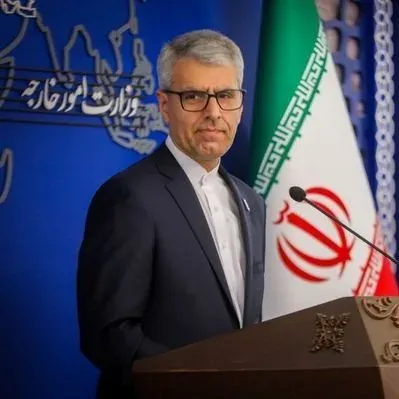
The council issued its clarification in response to what it described as 'misleading' interpretations of recent remarks by SNSC Secretary Mohsen Rezaei on the air transport issue. The statement said the claim that Iran would resort to military retaliation was 'rejected,' adding that negotiations with relevant countries were being pursued 'seriously' to remove what Tehran characterised as 'illegal' aviation restrictions.
Notably, the SNSC did not rule out all forms of response — it underlined that 'numerous non-military ways' to retaliate existed, which could be applied to 'certain airports if necessary,' while expressing hope that the situation would not reach that point.
The US Sanctions That Triggered the Crisis
The standoff was set off earlier this week when US Treasury Secretary Scott Bessent announced that 'all the Iranian airlines will be shut down around the world' from Wednesday, threatening secondary sanctions on any company providing aviation services to Iranian carriers. Speaking to broadcaster CNBC, Bessent warned: 'When Iranian carriers land at an airport, you cannot provide them with fuel, you cannot provide them with landing services, you cannot sell them tickets, or you will be knocked out of the dollar system.'
Hours after the sanctions took effect, Rezaei, in an interview with state-run IRIB TV, urged countries — particularly Iran's neighbours — not to participate in what he called US 'adventurism,' predicting it 'would soon be doomed to failure.'
Trump Reportedly Rejects Ceasefire Proposal
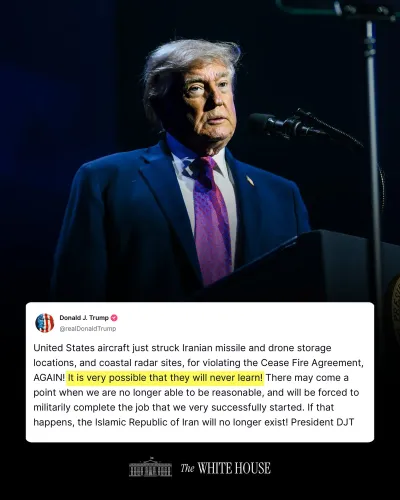
The aviation row is unfolding against a far more volatile backdrop. US President Donald Trump has reportedly rejected an Iranian proposal for a seven-day ceasefire and is considered likely to resume bombing Tehran after the US midterm elections in November, according to The Wall Street Journal, citing officials familiar with the matter.
Trump, who has repeatedly vowed that Iran will never acquire a nuclear bomb, was described as sceptical that Tehran would meet his demands and considers a renewed bombing campaign a likely outcome, the report said. He also posted an image on his Truth Social platform showing a map with the Strait of Hormuz circled and labelled 'Trump Strait' — a provocative gesture that drew immediate attention from regional observers.
What This Means for the Region
This comes amid one of the most acute periods of US-Iran tension in recent years. The aviation sanctions are not merely a travel inconvenience — they constitute a significant economic squeeze, cutting off Iranian carriers from fuel, ground services, and ticketing infrastructure at airports worldwide. The SNSC's reference to potential non-military counter-measures at 'certain airports' is widely read as a signal that Tehran could restrict transit or landing rights for carriers from countries that comply with US demands.
With Trump reportedly weighing a return to direct military action and Iran publicly seeking off-ramps through diplomacy, the next several weeks — particularly the period around the US midterm elections — will be closely watched by governments across the Middle East and beyond.
Point of View
It puts a hard timeline on a crisis that has few good exits.
NationPress
27 Sept 2026
Frequently Asked Questions
Why did Iran's Supreme National Security Council issue this statement?
The SNSC issued the statement to correct what it called 'misleading' interpretations of remarks by its Secretary Mohsen Rezaei, clarifying that Iran would not pursue military retaliation over aviation restrictions. The council said it was instead pursuing negotiations to lift the restrictions while reserving non-military response options.
What aviation sanctions has the US imposed on Iran?
US Treasury Secretary Scott Bessent announced that all Iranian airlines would be effectively shut down globally, with secondary sanctions targeting any company that provides Iranian carriers with fuel, landing services, or ticketing. The sanctions took effect from Wednesday, creating a near-total exclusion of Iranian carriers from international aviation infrastructure.
Has Trump rejected an Iran ceasefire offer?
According to The Wall Street Journal, citing US officials familiar with the matter, President Trump has rejected an Iranian proposal for a seven-day ceasefire and is considered likely to resume bombing Tehran after the US midterm elections. Trump has reportedly remained sceptical that Iran would meet his demands.
What non-military options is Iran considering?
The SNSC stated that numerous non-military retaliatory options exist and could be applied to 'certain airports if necessary,' without specifying them. Analysts read this as a potential reference to restricting landing or transit rights for carriers from countries that comply with US aviation sanctions against Iran.
What is the significance of Trump's 'Trump Strait' post?
President Trump posted an image on his Truth Social platform showing a map of the Strait of Hormuz — a critical global oil and shipping chokepoint — circled and labelled 'Trump Strait.' The post is widely seen as a signal of intent toward the strategic waterway and drew immediate attention from regional governments and observers.