Iran IRGC missiles, drones hit US radar at two Bahrain air bases
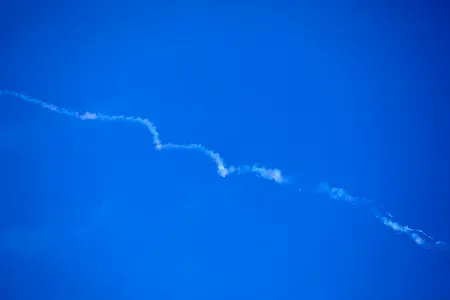
Synopsis
Iran's IRGC fired missiles and drones at US Patriot air defence radars in Bahrain on 22 November, escalating what is now an open military confrontation between Tehran and Washington. With the Strait of Hormuz under Iranian pressure and a ceasefire plan still unaccepted, the Gulf is on its most precarious footing since the conflict erupted in late February.
Key Takeaways
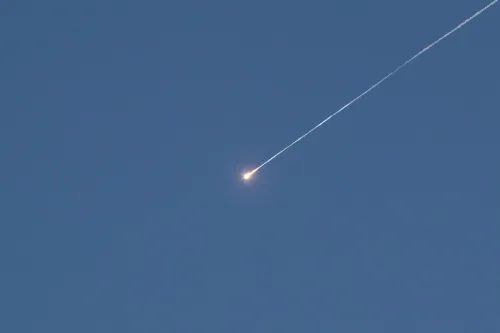
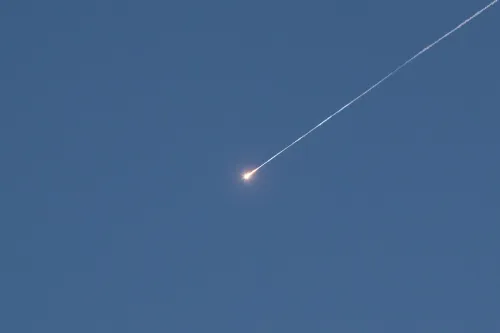
Iran's IRGC launched a hybrid missile and drone offensive on 22 November 2026 targeting US radar at air bases in Bahrain .
The IRGC identified the targeted sites as Al-Riffa and Awali Sakhir air bases; semi-official Fars named Shaikh Isa and Al Juffair — an unresolved discrepancy.
Bahrain's Defence Force said its air defences intercepted several attacks; a civilian industrial facility caught fire but no injuries were reported.
The IRGC cited US MQ-1 Predator and MQ-9 Reaper drone violations of Iranian airspace as the trigger.
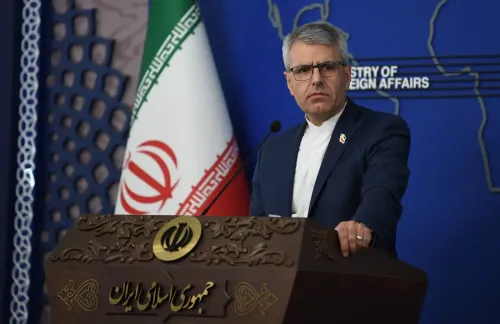
Iranian Deputy FM Kazem Gharibabadi called the US economic blockade an 'act of war' and said a two-day Hormuz ceasefire plan remains on the table.
The crisis traces back to 28 February joint US-Israeli strikes on Tehran , which triggered Iran's sustained regional counter-offensive.
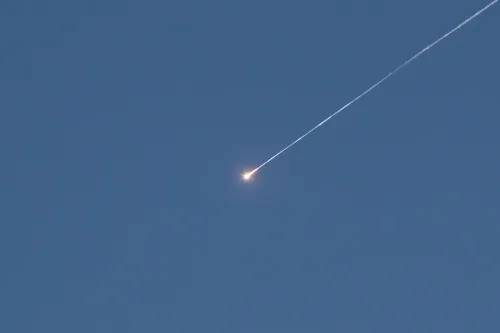
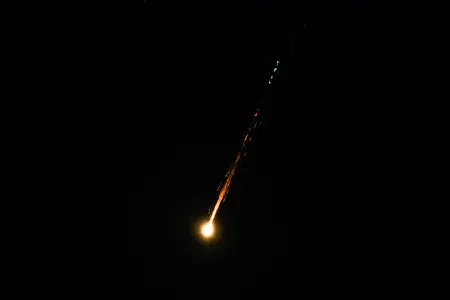
Iran's Islamic Revolutionary Guard Corps (IRGC) announced on Saturday night, 22 November 2026 that its aerospace force launched a hybrid offensive of missiles and drones targeting US Patriot air defence radars at two air bases in Bahrain, in what it described as a retaliatory strike. The operation marks one of the most direct Iranian military actions against US-linked infrastructure in the Gulf in recent memory.
What the IRGC Said
In a statement published on its official outlet Sepah News, the IRGC said the strikes targeted the Al-Riffa and Awali Sakhir air bases in Bahrain. The Corps said the two radars belonging to the US Army's Patriot air defence systems at those installations were hit in the attack. The semi-official Fars news agency had reported the targeted bases as Shaikh Isa and Al Juffair air bases — a discrepancy between the two Iranian accounts that has not been officially reconciled.
The IRGC framed the action as a response to what it called a continuation of 'aggression against and violation' of Iran's airspace. It stated that earlier on Saturday, an MQ-1 Predator drone and an MQ-9 Reaper drone, both said to belong to the US military, had entered Iranian airspace. The IRGC warned that Iran's airspace is a 'red line' for its armed forces, and that any violation by any state or force would receive a 'harsh and decisive' response.
Bahrain's Response
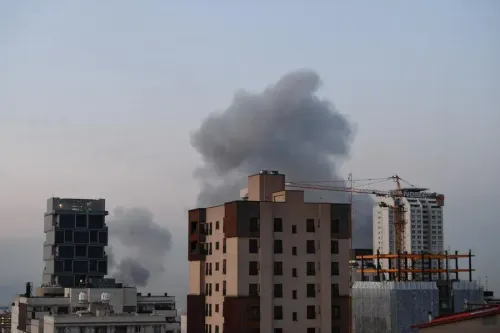
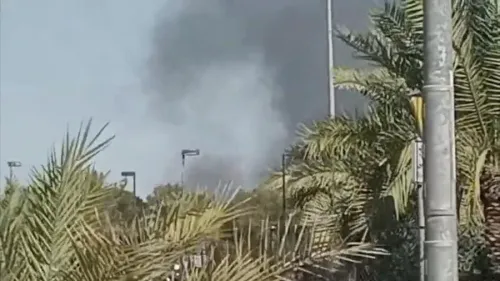
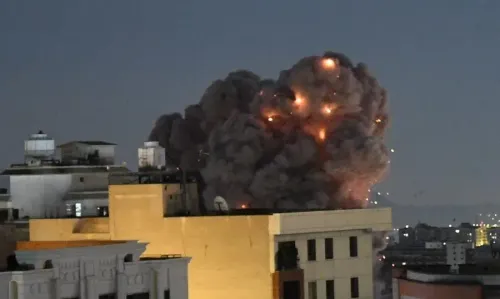
Bahrain's Ministry of Interior confirmed that a civilian industrial facility was targeted in what it described as an 'Iranian attack,' causing a fire at the site. Civil defence teams were deployed to bring the blaze under control, the ministry said. The Bahrain Defence Force (BDF) said its air defence systems intercepted a number of the Iranian aerial attacks, with falling debris causing minor material damage but no injuries reported. The BDF characterised Iran's actions as part of a 'systematic hostile approach' targeting the kingdom.
Strait of Hormuz and Diplomatic Signals
Also on Saturday, Iranian Deputy Foreign Minister for Legal and International Affairs Kazem Gharibabadi told reporters in Tehran that Iran considers the US-imposed economic blockade an 'act of war' and would take every necessary measure to break it. He reiterated that a two-day plan to cease hostilities and reopen the Strait of Hormuz remains Iran's sole formal proposal and 'is still on the table,' adding that Iran is prepared to move forward 'with confidence' once the United States meets the conditions for the plan's implementation.
Separately, several explosions were heard on Saturday night in Iran's southern Sirik County, according to Fars. The agency said the blasts appeared to have come from the sea, though their nature remained unknown at the time of reporting. It suggested the sounds could be linked to warning shots or vessels striking naval mines.
Background: A Conflict That Has Been Escalating Since February
The strikes follow a dramatic escalation that began on 28 February, when Israel and the United States reportedly launched joint attacks on Tehran and other Iranian cities. Iran responded with successive waves of missile and drone strikes against Israeli and US positions across the region and tightened its grip on the Strait of Hormuz — a waterway through which a significant share of global oil supply passes. The latest strikes on Bahraini soil signal that the conflict is widening beyond Israel's immediate neighbourhood and drawing Gulf states deeper into the confrontation.
As the situation remains fluid, all eyes are on Washington's response and whether the Strait of Hormuz standoff will be resolved through the Iranian-proposed ceasefire plan or push further toward open escalation.
Point of View
Suggesting Manama is wary of becoming the principal battleground. The unresolved discrepancy between the IRGC and Fars on which bases were hit is itself telling — it points to either information warfare or internal communication gaps in Tehran's military-media apparatus. Most critically, Iran's simultaneous diplomatic signal on the Hormuz ceasefire plan suggests Tehran is trying to hold two tracks open: military pressure and negotiated offramp. Whether Washington reads that as an opening or an escalation will define the next 72 hours.
NationPress
22 Nov 2026
Frequently Asked Questions
What did Iran's IRGC attack in Bahrain on 22 November 2026?
The IRGC said its aerospace force struck US Patriot air defence radars at two air bases in Bahrain using a combination of missiles and drones. It identified the targets as the Al-Riffa and Awali Sakhir air bases, though semi-official Iranian media named different bases, creating an unresolved discrepancy.
Why did Iran launch the strikes on Bahrain?
The IRGC described the strikes as retaliation for what it called the violation of Iranian airspace by two US military drones — an MQ-1 Predator and an MQ-9 Reaper — earlier the same day. Iran has declared its airspace a 'red line' and warned of harsh responses to any future violations.
Was anyone killed or injured in the Bahrain attack?
No injuries were reported. The Bahrain Defence Force said its air defence systems intercepted a number of the Iranian aerial attacks, with falling debris causing only minor material damage. A civilian industrial facility also caught fire following the attack, but no casualties were confirmed.
What is Iran's position on the Strait of Hormuz standoff?
Iranian Deputy Foreign Minister Kazem Gharibabadi reiterated on 22 November that a two-day plan to cease hostilities and reopen the Strait of Hormuz remains Iran's sole formal proposal and is still on the table. He said Iran views the US economic blockade as an act of war and will act to break it.
How did the Iran-US conflict in the Gulf begin?
The current escalation traces back to 28 February, when Israel and the United States reportedly launched joint strikes on Tehran and other Iranian cities. Iran responded with waves of missile and drone attacks on Israeli and US assets across the region and tightened its control over the Strait of Hormuz, triggering the ongoing confrontation.