IRGC warns Iran will not accept war of attrition, demands US meet conditions
Synopsis
Iran's IRGC has issued its starkest warning since the April ceasefire — Tehran will not accept a prolonged standoff and will either resolve the conflict 'on the battlefield' or force the US to accept its terms. With the June MoU's 60-day negotiation deadline already missed and the Strait of Hormuz still under Iranian control, the region is at a critical inflection point.
Key Takeaways
IRGC spokesman Hossein Mohebbi declared on 20 November 2026 that Iran rejects the continuation of a war of attrition and will not allow the situation to persist indefinitely.
Iran will not reopen the Strait of Hormuz unless the United States meets its conditions in a verifiable manner.
Tehran has linked nuclear negotiations directly to the Hormuz question, refusing to re-enter talks until the strait issue is settled.
A ceasefire was reached on 8 April after Israel and the US launched joint strikes on Iran on 28 February .
An Iran-US MoU signed on 18 June set a 17 August deadline for a final nuclear and sanctions deal — a deadline both sides missed.
Iran's Islamic Revolutionary Guard Corps (IRGC) declared on 20 November 2026 that Tehran will not accept the continuation of a war of attrition and refuses to allow the current standoff to persist indefinitely. The statement signals a sharp hardening of Iran's posture amid stalled negotiations with the United States over its nuclear programme and control of the Strait of Hormuz.
Key Statements From IRGC Spokesman
IRGC spokesman Hossein Mohebbi made the remarks at a conference in Tehran, warning that the Islamic Republic rejects both outright war and an open-ended 'neither war nor peace' limbo. He said, 'The Islamic Republic of Iran does not accept the continuation of a war of attrition and will not let this situation persist for a long time. We will bring the war to a definitive conclusion. This matter will either be settled on the battlefield, or the United States must accept Iran's conditions.'
Mohebbi further stressed that Iran would not reopen the Strait of Hormuz unless the US meets its conditions in a verifiable manner. He added that Tehran would not re-enter nuclear negotiations until the Hormuz question is resolved — effectively linking two of the most consequential pressure points in the standoff.
How the Conflict Unfolded
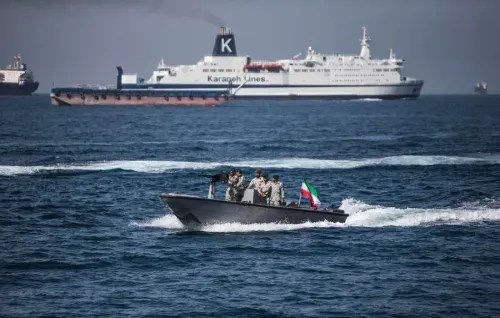
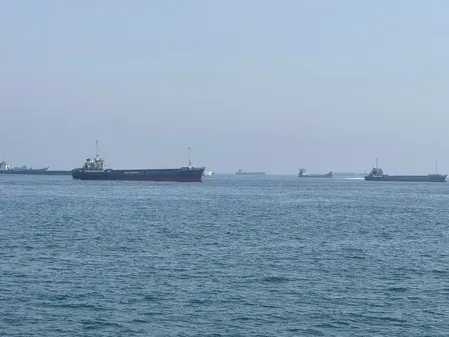
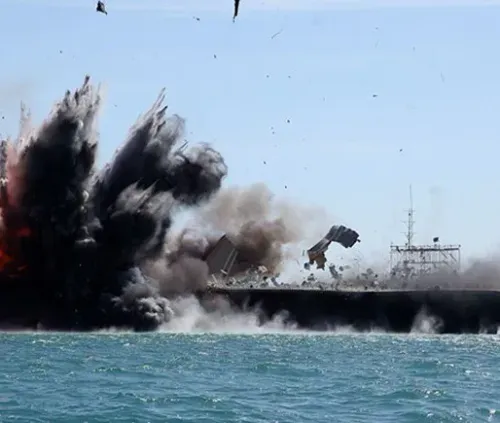
The current crisis escalated dramatically on 28 February, when Israel and the United States launched joint strikes on Tehran and other Iranian cities. Iran responded with waves of missile and drone attacks targeting Israeli and US assets across the region, while simultaneously tightening its control over the Strait of Hormuz — through which roughly 20% of the world's oil supply passes.
A ceasefire was brokered between the warring parties on 8 April, followed by a formal memorandum of understanding (MoU) signed by Iran and the United States on 18 June, covering an end to hostilities on all fronts in the region.
Collapsed Talks and Escalating Tensions
Under the terms of the June MoU, both sides were scheduled to conclude negotiations within 60 days — by 17 August — on a final agreement addressing Iran's nuclear programme and the removal of economic sanctions. Those talks, according to reports, failed to yield sufficient progress as tensions continued to mount. The 17 August deadline passed without a deal, leaving the diplomatic framework in limbo.
Notably, the IRGC spokesman's remarks represent the most explicit public threat since the ceasefire, raising questions about whether Tehran is signalling a possible return to active conflict or seeking to extract greater concessions from Washington at the negotiating table.
What Happens Next
The fate of the Strait of Hormuz — and by extension global energy markets — now hinges on whether the US and Iran can revive meaningful dialogue. Any renewed closure or disruption of the strait would have immediate consequences for oil supply chains, with ripple effects on energy prices worldwide. Analysts warn that Tehran's latest posture leaves little room for a quiet diplomatic resolution without a significant US concession.
Point of View
But a signal that Tehran believes prolonged ambiguity weakens its position more than Washington's. By explicitly linking the Strait of Hormuz to nuclear talks, Iran is collapsing two separate negotiating tracks into one, making any partial deal impossible. The missed August deadline was predictable given the maximalist positions on both sides, but the IRGC statement now puts the US in an uncomfortable bind: concede publicly, or risk a return to open conflict. What mainstream coverage underweights is how much Iran's domestic calculus — economic pressure from sanctions, internal legitimacy questions — drives this brinksmanship.
NationPress
20 Nov 2026
Frequently Asked Questions
What did the IRGC warn about Iran's position on the conflict?
IRGC spokesman Hossein Mohebbi said on 20 November 2026 that Iran will not accept a prolonged war of attrition and will bring the conflict to a 'definitive conclusion' — either on the battlefield or by the US accepting Iran's conditions. He also rejected any 'neither war nor peace' status quo.
Why is the Strait of Hormuz central to the standoff?
Iran tightened its grip on the Strait of Hormuz after the US and Israel launched joint strikes on Tehran in February 2026. The IRGC has said it will not reopen the strait until the US meets its conditions verifiably, making Hormuz a primary lever of pressure given the waterway's critical role in global oil transit.
What was the June MoU between Iran and the US?
On 18 June 2026, Iran and the United States signed a memorandum of understanding to end hostilities across the region. It set a 60-day window — expiring 17 August — for both sides to negotiate a final deal on Iran's nuclear programme and the lifting of sanctions, but talks failed to produce sufficient progress.
How did the current Iran-US conflict begin?
The conflict escalated sharply on 28 February 2026, when Israel and the United States launched joint strikes on Tehran and other Iranian cities. Iran responded with waves of missile and drone attacks on Israeli and US assets in the region and imposed tighter control over the Strait of Hormuz. A ceasefire followed on 8 April.
What are the implications if Iran does not reopen the Strait of Hormuz?
A continued Iranian stranglehold on the Strait of Hormuz would disrupt roughly one-fifth of the world's oil supply, sending energy prices higher and deepening economic strain globally. The IRGC's latest statement suggests Tehran views the strait as its strongest bargaining chip and has no intention of releasing it without binding US concessions.