Iran FM: Hormuz Strait management will not return to pre-war status
Synopsis
Iran's Foreign Minister Araghchi has declared the Strait of Hormuz — through which roughly 20% of global oil flows — will never be managed the same way again after what Tehran calls the US-Israeli war against Iran. Combined with Supreme Leader Khamenei's demand for war damages compensation, the signals point to a deliberate Iranian strategy to permanently reshape its leverage over the world's most critical oil chokepoint.
Key Takeaways
Iran's FM Seyed Abbas Araghchi declared on 25 October 2026 that the Strait of Hormuz routes and management will not revert to pre-war arrangements.
Araghchi cited 'fundamental and strategic' changes in West Asia following what he termed the US-Israeli war against Iran .
He rejected the presence of foreign forces in the region, calling their continued deployment a source of 'insecurity' .
Supreme Leader Mojtaba Khamenei called for 'serious' pursuit of compensation for damages inflicted by US-Israeli attacks.
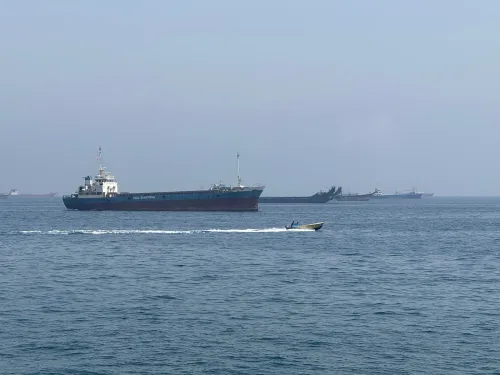
The Hormuz Strait handles approximately 20% of global petroleum trade, making any shift in its governance a major concern for energy markets worldwide.
Araghchi confirmed ongoing negotiations on Hormuz-related matters, with talks set to continue.
Iran's Foreign Minister Seyed Abbas Araghchi on Sunday, 25 October 2026 declared that the administration of the Strait of Hormuz and the routes through the critical waterway will never revert to their pre-war configuration — a pointed signal to global shipping and regional powers that Tehran intends to reshape its strategic posture in the Persian Gulf.
Key Declarations at Tehran Ceremony
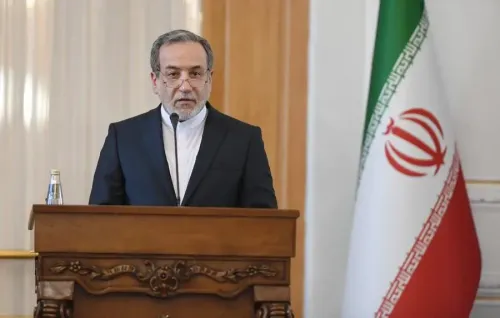
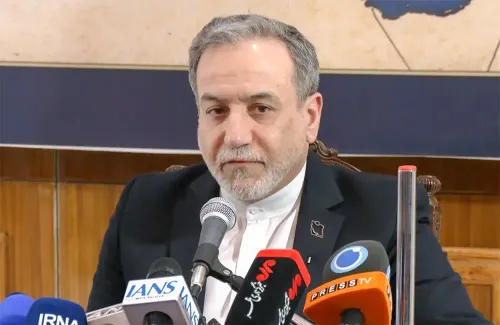
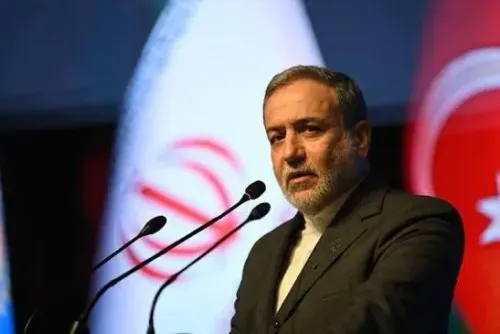
Speaking at an official ceremony in the Iranian capital, Araghchi stated that 'fundamental and strategic' changes had taken hold across West Asia in the wake of what he described as the US-Israeli war against Iran. 'We must accept that new realities have taken hold. The routes in the Strait of Hormuz will not be the same as they once were, and the strait's management will also not be as it was in the past,' he said. He added that negotiations on related matters were ongoing and would continue.
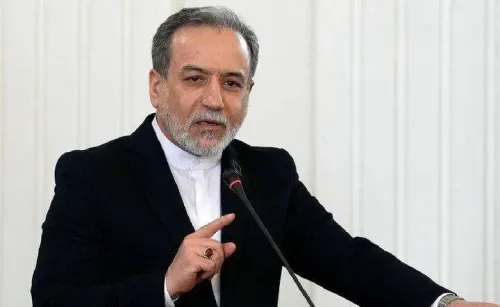
The minister also stressed that regional security must be guaranteed by countries within the region itself — explicitly rejecting the role of foreign forces. 'Their continued presence will lead to nothing but insecurity for the entire region,' he said, in an apparent reference to US and allied naval deployments in the Gulf. Despite the combative tone, Araghchi affirmed that Iran was ready to cooperate with all regional countries.
Supreme Leader Calls for Compensation from US and Israel
Separately, Iran's Supreme Leader Mojtaba Khamenei underlined the need for 'serious' efforts to restore the Iranian people's rights and secure compensation for damages sustained during what he termed the US-Israeli attacks, according to a statement published on the leader's official website on Saturday. The remarks emerged from a meeting between Khamenei and Judiciary Chief Gholamhossein Mohseni-Ejei.
Among the priorities flagged were promoting justice, safeguarding public rights, fighting corruption, and pursuing judicial reform. Khamenei specifically called for a 'comprehensive and tangible' transformation of the country's judicial apparatus and demanded decisive action against crime — framed partly in the context of seeking accountability from Washington and Tel Aviv.
Why the Hormuz Signal Matters
The Strait of Hormuz is the world's single most critical oil chokepoint, with roughly 20% of global petroleum trade — approximately 17–19 million barrels per day — passing through it. Any shift in Iran's management of the waterway carries direct implications for global crude prices, insurance rates for tankers, and the energy security of importers including India, China, Japan, and South Korea. This comes amid a broader post-conflict realignment in the region, with Gulf states recalibrating ties and Washington reviewing its force posture.
Notably, this is not the first time Iran has wielded the Hormuz card diplomatically — threats to 'close' the strait have periodically surfaced during periods of heightened tension, though Tehran has never fully acted on them. What differs now, according to Araghchi's framing, is that the calculus has shifted permanently rather than tactically.
Ongoing Negotiations and Regional Outlook
The minister's acknowledgement that negotiations are underway — without specifying the counterparties — suggests back-channel engagement with one or more regional or global actors. Analysts have pointed to possible talks involving Oman, which has historically served as a diplomatic conduit between Tehran and Washington. The trajectory of these discussions, and whether Iran translates its rhetorical redefinition of Hormuz management into enforceable policy, will be closely watched in the weeks ahead.
Point of View
Not operational announcement — but its implications are severe. Redefining Hormuz management in post-war terms hands Tehran a structural lever over global energy markets that it can activate or merely threaten, depending on diplomatic calculus. The simultaneous push by Khamenei for war-damage compensation from Washington and Tel Aviv suggests a coordinated messaging strategy: Iran is establishing a maximalist negotiating baseline before any formal normalisation process begins. What mainstream coverage underplays is the downstream effect on Asian importers, particularly India, which sources significant crude volumes through the Gulf and has carefully maintained ties with both Tehran and Washington.
NationPress
26 Oct 2026
Frequently Asked Questions
What did Iran's Foreign Minister say about the Strait of Hormuz?
Foreign Minister Seyed Abbas Araghchi said on 25 October 2026 that the Strait of Hormuz's routes and management will not return to their pre-war configuration, citing 'fundamental and strategic' changes in West Asia following what he described as the US-Israeli war against Iran. He indicated that related negotiations are ongoing.
Why is the Strait of Hormuz strategically important?
The Strait of Hormuz is the world's most critical oil chokepoint, with roughly 20% of global petroleum trade — around 17–19 million barrels per day — transiting through it. Any change in its management directly affects crude oil prices, tanker insurance costs, and the energy security of major importers including India, China, Japan, and South Korea.
What did Iran's Supreme Leader Khamenei demand?
Supreme Leader Mojtaba Khamenei called for 'serious' efforts to pursue the Iranian people's rights and ensure compensation for material and non-material damages from what he described as US-Israeli attacks, according to a statement published on his official website on Saturday, 25 October 2026.
Is Iran in negotiations over Hormuz Strait governance?
Araghchi confirmed that negotiations on Hormuz-related matters have been held and will continue, though he did not name the counterparties. Analysts have noted Oman's traditional role as a back-channel between Tehran and Washington as a possible diplomatic avenue.
What does Iran's position mean for regional security?
Araghchi explicitly rejected the presence of foreign — primarily US-led — forces in the region, arguing they protect only Israeli interests and generate insecurity. He simultaneously offered Iranian cooperation with all regional countries, framing Tehran's post-war posture as both assertive on sovereignty and open to regional dialogue.