Iran FM Araghchi: Tehran ready for dialogue with mutual respect, credible guarantees
Synopsis
Iran's Foreign Minister Araghchi used the OIC summit in Baghdad to deliver a dual message: Tehran will not bow to coercion, but has handed Washington a concrete seven-day plan to reopen the Strait of Hormuz through Qatari mediation. With the US-Iran MoU deadline already missed and nuclear talks stalled, the ball is now firmly in Washington's court.
Key Takeaways
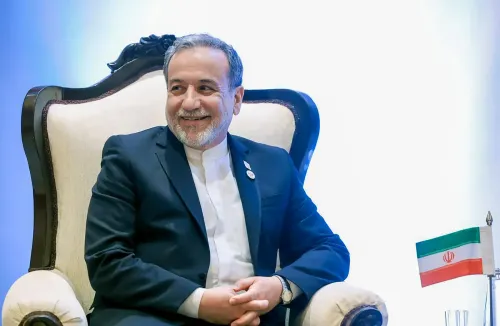
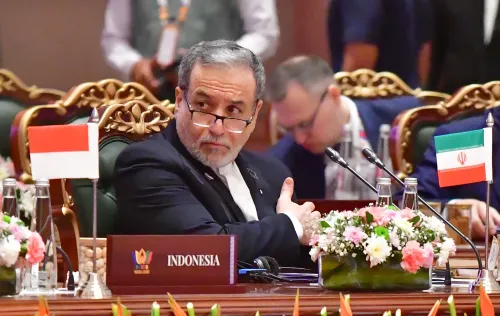
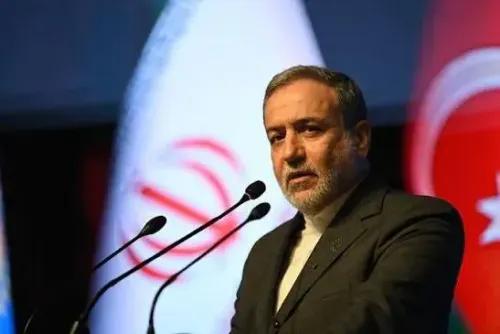
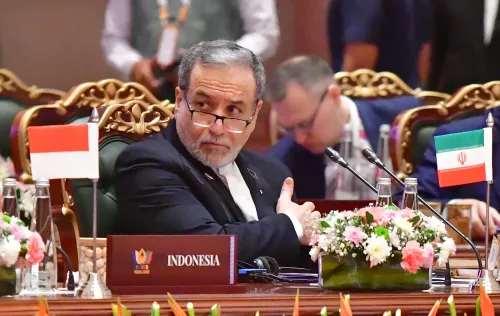
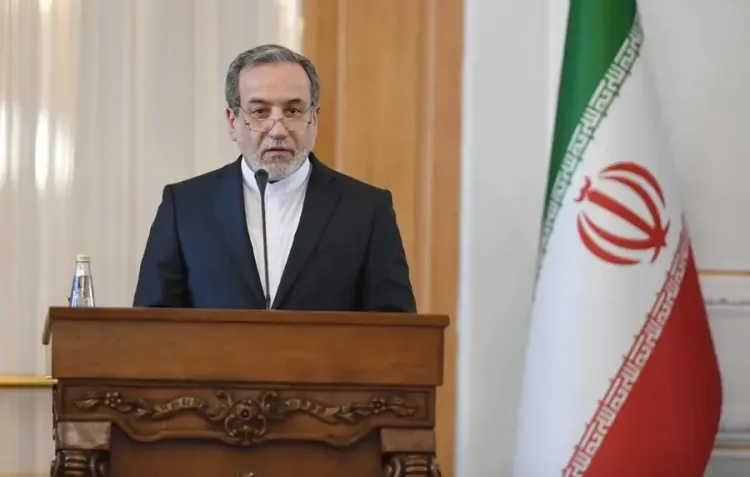
Iranian Foreign Minister Seyed Abbas Araghchi spoke at the 52nd OIC Council of Foreign Ministers in Baghdad on 18 October .
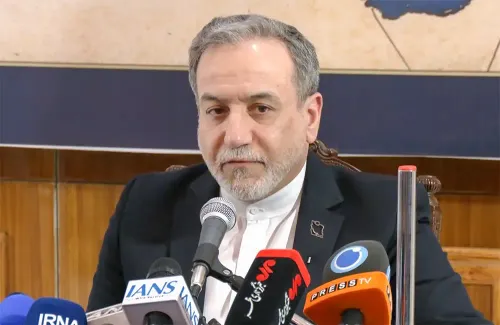
Araghchi said Iran is 'ready for dialogue based on mutual respect and credible guarantees' but will not accept 'coercion, threats or intimidation.' Iran has presented a seven-day plan to the United States via Qatar for reopening the Strait of Hormuz .
Israel and the US launched joint strikes on Iran on 28 February ; a ceasefire followed on 8 April and a US-Iran MoU was signed on 18 June .
The 60-day MoU negotiation window expired on 17 August without a final agreement on Iran's nuclear programme or sanctions removal.
Iranian Foreign Minister Seyed Abbas Araghchi declared on 18 October that Tehran will not surrender its sovereign rights under pressure, while simultaneously signalling openness to diplomacy — saying Iran remains 'ready for dialogue based on mutual respect and credible guarantees.' The remarks came at the 52nd Session of the Council of Foreign Ministers of the Organization of Islamic Cooperation (OIC) in the Iraqi capital Baghdad, according to a statement issued by the Iranian Foreign Ministry.
Key Statements from Baghdad
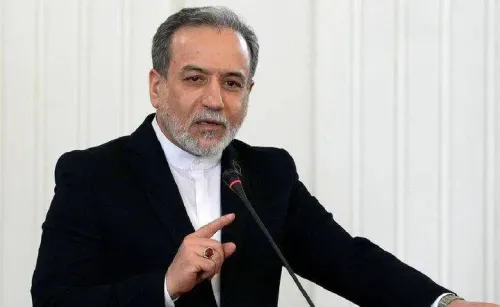
Araghchi was unequivocal on Iran's red lines. 'Iran does not accept coercion, threats or intimidation,' he said, addressing the gathered foreign ministers. At the same time, he reaffirmed Iran's commitment to safe and secure navigation through the Strait of Hormuz, a waterway critical to global energy flows, noting that the strait was open before the United States and Israel launched attacks on Iran on 28 February.
Notably, Araghchi disclosed that Iran has presented a 'concrete' seven-day plan to the United States through Qatar — under which, if the necessary conditions are met, the strait could be reopened within seven days. 'The choice now rests with the United States,' he said, placing the onus squarely on Washington.
Iran's Position on Regional Security
The foreign minister stressed that Iran will continue to defend its people, sovereignty, and legitimate interests 'by any means,' while insisting that Tehran has never attacked its neighbours — only US military bases and installations within those states. He called on every regional state to ensure its territory, airspace, and infrastructure serve regional security and are never used as a platform to attack a neighbour.
'No state can build lasting security at the expense of the security of others,' Araghchi said. He added that the region's problems are 'best resolved within the region, by its own states, before they become a pretext for the wars of distant powers' — a pointed reference to Western involvement.
Background: From Conflict to Ceasefire
The context for these remarks is a rapidly evolving conflict arc. On 28 February, Israel and the United States launched joint strikes on Tehran and other Iranian cities. Iran responded with waves of missile and drone attacks targeting Israel and US bases across the region, and simultaneously tightened its grip on the Strait of Hormuz, raising fears of a global energy supply shock.
A ceasefire was reached between the parties on 8 April. Subsequently, on 18 June, Iran and the United States signed a memorandum of understanding (MoU) committing to end hostilities across all fronts. Under the MoU, both sides were to hold negotiations within 60 days — a deadline that expired on 17 August — aimed at reaching a final agreement on Iran's nuclear programme and the removal of sanctions. However, according to reports, the talks failed to achieve sufficient progress as tensions continued to escalate.
What Comes Next
Araghchi's OIC address signals that Tehran is recalibrating its posture — projecting strength while keeping a diplomatic door open, with Qatar acting as a key intermediary channel. Whether Washington responds to the seven-day Hormuz plan will likely determine the pace and shape of any renewed nuclear negotiations. Regional states, particularly those hosting US military infrastructure, will be watching closely as both sides test the boundaries of the post-MoU framework.
Point of View
Yet flexible enough to keep a negotiating channel alive through Qatar. The seven-day Hormuz plan is the most operationally specific offer Tehran has publicly floated, which suggests Iran is feeling the economic pressure of a partially closed strait more acutely than its rhetoric admits. The missed 17 August MoU deadline is the real story here: both sides signed a framework and then failed to convert it, a pattern that has defined US-Iran diplomacy for decades. Without a binding verification mechanism on either nuclear commitments or sanctions relief, the next 'concrete' plan risks the same fate.
NationPress
18 Oct 2026
Frequently Asked Questions
What did Iran's Foreign Minister Araghchi say at the OIC summit in Baghdad?
Araghchi said Iran will not surrender its sovereign rights under pressure but remains open to 'dialogue based on mutual respect and credible guarantees.' Speaking at the 52nd OIC Council of Foreign Ministers session on 18 October in Baghdad, he also disclosed a seven-day plan conveyed to the US through Qatar for reopening the Strait of Hormuz.
What is Iran's seven-day plan for the Strait of Hormuz?
Iran has reportedly conveyed a concrete seven-day plan to the United States through Qatar, under which the Strait of Hormuz could be reopened within seven days if the necessary conditions are met. Araghchi said 'the choice now rests with the United States,' indicating Washington must act for the plan to proceed.
What happened between Iran, the US, and Israel earlier in 2025?
On 28 February, Israel and the United States launched joint attacks on Tehran and other Iranian cities. Iran responded with missile and drone strikes on Israel and US regional bases, and tightened control over the Strait of Hormuz. A ceasefire was reached on 8 April, followed by a US-Iran memorandum of understanding on 18 June to end hostilities.
Why did US-Iran nuclear negotiations stall?
Under the June MoU, both sides were scheduled to hold negotiations within 60 days — a deadline that lapsed on 17 August — to finalise a deal on Iran's nuclear programme and sanctions removal. According to reports, the talks failed to achieve sufficient progress as tensions continued to escalate, leaving the framework unimplemented.
What is Iran's stated position on regional security?
Araghchi stated that Iran has never attacked its neighbours, only US military bases within those states, and called on all regional states to ensure their territory is not used as a platform for attacks on neighbours. He argued that regional problems are best resolved by regional states themselves, without external intervention.