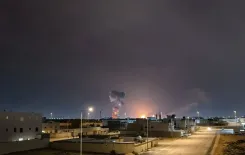
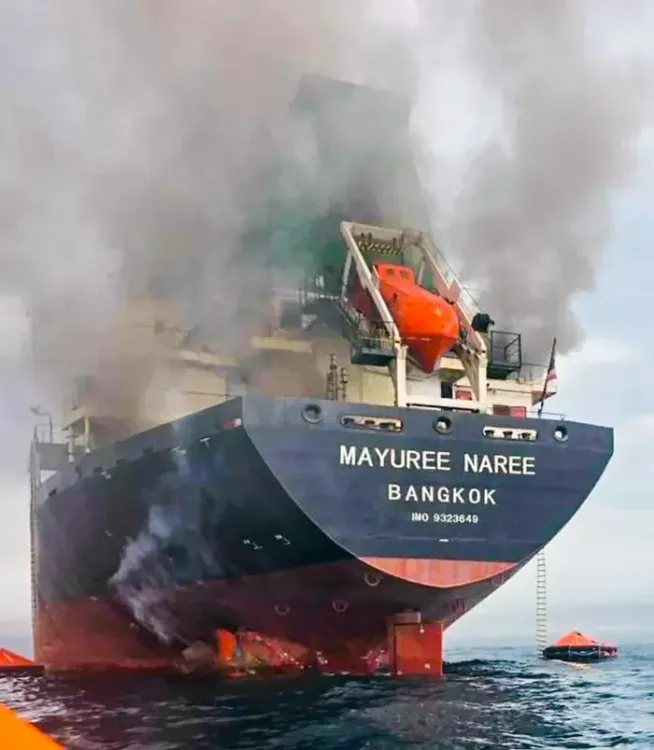
Strait of Hormuz: Iran says 2 tankers hit mines, caught fire
Synopsis
Iran's navy says two oil tankers hit mines and caught fire east of the Strait of Hormuz. The reported incident comes as Iranian Army commander Amir Hatami says the energy waterway will remain closed until seven Iranian conditions are met.
Key Takeaways
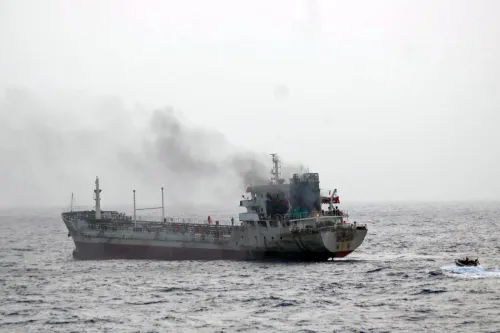
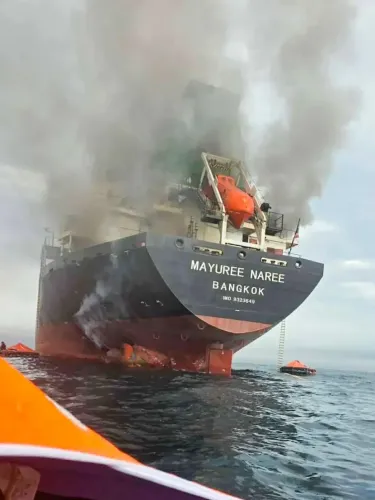
Iran's Army navy said two oil tankers hit naval mines and caught fire east of the Strait of Hormuz on 24 November .
The navy alleged that the vessels had switched off identification and navigation systems before entering a restricted area.
The explosions brought both tankers to a halt, according to the navy's statement.
Major General Amir Hatami said the strait would not reopen until seven Iranian conditions were met.
The strait is a route for oil and liquefied natural gas exports from Gulf producers to international markets.
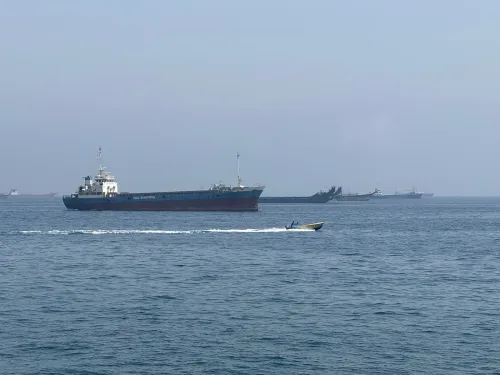
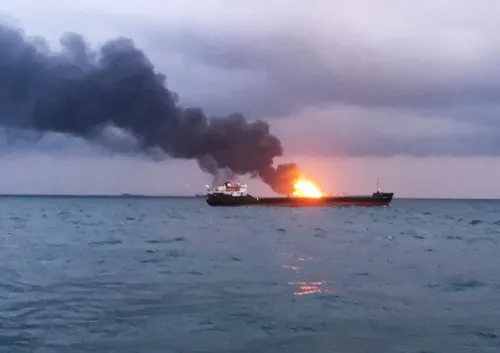
Iran's Army navy said two oil tankers struck naval mines and caught fire east of the Strait of Hormuz on Tuesday, 24 November, after allegedly entering a restricted area with their identification and navigation systems switched off. The navy said the explosions stopped the vessels, while Iran's Army commander reiterated that the waterway would not reopen until the country's seven conditions were met.
The account came in a statement published on the army's website. The source did not identify the tankers or provide details of their crews, cargoes or any casualties.
Iranian navy's account of the incident
The navy described the vessels as violating its rules and said they had entered a forbidden region east of the strait. It said both their identification and navigation systems had been deactivated before they encountered the mines.
According to the statement, the resulting blasts brought both tankers to a halt. The navy cited the incident as a reason for vessels to comply with Iranian regulations for safe passage through the waterway.
The statement did not specify the vessels' flags or the precise location of the explosions. The information supplied about the incident comes from the Iranian navy's account.
Conditions for reopening the waterway
The navy warned that the strait would not be reopened unless Iran's objectives and demands were met. It urged tanker owners to coordinate with the Iranian armed forces for safe passage.
Separately, Iranian Army Commander Major General Amir Hatami said on the same day that the waterway would remain closed until seven Iranian conditions were fulfilled, according to local media reports. The source did not list those conditions or explain how they would be assessed.
Hatami also warned that Iran would tighten its control over the strait and make conditions more difficult for its adversaries. His remarks to senior Army commanders presented the waterway as part of Iran's geopolitical strength.
Hatami's remarks on the wider conflict
Addressing the commanders, Hatami said Iran's social, military, political and geopolitical power had overturned its adversaries' calculations, according to reports. He also said those who launched the war had felt its effects at petrol stations and in their homes.
Hatami maintained that Iran would not bear the costs of war alone and said those backing its enemy would also bear a cost. These were the commander's assertions; the source did not provide independent evidence to assess them.
Why the Strait of Hormuz matters
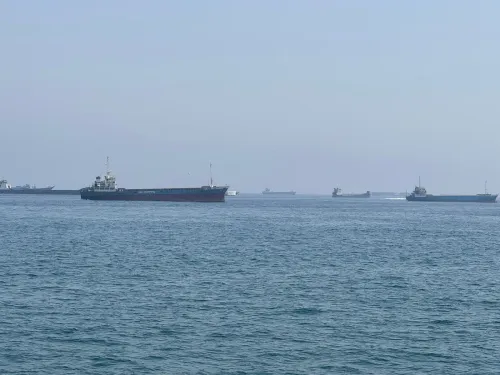
The Strait of Hormuz connects the Persian Gulf with the Gulf of Oman and the Arabian Sea. It is a major energy corridor for oil and liquefied natural gas exports from Gulf producers to international markets.
The reported tanker incident and Iran's statements are therefore relevant to ship operators and countries receiving those exports. The navy's call for coordination also signals the passage requirements it is asserting for tanker owners.
Further details about the vessels and the circumstances of the reported blasts remain outstanding, as does an explanation of Iran's seven conditions for reopening the strait.
Point of View
Including the vessels' identities, the status of their crews and the precise circumstances of the blasts. Transparency about those facts and the stated conditions for reopening is necessary for ship operators and importing countries to assess the risks.
NationPress
24 Nov 2026
Frequently Asked Questions
What happened to the tankers near the Strait of Hormuz?
Iran's Army navy said two oil tankers struck naval mines and caught fire east of the Strait of Hormuz on 24 November. It said the blasts brought the vessels to a halt.
Why did Iran say the tankers entered a restricted area?
The navy alleged that the tankers entered a forbidden region after deactivating their identification and navigation systems. Its statement did not identify the vessels.
When will the Strait of Hormuz reopen?
Iran's Army commander said the strait would not reopen until seven Iranian conditions were met. The source did not list those conditions or give a reopening date.
Why does the Strait of Hormuz matter?
The Strait of Hormuz is a major route for oil and liquefied natural gas exports from Gulf producers to international markets. It connects the Persian Gulf with the Gulf of Oman and the Arabian Sea.
Were the tanker crews injured?
The source did not provide information about the crews or any casualties. It also did not identify the tankers or their cargoes.