Hormuz tanker blasts: IRGC says 2 ships hit naval mines
Synopsis
Iran says it has mined the Strait of Hormuz's alternative routes, and two tankers have already paid the price. Alongside a US blockade that has disabled six ships and diverted 158, commercial shipping through the world's most critical oil chokepoint is now caught between Iranian mines and American munitions.
Key Takeaways
Iran's IRGC navy said two oil tankers exploded after hitting naval mines in the Strait of Hormuz on 28 November 2026 .
One tanker struck mines off Oman's Khasab port ; the other hit mines on an “unauthorised” route east of the strait .
The IRGC alleged the vessels had switched off GPS and warned the unauthorised route is entirely mined.
CENTCOM said a US aircraft disabled the Palau-flagged M/V Pacific Archer in the Gulf of Oman on 26 November ; the crew was unharmed.
The US says 158 vessels have been redirected and six disabled under its blockade of Iran.
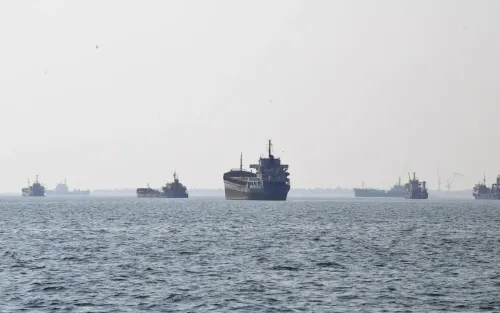
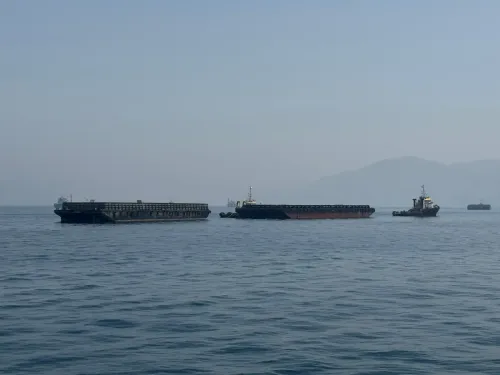
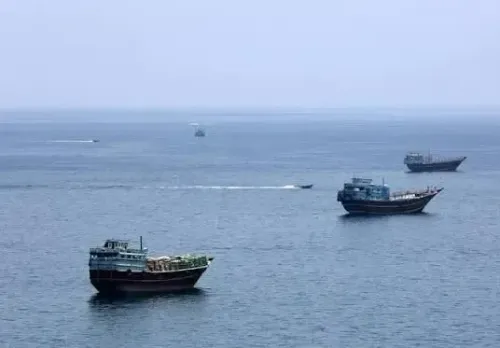
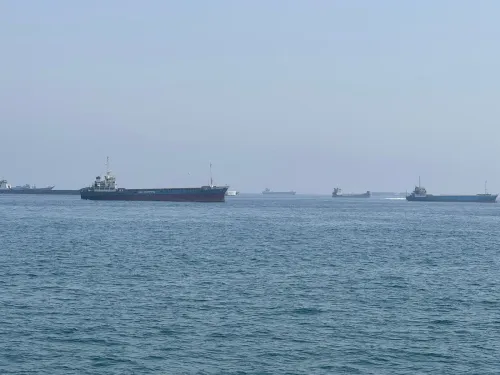
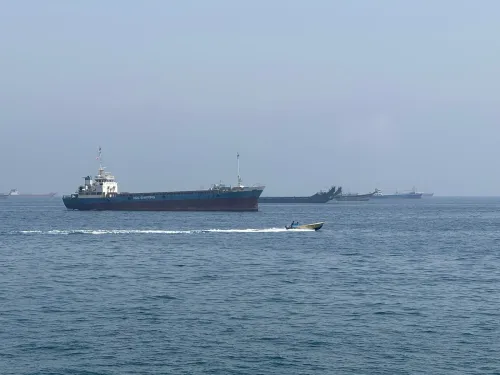
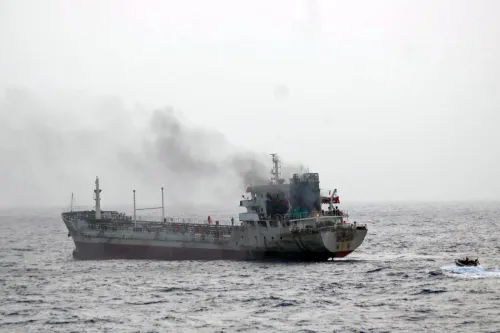
Two oil tankers exploded and caught fire after striking naval mines in the Strait of Hormuz on Saturday, 28 November 2026, according to the navy of Iran's Islamic Revolutionary Guard Corps (IRGC). The IRGC described both vessels as “violating” ships that had tried to slip through the waterway on what it called an “unauthorised” route. The claim comes as Tehran vows to keep the strait shut and Washington enforces a naval blockade of Iran.
Key Developments in the Strait of Hormuz
In a statement carried by the IRGC's official news outlet, Sepah News, the force's navy said one tanker struck mines off Oman's Khasab port. The second reportedly hit mines on the “unauthorised” route east of the Strait of Hormuz.
The IRGC alleged that both vessels had switched off their GPS systems and attempted to cross the strait's “illegitimate” route stealthily. The statement did not name the tankers, their flags or owners, and gave no details on crew casualties. These claims have not been independently verified.
What the IRGC Navy Warned
The IRGC navy said the “unauthorised” route through the waterway is entirely mined. According to reports, it warned that tanker crossings would not avoid collision with the “highly devastating” mines, even with aerial support from what it called the “terrorist” US military.
Notably, the warning is aimed directly at commercial shipping. It suggests Tehran is treating any passage outside its approved corridor as hostile, which raises the risk for vessels operating in one of the world's busiest energy chokepoints.
US Blockade and the Pacific Archer Incident
This comes amid a parallel escalation by the United States. The US Central Command (CENTCOM) said it disabled a commercial vessel in the Gulf of Oman on 26 November. It said the ship had allegedly tried to breach the US naval blockade of Iran despite repeated warnings.
According to CENTCOM, the Palau-flagged bulk carrier M/V Pacific Archer had departed from the Iranian port city of Bandar Abbas and tried to transit regional waters. “A U.S. military aircraft launched precision munitions that struck the stern of Palau-flagged M/V Pacific Archer. The ship’s propulsion was ultimately disabled and the civilian crew was unharmed,” the command said.
“US Central Command (CENTCOM) disabled a commercial vessel in the Gulf of Oman, Nov. 26, after the crew attempted to run the US naval blockade, despite multiple warnings, following departure from an Iranian port,” the statement added.
Scale of the Enforcement Campaign
CENTCOM said American forces continue to strictly enforce the blockade. It said 158 commercial vessels have been redirected after complying with instructions, while six vessels have been disabled for refusing to comply.
“All mariners operating in the Gulf of Oman and approaches to the Strait of Hormuz are urged to heed blockade warnings issued by CENTCOM forces,” the command said.
Merchant shipping now faces two competing sets of threats. Iran says it has mined the alternative routes. The US is disabling ships that try to leave Iranian ports. Further confirmation of the tanker incidents, including crew safety and vessel identities, is awaited. Shippers and energy markets will be watching closely in the coming days.
Point of View
No flags, no word on crews. Until those details surface, the claim reads as much like deterrence messaging as battlefield reporting. What is not in doubt is that Hormuz has become a two-sided trap, with Iranian mines on one flank and US munitions on the other. For India, which relies heavily on Gulf crude moving through this corridor, the stakes go beyond diplomacy. Every week this standoff persists feeds directly into freight costs, insurance premiums, and ultimately the price at the pump.
NationPress
28 Nov 2026
Frequently Asked Questions
What happened in the Strait of Hormuz on 28 November 2026?
Iran's IRGC navy said two oil tankers exploded and caught fire after hitting naval mines in the Strait of Hormuz. It said one struck mines off Oman's Khasab port and the other on an unauthorised route east of the strait.
Why did Iran call the tankers 'violating' vessels?
The IRGC said the tankers had switched off their GPS systems and tried to cross the strait stealthily on what it called an illegitimate, unauthorised route. Iran has vowed to keep the strait shut amid the US blockade.
What is the M/V Pacific Archer incident?
CENTCOM said a US military aircraft struck the stern of the Palau-flagged bulk carrier M/V Pacific Archer in the Gulf of Oman on 26 November, disabling its propulsion. The ship had left Bandar Abbas and allegedly tried to run the US blockade; its crew was unharmed.
How many ships has the US blockade of Iran affected?
According to CENTCOM, 158 commercial vessels have been redirected after complying with instructions, while six have been disabled for refusing to comply.
Were there casualties in the Hormuz tanker explosions?
The IRGC statement did not give any information on crew casualties or identify the tankers. Independent confirmation of the incidents was not immediately available.