Iran warns neighbours: join US economic war and face consequences
Synopsis
Iran’s Supreme National Security Council chief has warned that any country joining the US ‘economic war’ against Tehran will be treated as an enemy — and that oil transit through the Strait of Hormuz could be blocked. With Trump calling it the ‘most crushing economic operation ever,’ and Iranian officials drawing a line in the water, the standoff is escalating fast with major implications for global energy flows.
Key Takeaways
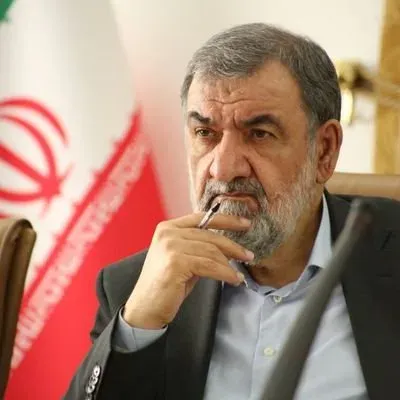
Mohsen Rezaei , Secretary of Iran’s Supreme National Security Council , warned on 23 August that countries joining the US economic campaign against Iran would be treated as “enemies.” Tehran threatened to block oil exports through the Strait of Hormuz and the Persian Gulf if regional states side with the US.
Rezaei said the strait would remain closed until Washington honours a peace memorandum of understanding signed in June .
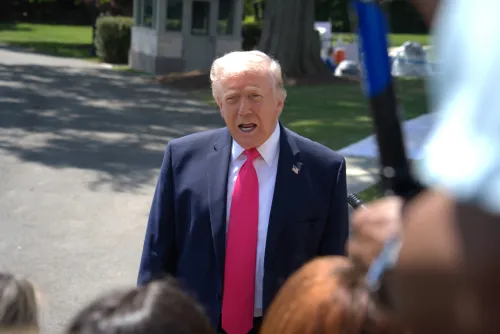
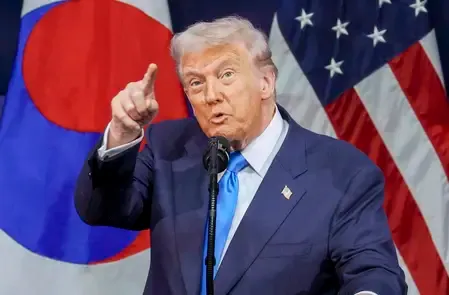
US President Donald Trump announced on Wednesday what he called “the most crushing economic operation ever taken” against any country supporting Iran .
Iranian Foreign Minister Seyed Abbas Araghchi posted on X that the US campaign is “bound to fail,” citing the failure of previous sanctions rounds.
Deputy Foreign Minister Kazem Gharibabadi accused the US of relabelling past failures as a new “economic war” to disguise its lack of progress.
A senior Iranian security official on Saturday, 23 August issued a stark warning to neighbouring countries and other states, cautioning them against aligning with the United States in its escalating “economic pressure campaign” against Tehran — and threatening to treat any such country as an “enemy.”
The Warning from Tehran
Mohsen Rezaei, Secretary of Iran’s Supreme National Security Council, told state broadcaster IRIB TV that Tehran would first pursue dialogue with any country considering participation in what he described as the US “economic war” against Iran. However, he made clear that if those countries pressed ahead regardless, Iran would move to target their interests.
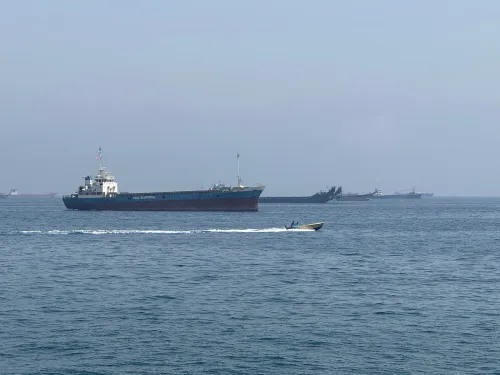
Rezaei went further, warning that Tehran would not permit oil exports through the Strait of Hormuz and the Persian Gulf if regional countries sided with the US pressure campaign. He added that the Strait of Hormuz would remain closed until Washington fulfilled its commitments under a peace memorandum of understanding reportedly signed between the two countries in June.
What Triggered the Escalation
Rezaei’s remarks came in direct response to US President Donald Trump’s announcement on Wednesday of what he called “the most crushing economic operation ever taken” against any country providing support to Iran. “This will be Economic Warfare and Isolation on an unprecedented scale,” Trump posted on Truth Social.
This is not the first time Washington has escalated pressure on Tehran — it follows years of sanctions rounds, “maximum pressure” campaigns, and demands for “unconditional surrender”, none of which, Iranian officials argue, have achieved their stated objectives.
Iran’s Foreign Ministry Pushes Back
Iranian Foreign Minister Seyed Abbas Araghchi dismissed the latest US move as destined for failure, drawing a pointed historical parallel on social media platform X. “14 years ago: ‘Most crippling sanctions in history.’ Failed. 8 years ago: ‘Maximum pressure.’ Failed. 5 months ago: ‘Unconditional surrender.’ Failed. Today: ‘Most crushing economic operation ever.’ Bound to fail,” Araghchi posted.
Iranian Deputy Foreign Minister for Legal and International Affairs Kazem Gharibabadi echoed the defiance, saying the US label of “economic war” was an attempt to obscure Washington’s previous failures. According to reports citing Iran’s official news agency, Gharibabadi noted that while the United States publicly claims Iran is “on the verge of collapse,” it is simultaneously reaching out to all its allies for assistance — a contradiction, he argued, that reveals the limits of US leverage.
The Strait of Hormuz: A Critical Pressure Point
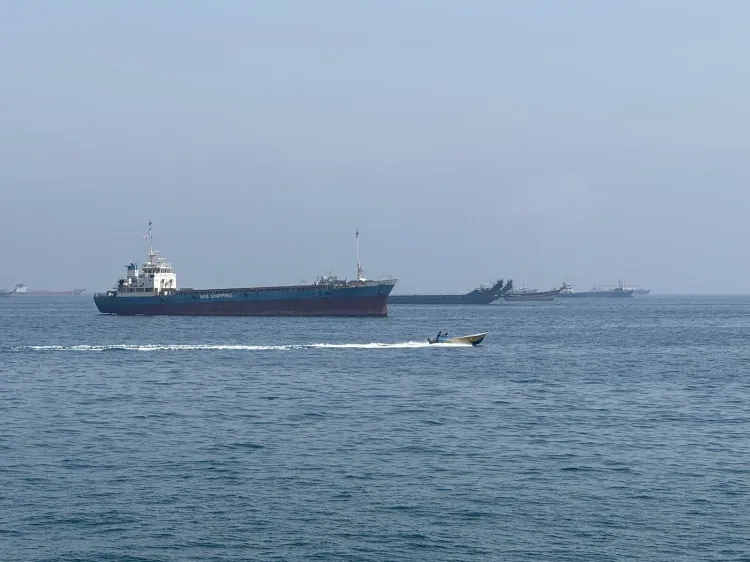
The threat to restrict passage through the Strait of Hormuz carries significant geopolitical weight. The strait is a critical chokepoint for global oil shipments, with roughly 20% of the world’s traded crude passing through it. Any disruption would have immediate consequences for energy markets and for regional economies dependent on Gulf shipping lanes.
This comes amid a broader pattern of Iranian brinkmanship around the strait during periods of heightened US-Iran tension, suggesting Tehran is calibrating its response to maximise pressure on third-party states while keeping direct military confrontation off the table — for now.
What Happens Next
The standoff raises the stakes for countries in the region and beyond that maintain economic ties with both Iran and the United States. With Tehran explicitly threatening to target the interests of nations that cooperate with the US campaign, governments in the Gulf, South Asia, and Central Asia face heightened pressure to declare their positions. How those countries respond in the coming weeks will likely shape the next phase of the US-Iran confrontation.
Point of View
But the context has shifted: Tehran is now explicitly naming third-party countries as potential targets, not just Washington. That is a meaningful escalation in diplomatic posture — designed to fracture the coalition the US is trying to build. The irony Gharibabadi highlights is real: a superpower simultaneously declaring economic victory and scrambling for allied support does not project strength. What mainstream coverage often misses is that the June peace memorandum — which Rezaei cited as a US commitment — has received almost no scrutiny; its terms, if real, could be the actual pivot point in this standoff, not the sanctions rhetoric on either side.
NationPress
8 Oct 2026
Frequently Asked Questions
What did Iran’s security chief warn on 23 August?
Mohsen Rezaei, Secretary of Iran’s Supreme National Security Council, warned that any country joining the US economic pressure campaign against Iran would be treated as an enemy. He also threatened to block oil exports through the Strait of Hormuz if regional states supported the US campaign.
What did US President Trump announce that triggered Iran’s response?
President Donald Trump announced on Wednesday what he described as ‘the most crushing economic operation ever taken’ against any country providing support to Iran, posting on Truth Social that it would constitute ‘Economic Warfare and Isolation on an unprecedented scale.’
Why is the Strait of Hormuz significant in this context?
The Strait of Hormuz is one of the world’s most critical oil shipping chokepoints, with roughly 20% of globally traded crude passing through it. Iran’s threat to close the strait could cause immediate disruptions to global energy markets and severely impact regional economies.
What is the June peace memorandum Rezaei referenced?
Rezaei stated that the Strait of Hormuz would remain closed until the United States fulfils its commitments under a peace memorandum of understanding reportedly signed between Tehran and Washington in June. The specific terms of this agreement have not been publicly detailed.
How has Iran’s foreign ministry responded to the latest US measures?
Foreign Minister Seyed Abbas Araghchi posted on X that the US campaign is bound to fail, citing the collapse of previous pressure campaigns including ‘maximum pressure’ and ‘unconditional surrender’ demands. Deputy Foreign Minister Kazem Gharibabadi called the ‘economic war’ label an attempt to conceal Washington’s past failures.