Iran vows preemptive strikes to stop enemy attacks, plans missile range expansion
Synopsis
Iran's Army has not just declared a new offensive doctrine — it has backed it with action, citing a preemptive missile strike on a US base in Jordan in late July as proof. With peace talks stalled since August and Tehran now publicly committing to extend missile range to 1,000 km, the post-ceasefire security order in West Asia looks increasingly fragile.
Key Takeaways
Iranian Army spokesman Mohammad Akraminia confirmed on 8 October 2026 that Iran will carry out preemptive strikes to prevent enemy aggression.
Iran has formally shifted its military doctrine from defensive to offensive , citing operations in Jordan and Iraq's Kurdistan region .
Iran is expanding its missile range to counter enemy forces deployed up to 1,000 kilometres from its coastline.
A ceasefire between Iran, the US, and Israel was reached on 8 April ; an MoU was signed on 18 June but negotiations for a final deal collapsed by 17 August .
Akraminia assessed that the US will not attempt a ground invasion of Iran, citing Tehran's strong deterrence posture.
Iranian Army spokesman Mohammad Akraminia declared on 8 October 2026 that Tehran will carry out preemptive military operations whenever necessary to prevent any 'aggression by the enemy' — a signal that Iran's strategic posture has shifted decisively from defence to offence. The remarks, published in an interview with the semi-official Fars News Agency, represent some of the most direct articulations of Iran's revised military doctrine since the ceasefire earlier this year.
A Doctrine Shift: From Defence to Offence
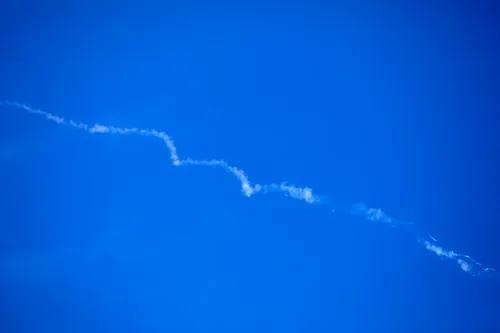
Akraminia stated that Iran has formally changed its military doctrine from a defensive to an offensive orientation and has already applied it in its recent conflict with the United States and Israel. He cited a missile strike against a US base in Jordan in late July as a concrete example of the new approach in action, arguing that the strike was preemptive in nature and effectively 'wrested the initiative from them and left them unable to take any action.'
He stressed that preemptive operations remain 'legitimate' as long as they adhere to principles of necessity, urgency, and proportionality. Additional operations cited under the new doctrine include several missile and drone attacks against bases of counter-revolutionary and separatist groups in Iraq's semi-autonomous Kurdistan region.
Missile Range and Precision: Iran's Next Military Build-Up
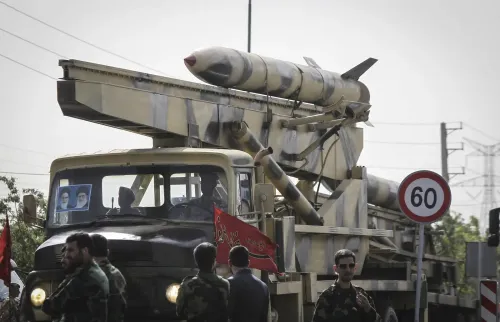
Akraminia revealed that Iran's Army has now formally decided to increase the range of its missiles, following lessons drawn from the recent war. 'In this war, we came to the conclusion that we must definitely increase the range of our missiles, and we have now embarked on that path,' he said.
He explained the rationale: the 'enemy' has repositioned its forces at distances of up to 1,000 kilometres from Iran's coastline, necessitating longer-range strike capabilities. Beyond range, Akraminia noted that Iran has already made significant gains in missile speed and precision, and that future generations of missiles will be both faster and more accurate.
No Ground Invasion, Iran Assesses
On the prospect of a US ground incursion into Iranian territory, Akraminia was unequivocal: 'My assessment is that the Americans will not dare launch a ground invasion.' The statement reflects Tehran's broader confidence in its deterrence posture, even as post-ceasefire negotiations with Washington remain stalled.
Background: War, Ceasefire, and a Stalled Peace Deal
The context for these statements is a conflict that erupted on 28 February, when Israel and the United States launched joint strikes on Tehran and other Iranian cities. Iran responded with waves of missile and drone attacks targeting Israeli and US assets across the region, while also tightening its grip on the strategically vital Strait of Hormuz.
A ceasefire came into effect on 8 April. On 18 June, Iran and the United States signed a memorandum of understanding (MoU) to end hostilities across all fronts, with negotiations on a final agreement scheduled to conclude by 17 August. Those talks failed to produce sufficient progress, and tensions have continued to escalate, leaving the region's security outlook deeply uncertain.
Akraminia's interview suggests that, far from winding down, Iran is accelerating its military modernisation — a posture that will weigh heavily on any renewed diplomatic effort.
Point of View
Arriving precisely when US-Iran diplomatic talks have ground to a halt. The missile-range announcement is particularly pointed: targeting forces 1,000 km offshore is a direct message to US carrier groups in the region. What mainstream coverage underplays is the structural fragility of the June MoU: an agreement that set a 60-day deadline, missed it, and has produced no visible fallback mechanism. Tehran appears to be using military posturing to compensate for diplomatic stagnation — a pattern that historically raises the risk of miscalculation on both sides.
NationPress
8 Oct 2026
Frequently Asked Questions
What did Iran's Army spokesman say about preemptive strikes?
Iranian Army spokesman Mohammad Akraminia said on 8 October 2026 that Iran will carry out preemptive military operations if necessary to prevent aggression, and that such strikes are 'legitimate' when they meet the principles of necessity, urgency, and proportionality. He cited a missile strike on a US base in Jordan in late July as an example already carried out under Iran's new offensive doctrine.
How has Iran's military doctrine changed?
Iran has shifted from a defensive to an offensive military doctrine, according to Akraminia. The new posture authorises preemptive strikes and has already been applied in operations against US and Kurdish separatist targets in the region.
Why is Iran expanding its missile range?
Iran says the 'enemy' has moved its forces up to 1,000 kilometres from Iranian coastlines, making longer-range missiles a strategic necessity. Akraminia confirmed that Iran has begun work on extending range and has already upgraded missile speed and precision, with further improvements planned.
What is the current status of the Iran-US ceasefire and MoU?
A ceasefire was reached on 8 April, and Iran and the United States signed a memorandum of understanding on 18 June to end hostilities. However, negotiations for a final agreement, due by 17 August, failed to make sufficient progress, leaving the situation unresolved and tensions elevated.
Does Iran expect a US ground invasion?
Akraminia said he does not believe the United States will attempt a ground invasion of Iran, stating that 'the Americans will not dare launch a ground invasion.' He framed this as a reflection of Iran's deterrence capability.