Iran's enriched uranium stockpile off the table in US talks, says official
Synopsis
A senior Iranian security official has publicly confirmed that the country's enriched uranium stockpile is not even on the table in ongoing indirect talks with the US — a significant signal that the two sides remain far from a comprehensive nuclear deal, even as Iran's Foreign Ministry claims progress on other issues and references a 60-day framework tied to a 14-article memorandum.
Key Takeaways
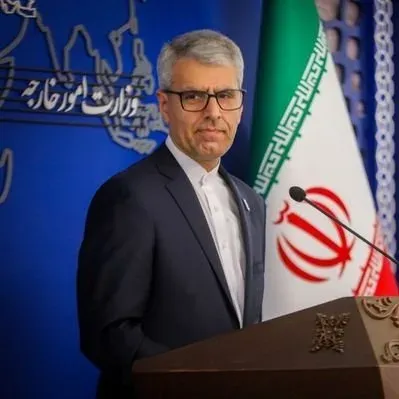
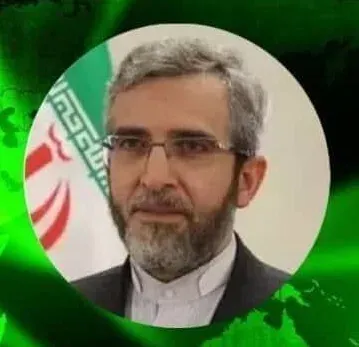
Ali Baqeri , Deputy Secretary of Iran's Supreme National Security Council , said on 27 May that Iran's enriched uranium stockpile is 'not on the agenda' of current US talks.
Iran and the US have not yet reached agreement on the reopening of the Strait of Hormuz , according to Baqeri.
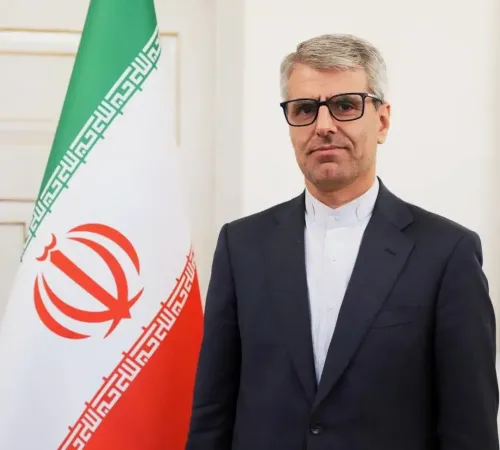
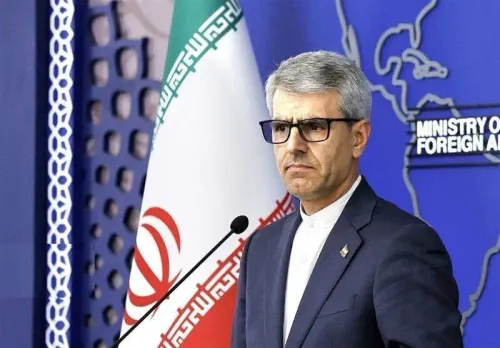
Foreign Ministry spokesperson Esmaeil Baqaei said earlier this week that a 'large portion' of issues have been resolved, but no signing timeline has been set.
Baqaei cited US internal contradictions — including resignations and congressional opposition — as complicating factors in the negotiations.
A 60-day framework is reportedly in place to discuss a 14-article memorandum , focused on ending the war rather than nuclear specifics, per Baqaei.
Ali Baqeri, Deputy Secretary of Iran's Supreme National Security Council, stated on Wednesday, 27 May that Iran's enriched uranium stockpile is not among the subjects under discussion in the ongoing indirect talks with the United States. Baqeri made the remarks on the sidelines of the First International Security Forum in Moscow, according to local media reports.
What Baqeri Said in Moscow
Speaking to reporters at the Moscow forum, Baqeri said discussions about Iran's enriched uranium reserves 'are not on the agenda of the talks.' He also indicated that Iran and the US have not yet reached a final agreement on the reopening of the Strait of Hormuz, according to reports citing Ria Novosti and Tasnim News Agency.
When asked about negotiations on maritime transit in the region, Baqeri said, 'Until we agree on all issues, we consider that we have not agreed on anything.' He confirmed that indirect communications between the two sides remain ongoing but declined to share further details on the nature or venue of those contacts.
Context: Tensions in the Persian Gulf
Baqeri's remarks come amid sustained diplomatic activity following a period of heightened tensions in and around the Persian Gulf and the Strait of Hormuz, linked to conflict involving the US, Israel, and Iran. The strategic waterway handles a significant share of global oil transit, making any agreement — or breakdown — on its status consequential for energy markets worldwide.
Iran's Foreign Ministry Signals Partial Progress
Earlier this week, on Monday, Iran's Foreign Ministry spokesperson Esmaeil Baqaei said a conclusion had been reached on 'a large portion' of issues under discussion with the US, though no specific timeframe had been set for finalising any understanding. Baqaei cautioned that 'no one can claim that the signing of an agreement is imminent.'
Baqaei pointed to what he described as inconsistent political behaviour in Washington, saying that 'contradictory stances within hours' complicate the negotiation process. He cited several resignations, congressional opposition, public opinion, and internal contradictions in the US as factors that have, in his assessment, created space for the influence of 'certain actors, including those from the Israeli regime.'
The 60-Day Framework and Nuclear Details
On the question of a 60-day framework reportedly under discussion, Baqaei said the plan is to address certain details regarding a memorandum and related issues within that period, noting that one topic is connected to nuclear matters. However, he stressed that Iran 'is not discussing nuclear details at this stage' and that the 14-article memorandum in question is focused on ending the war rather than nuclear specifics.
Iran has maintained that protecting its national interests is the paramount consideration, and that any outcome will be announced only after it is achieved. With both sides publicly signalling partial progress while flagging unresolved gaps, the trajectory of negotiations remains uncertain.
Point of View
And likely more fragile, than either side's public statements imply. Iran's insistence on an 'all or nothing' posture ('until we agree on all issues, we have agreed on nothing') is a classic maximalist negotiating signal, but it also raises the risk of a collapse if any single issue stalls. Meanwhile, Tehran's pointed references to US internal dysfunction — resignations, congressional opposition, Israeli influence — read less as diplomatic commentary and more as a pre-emptive narrative for a potential breakdown. The 14-article memorandum focused on 'ending the war' rather than nuclear matters suggests the two sides may be attempting to sequence a ceasefire before tackling the harder nuclear file, a sequencing that has historically been difficult to sustain.
NationPress
11 Oct 2026
Frequently Asked Questions
What did Iran's Ali Baqeri say about enriched uranium in US talks?
Ali Baqeri, Deputy Secretary of Iran's Supreme National Security Council, said on 27 May that discussions about Iran's enriched uranium reserves 'are not on the agenda of the talks' with the US. He made the remarks at the First International Security Forum in Moscow.
Have Iran and the US reached any agreement on the Strait of Hormuz?
No. Baqeri stated that Iran and the US have not yet reached a final agreement on the reopening of the Strait of Hormuz. He added that until all issues are agreed upon, Iran considers nothing agreed.
What progress has been made in Iran-US indirect talks?
Iran's Foreign Ministry spokesperson Esmaeil Baqaei said on Monday that a conclusion has been reached on a large portion of issues, but no signing timeline has been set and no agreement is imminent. Indirect communications between the two sides remain ongoing.
What is the 60-day framework mentioned in the Iran-US talks?
According to Baqaei, the 60-day framework is intended to discuss details of a 14-article memorandum and related issues, including one topic connected to nuclear matters. However, he stressed that Iran is not discussing nuclear details at this stage and that the memorandum is focused on ending the war.
Why does Iran say US political behaviour complicates negotiations?
Baqaei cited what he described as contradictory US stances within hours, alongside internal factors such as resignations, congressional opposition, and the influence of actors including those from the Israeli regime. He characterised decision-making in Washington as disorganised, which he said complicates any negotiation process.