Oil tanker EL GAIA explodes on naval mines in Strait of Hormuz
Synopsis
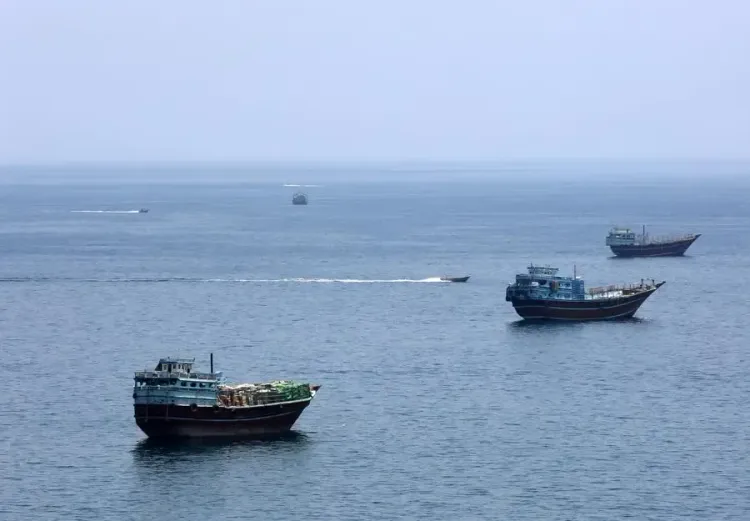
A super oil tanker has been destroyed by naval mines in the Strait of Hormuz — a waterway Iran's IRGC says it now controls and has effectively closed to 'unauthorised' traffic. With insurers warned off, a US drone already struck, and global oil flows through the strait at risk, the incident signals a sharp new phase in the Iran-US standoff at one of the world's most critical energy chokepoints.
Key Takeaways
Super tanker EL GAIA exploded and caught fire after striking naval mines in the Strait of Hormuz on 15 September 2026 .
Iran's IRGC Navy said the vessel was attempting an 'illegal' southern route and was fully engulfed after firefighting efforts failed.
Iran's Persian Gulf Strait Authority (PGSA) formally warned insurance companies, P&I clubs, and classification societies against servicing vessels on its 'violating' ships list.
Earlier this month, the IRGC said it struck a US Saildrone Explorer USV at the strait's entrance, describing it as on an 'aggressive mission.' The strait has been under Iranian restriction since US-Israeli strikes on Iran on 28 February , with simultaneous US naval blockade targeting Iranian-bound vessels.
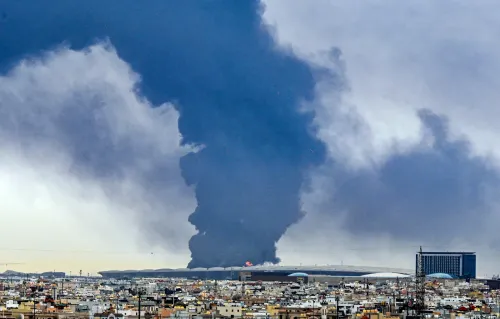
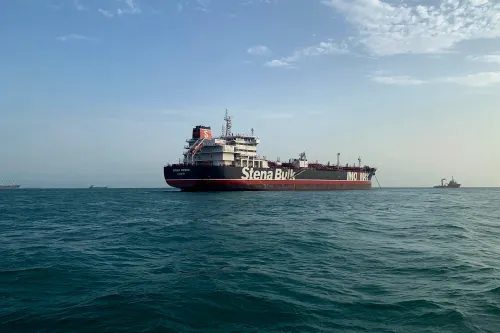
A super oil tanker identified as EL GAIA exploded and caught fire in the Strait of Hormuz on 15 September 2026 after striking naval mines while attempting to cross the waterway via a route Iran's Islamic Revolutionary Guard Corps (IRGC) has designated as 'forbidden,' the IRGC Navy said. The vessel was fully engulfed in flames after efforts to contain the fire proved unsuccessful, according to a statement on the IRGC's official news outlet Sepah News.
What Happened to the Tanker
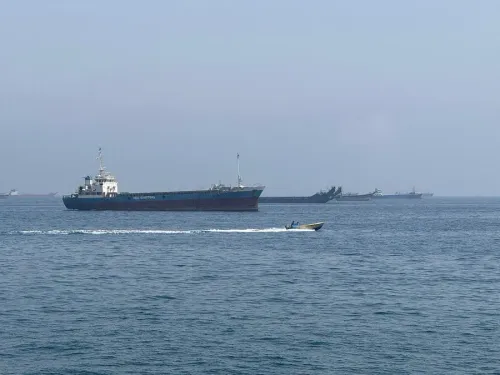
The EL GAIA was reportedly attempting to navigate the southern corridor of the Strait of Hormuz — a route Iran has declared off-limits since restricting passage through the waterway following US-Israeli strikes on Iran on 28 February. The IRGC Navy stated that prior warnings had been issued about the dangers of using what it termed the 'illegal' route. According to the statement, fire-fighting efforts were futile and the entire vessel was consumed by flames.
Iran's Warnings to Shipping Industry
Earlier on the same day, Iran's Persian Gulf Strait Authority (PGSA) — the body overseeing maritime traffic in the strait — warned insurance companies, protection and indemnity (P&I) clubs, and classification societies against servicing vessels on its updated list of 'violating' ships. In a post on social media platform X, the PGSA stated these entities 'are warned to refrain from providing services to these vessels to avoid consequences arising from dealing with them.' The warning significantly raises the commercial risk for any insurer or classification body servicing ships that Iran deems to be in violation.
IRGC's Earlier Strike on US Drone
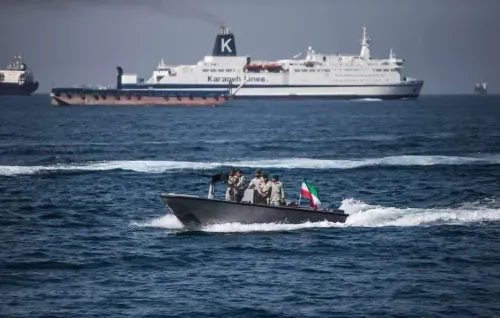
The tanker incident follows a separate escalation earlier this month, when the IRGC said its naval forces struck a US unmanned surface vehicle (USV) of the Saildrone Explorer type at the strait's entrance, describing it as being on an 'aggressive mission.' The IRGC noted that Saildrone Explorer USVs were previously deployed in the region by the US Fifth Fleet and Task Force 59, headquartered in Bahrain, adding that the US naval base in Bahrain had been targeted in Iranian strikes and that the USVs are now allegedly operated by a unit based in Khasab, Oman.
Broader Context: Strait Under Tension
The Strait of Hormuz — through which an estimated 20% of global oil supply transits — has been a flashpoint since Tehran moved to restrict passage following the February strikes. US forces have simultaneously imposed a naval blockade targeting vessels travelling to or from Iranian ports, creating a dangerous dual-blockade scenario in one of the world's most critical energy chokepoints. The IRGC has repeatedly stated that the strait 'remains closed and under the control of Iran's naval forces,' and warned that 'any hostile presence in the strategic waterway will be targeted.' The destruction of the EL GAIA marks a significant escalation in physical consequences for commercial shipping in the region.
What Comes Next
With a super tanker now destroyed and insurers formally warned off servicing vessels Iran classifies as violators, the commercial shipping industry faces acute pressure to reroute around the Cape of Good Hope — adding weeks of transit time and significantly higher freight costs. Energy markets are expected to react to the news. The incident is also likely to intensify diplomatic pressure on the United States and its allies to clarify the legal status of the blockade and Iran's mine-laying activities under international maritime law.
Point of View
Mined waterway, not a global commons. What mainstream coverage often underweights is the insurance dimension: once P&I clubs and classification societies pull back, commercial shipping effectively self-enforces Iran's blockade without a single additional Iranian action. The dual-blockade scenario — Iran restricting inbound traffic, the US targeting Iranian-bound vessels — creates a legal and operational vacuum that international maritime law has no ready framework for. Energy markets have so far priced in modest risk; a super tanker on fire may change that calculus sharply.
NationPress
15 Sept 2026
Frequently Asked Questions
What happened to the oil tanker EL GAIA in the Strait of Hormuz?
The super tanker EL GAIA exploded and caught fire on 15 September 2026 after striking naval mines while attempting to cross the Strait of Hormuz via a southern route Iran's IRGC has declared forbidden. According to the IRGC Navy, firefighting efforts failed and the vessel was completely engulfed in flames.
Why is the Strait of Hormuz currently restricted?
Iran restricted passage through the Strait of Hormuz following US-Israeli strikes on Iran on 28 February. The IRGC has since declared the strait closed and under its control, warning that any 'hostile presence' will be targeted. Simultaneously, US forces have imposed a naval blockade on vessels heading to or from Iranian ports.
What did Iran's PGSA warn insurers about?
Iran's Persian Gulf Strait Authority warned insurance companies, P&I clubs, and classification societies to stop providing services to vessels on its updated list of 'violating' ships, cautioning them of 'consequences' for non-compliance. The warning was issued via an official post on social media platform X on 15 September 2026.
Did Iran strike a US drone in the Strait of Hormuz?
Yes. Earlier in September 2026, the IRGC said its naval forces struck a US Saildrone Explorer-type unmanned surface vehicle at the entrance to the strait, describing the drone as being on an 'aggressive mission.' The IRGC said such drones, previously used by the US Fifth Fleet, are now operated from a unit based in Khasab, Oman.
How does the EL GAIA incident affect global oil supplies?
The Strait of Hormuz is a transit point for roughly 20% of global oil supply. The destruction of a super tanker and formal warnings to insurers are likely to deter commercial shipping from using the route, potentially forcing vessels onto longer alternative paths and raising freight costs. Energy markets are expected to react to the incident.