IRGC Navy warns ships: only Iran-approved Hormuz routes are safe
Synopsis
Even as an Iran-US ceasefire MoU and an Iran-Oman joint working group try to normalise shipping through the Strait of Hormuz, the IRGC Navy has drawn a hard line: only routes announced by Tehran are legal. With 11,000 seafarers stranded and a 60-day free-passage window ticking, the gap between diplomatic agreements and on-water enforcement is the critical variable to watch.
Key Takeaways
Iran's IRGC Navy declared on 25 June that only Iran-designated routes through the Strait of Hormuz are authorised; all others are 'very dangerous and prohibited.' The warning followed the Oman Maritime Security Centre issuing its own outbound-shipping guidelines under an IMO arrangement.
Under an Iran-US MoU signed on 18 June , Iran committed to free commercial passage through the strait for 60 days .
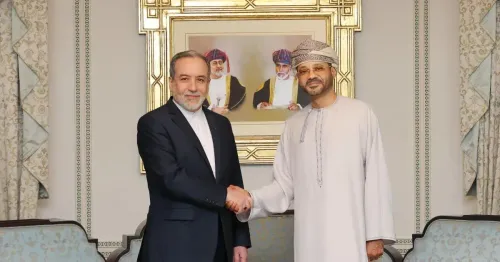
Iran and Oman agreed on Tuesday to form a joint working group on future Hormuz navigation administration.
The IMO announced an evacuation plan for more than 11,000 seafarers stranded in the strait, with safety guarantees verified by Secretary-General Arsenio Dominguez .
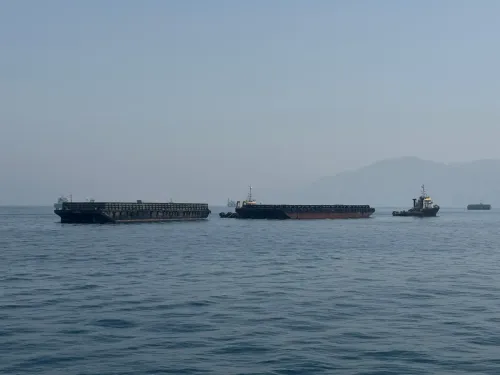
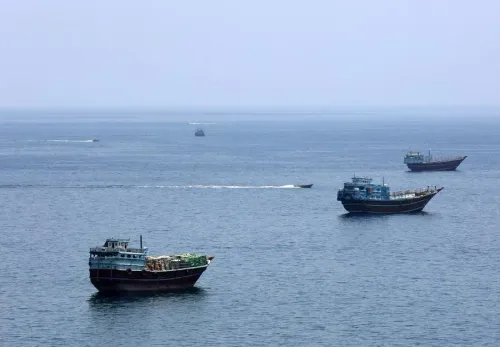
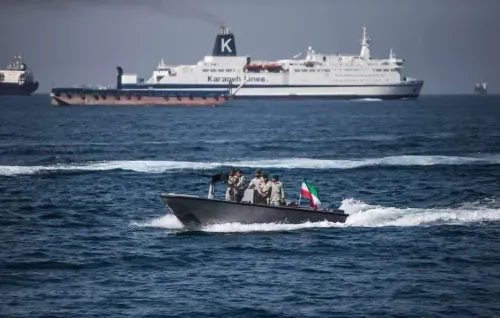
Iran's Islamic Revolution Guard Corps (IRGC) Navy on Thursday, 25 June declared that the only authorised passages for vessels transiting the Strait of Hormuz are those formally designated by Iranian authorities — warning that movement through any other route is 'very dangerous and prohibited.' The statement, published on the IRGC's official outlet Sepah News, came hours after the Oman Maritime Security Centre released its own outbound-shipping guidelines for the strait under an arrangement with the International Maritime Organisation (IMO).
The IRGC's Warning
The IRGC Navy was unambiguous in its language. 'Everyone must know that the only routes for passage through the strait are those announced by Iran, and traffic outside those routes is very dangerous and prohibited, and must be strictly avoided,' the statement read. The declaration effectively asserts Tehran's primacy over navigation rules in one of the world's most strategically critical waterways, through which roughly 20% of global oil trade passes.
Context: The Iran-US Memorandum and Oman's Role
The announcement follows a memorandum of understanding (MoU) signed on 18 June between Iran and the United States to end the war, under which Tehran committed to facilitating safe commercial passage through the strait at no charge for 60 days. On Tuesday, Iran and Oman issued a joint statement confirming the formation of a 'joint working group' to negotiate the future administration of navigation in the Strait of Hormuz, reaffirming both nations' commitment to vessels' safe passage in accordance with international law.
IMO's Evacuation Operation
Separately, the IMO announced a plan to evacuate more than 11,000 seafarers still stranded in the Strait of Hormuz. IMO Secretary-General Arsenio Dominguez confirmed on Tuesday that the organisation had 'secured the necessary safety guarantees and verified safe navigation conditions' to support the operation. The evacuation will be carried out in close cooperation with Iran, Oman, other regional states, and the maritime industry, Dominguez said.
What This Means for Shipping
The IRGC's statement introduces a layer of jurisdictional tension: while the Oman-IMO guidelines and the Iran-US MoU create one framework for passage, Tehran is simultaneously asserting sole authority over which physical routes are permissible. For commercial shipping operators, this means any vessel transiting the strait must align its course with Iran-published corridors — or risk being flagged as violating Iranian maritime rules. The situation remains fluid, with the joint Iran-Oman working group yet to formalise long-term navigation protocols.
Point of View
Including the IMO or Oman, can define Hormuz passage rules without Iranian sanction. This creates a structural ambiguity: the Iran-US MoU guarantees free passage in principle, but the IRGC controls enforcement in practice. Historically, such gaps between diplomatic text and IRGC behaviour have been where incidents occur. The 60-day free-passage window is effectively a test of whether Tehran's political commitments can restrain its naval arm — a test that has failed before.
NationPress
24 Sept 2026
Frequently Asked Questions
What did the IRGC Navy announce about the Strait of Hormuz?
The IRGC Navy declared on 25 June that the only authorised shipping routes through the Strait of Hormuz are those formally announced by Iranian authorities, warning that passage through any other route is 'very dangerous and prohibited.' The statement was published on the IRGC's official outlet Sepah News.
Why did the IRGC issue this warning now?
The warning came after the Oman Maritime Security Centre released its own outbound-shipping guidelines for the strait under an arrangement with the IMO. The IRGC appeared to be asserting Tehran's primacy over navigation rules in response to those parallel guidelines.
What is the Iran-US MoU on Hormuz passage?
Iran and the United States signed a memorandum of understanding on 18 June to end the war, under which Iran committed to facilitating safe commercial passage through the Strait of Hormuz at no charge for 60 days. The IMO's seafarer evacuation operation is also being conducted under this framework.
What is the Iran-Oman joint working group?
On Tuesday, Iran and Oman issued a joint statement announcing the formation of a 'joint working group' to negotiate the future administration of navigation in the Strait of Hormuz. Both countries reaffirmed their commitment to ensuring vessels' safe passage in accordance with international law.
How many seafarers are stranded in the Strait of Hormuz?
More than 11,000 seafarers remain stranded in the Strait of Hormuz. The IMO announced an evacuation plan on Tuesday, with Secretary-General Arsenio Dominguez confirming that safety guarantees and verified navigation conditions are in place for the operation.