Iran's 'silent' economic war harder than missiles, says President Pezeshkian
Synopsis
Iranian President Pezeshkian openly called the US-led economic pressure on Iran a 'silent war harder than missiles' — even as the IRGC claimed it destroyed a US MQ-9 drone and reported two oil tankers catching fire on naval mines in the Strait of Hormuz within hours of each other, marking one of the sharpest single-day escalations in the US-Iran standoff in recent months.
Key Takeaways
Iranian President Masoud Pezeshkian on 21 November 2026 called the US-led economic pressure a 'silent war far more difficult than missiles.' Pezeshkian said the 'enemy' had failed to cause famine or goods shortages, insisting Iran's 'wheels of production continue to turn.' Interior Ministry spokesman Ali Zeinivand said a US naval blockade and land-air restrictions had not stopped Iran's trade transactions.
The IRGC reported two oil tankers catching fire after hitting naval mines near the Strait of Hormuz — one near Oman's Al Ghanam Island , another near Khasab port — within hours of each other.
The IRGC claimed its air defence systems destroyed a US MQ-9 drone west of the strait, alleging it was providing aerial support to vessels attempting 'unauthorised' passage.
The IRGC warned any vessel using 'unauthorised' routes through the strait without coordination would face 'decisive' consequences.
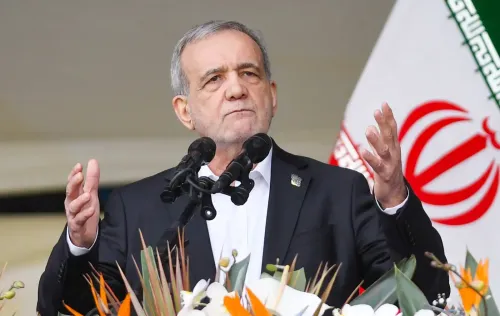
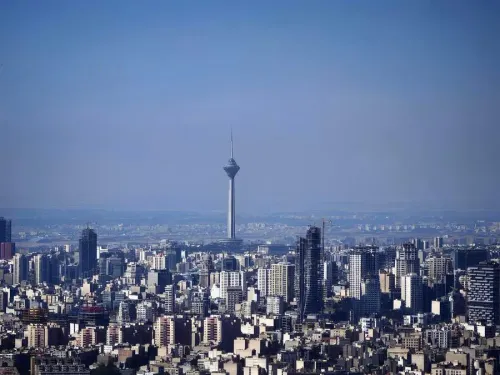
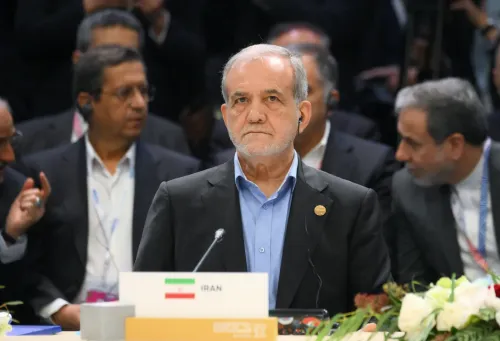
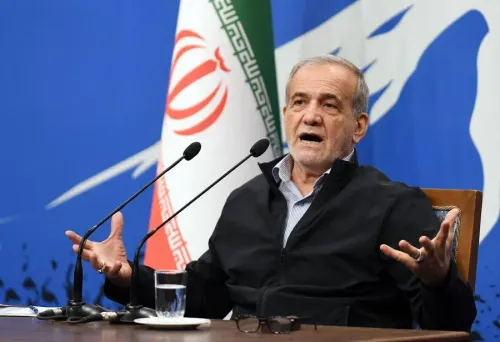
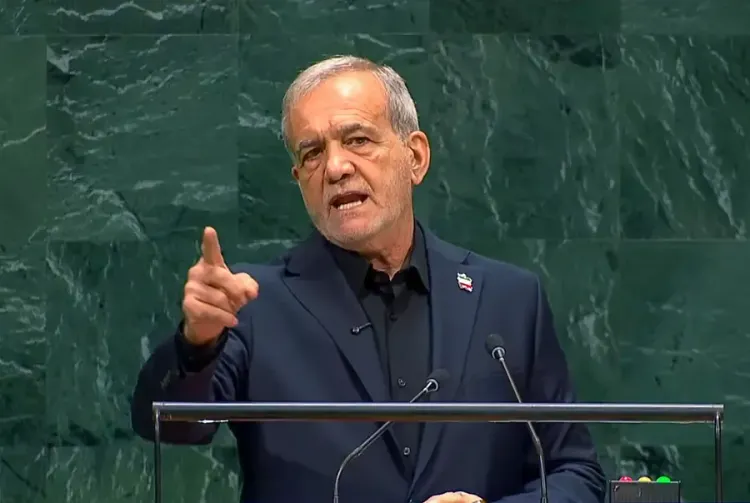
Iranian President Masoud Pezeshkian on Saturday, 21 November 2026 declared that Iran is locked in a 'silent' economic war that he described as 'far more difficult than a conflict involving the launching of missiles and destruction,' according to the country's official news agency IRNA. The remarks came at a conference in Tehran and signal a rare public acknowledgement of the severity of economic pressure on the Islamic Republic.
Pezeshkian's Warning at Tehran Conference
Pezeshkian said the 'enemy' — a term Iranian officials routinely use to refer to the United States — had anticipated triggering a famine and domestic goods shortage in Iran, but had failed to achieve those objectives. 'Iran's wheels of production continue to turn,' he said, while stressing that the economic war waged by the US was 'certainly not simple.' He called for greater national unity and solidarity in the face of what he termed 'enemy invasions and an unequal war,' and noted that Iran's security and military forces had responded with strength.
Border Restrictions and Trade Disruptions
Separately, Iranian Interior Ministry spokesman Ali Zeinivand on Saturday pointed to what he characterised as a US anti-Iran naval blockade alongside land and aerial restrictions, stating that these measures had failed to halt the country's trade transactions. Zeinivand said the Interior Ministry is in active consultation with neighbouring countries on border and trade issues, expressing hope that existing problems would be resolved. He added that temporary closures of borders with neighbouring states had not caused serious disruptions in Iran's border trade.
IRGC Reports Oil Tanker Incidents in Strait of Hormuz
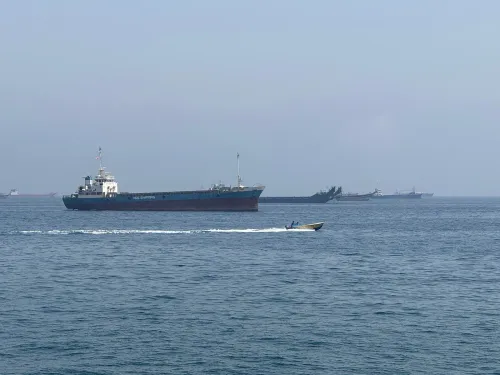
In a sharp escalation, Iran's Islamic Revolution Guard Corps (IRGC) said Saturday that a second oil tanker it labelled 'violating' caught fire after hitting naval mines approximately 3 km off Oman's Al Ghanam Island, south of the Strait of Hormuz. The IRGC made the announcement through its official outlet Sepah News, citing its navy. This followed a separate incident late Friday in which another tanker reportedly caught fire after striking naval mines near Oman's Khasab port — making it the second such incident within hours.
US Drone Downed, IRGC Issues Stern Warning
The IRGC further claimed its aerospace division's air defence systems had targeted and destroyed a US MQ-9 drone west of the Strait of Hormuz, alleging the unmanned aircraft had been 'tasked with providing crossing vessels aerial support during the operations.' The Corps accused the US Army of providing extensive aerial coverage to facilitate what it described as the 'unauthorised' transfer of cargoes and fuel smuggling through the strait. In a formal warning, the IRGC stated that any vessel navigating the Strait of Hormuz through 'unauthorised' routes without coordinating with its traffic control centre, or with navigation systems deactivated, would be considered to be in 'violation and cooperation with the aggressive US military' — and would be dealt with 'decisively.'
Strategic Stakes at the Strait of Hormuz
The Strait of Hormuz remains one of the world's most critical oil shipping chokepoints, with roughly 20% of global oil trade passing through it. Any sustained disruption has immediate consequences for global energy prices and supply chains. This comes amid months of heightened US-Iran tensions, with Washington maintaining sweeping sanctions on Tehran and Iran increasingly asserting maritime authority in the strait. Notably, the IRGC's claim of downing a US drone — if confirmed — would mark a significant escalation in the confrontation between the two sides.
Point of View
And a credible exchange of fire between US and Iranian forces there would immediately move energy markets and draw in Gulf states. What mainstream coverage underweights is the domestic dimension — Pezeshkian's call for 'national unity' reflects a leadership under pressure to demonstrate resilience to its own population, not just the outside world.
NationPress
21 Nov 2026
Frequently Asked Questions
What did Iranian President Pezeshkian mean by a 'silent' economic war?
President Masoud Pezeshkian used the phrase to describe the sustained US-led economic pressure — including sanctions and trade restrictions — on Iran, calling it 'far more difficult than a conflict involving the launching of missiles and destruction.' He made the remarks at a conference in Tehran on 21 November 2026, insisting that despite the pressure, Iran's domestic production had continued.
What happened to oil tankers in the Strait of Hormuz on 21 November 2026?
Iran's IRGC reported that two oil tankers it labelled 'violating' caught fire after hitting naval mines near the Strait of Hormuz within hours of each other — one approximately 3 km off Oman's Al Ghanam Island, and another near Oman's Khasab port late Friday. The IRGC alleged the vessels were attempting unauthorised passage facilitated by US aerial support.
Did Iran shoot down a US drone near the Strait of Hormuz?
The IRGC claimed on Saturday that its air defence systems targeted and destroyed a US MQ-9 drone west of the Strait of Hormuz, alleging the drone had been providing aerial support to vessels attempting unauthorised cargo transfers and fuel smuggling. The claim has not been independently verified.
How has Iran responded to US trade and naval restrictions?
Interior Ministry spokesman Ali Zeinivand said on Saturday that despite what he described as a US naval blockade and land-aerial restrictions, Iran's trade transactions had continued. He added that the Interior Ministry is in consultation with neighbouring countries on border and trade issues, and that temporary border closures had not seriously disrupted Iran's cross-border commerce.
Why is the Strait of Hormuz strategically significant?
The Strait of Hormuz is one of the world's most critical oil shipping chokepoints, through which roughly 20% of global oil trade passes. Any sustained disruption has immediate consequences for global energy prices and supply chains, making tensions there a matter of international concern well beyond the US-Iran bilateral relationship.