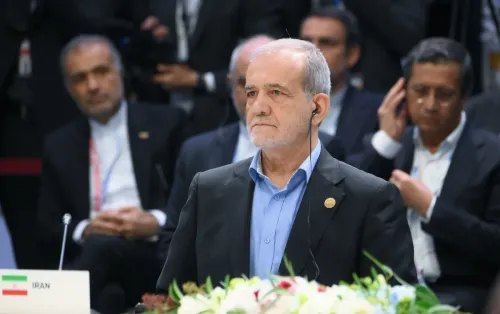
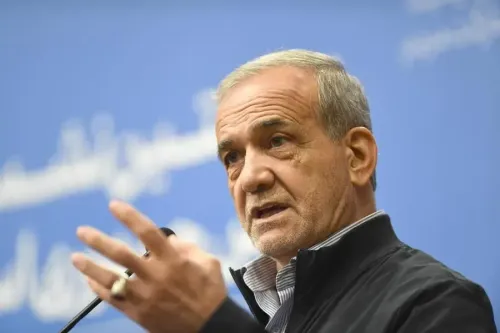
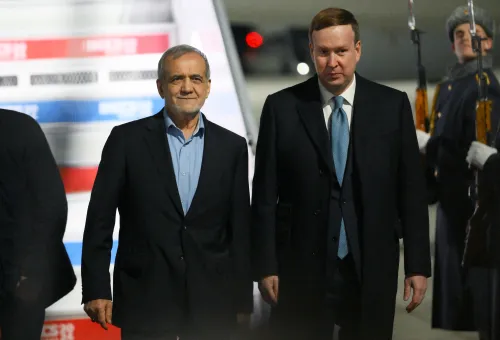
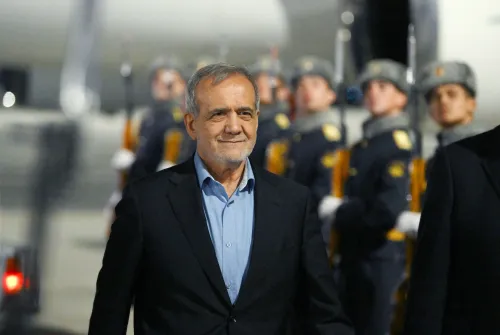
Iran's Pezeshkian says economic war objectives have failed amid US pressure
Synopsis
Iran's President Pezeshkian publicly declared on X that a sustained 'economic war' against his country has failed, even as US President Trump painted Iran as militarily and financially broken and predicted the conflict would end 'very quickly' — with oil prices set to 'drop like a rock.' Two leaders, one crisis, two radically opposite readings of who is winning.
Key Takeaways
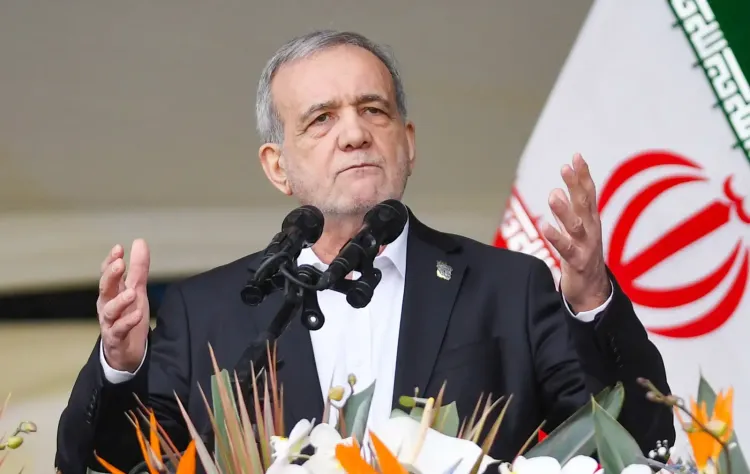
Iranian President Masoud Pezeshkian posted on X on 4 October that foreign efforts to achieve 'economic war' objectives against Iran have not succeeded.
Pezeshkian said his government had adopted a 'new arrangement' to manage the country's 'special conditions,' without specifying details.
US President Donald Trump claimed Iran faces 301 per cent inflation , a collapsed currency, and a defeated military.
Trump predicted the conflict with Iran would end 'very quickly' and that oil prices would 'drop like a rock' once it did.
The remarks come amid continuing geopolitical tensions and an intensified sanctions campaign targeting Tehran .
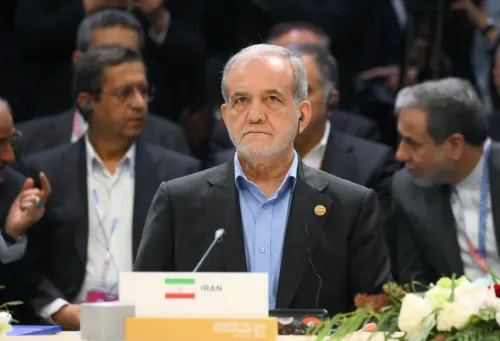
Iranian President Masoud Pezeshkian on 4 October declared that foreign efforts to cripple Iran through economic pressure have fallen short of their intended goals, asserting that his government had adopted a new framework to navigate what he called the country's 'special conditions.' The remarks came as Iran faces intensifying sanctions and geopolitical strain, with US President Donald Trump separately predicting the conflict with Iran would end 'very quickly.'
Pezeshkian's Defiant Stance
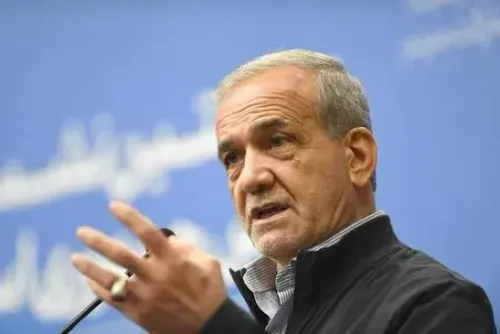
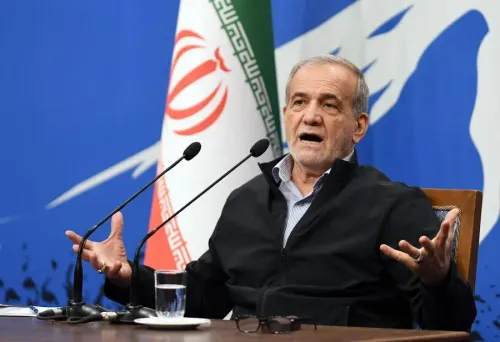
In a post on X, President Pezeshkian acknowledged that economic pressure on Iran had 'intensified' in recent months but credited the resilience of the Iranian people and government action for blunting the impact. He framed the situation explicitly as an 'economic war,' accusing unnamed adversaries of attempting to 'cut off the country's vital arteries.'
'The enemy's plan in recent months has been to cut off the country's vital arteries with the aim of pressuring the noble people of Iran. Economic pressure has intensified, but by the grace of God, with the accompaniment of the people and the measures taken by our colleagues in the government, we have not allowed the enemy's objectives in the economic war to be realized,' Pezeshkian posted.
Trump's Counter-Narrative
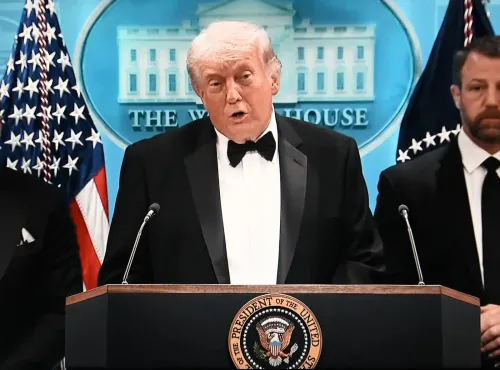
Speaking to reporters after arriving in Texas and during a visit to a Peterbilt Motors facility in Denton, US President Donald Trump offered a starkly different assessment. Trump portrayed Iran as militarily and economically hollowed out, claiming its navy, air force, and military had been 'defeated' and that the country was grappling with 301 per cent inflation and a near-collapsed currency.
'Iran will very soon be ending one way or the other,' Trump told reporters. 'It'll either just say, look, they have 301 per cent inflation. They have no money, they have no currency. Their military has been defeated, their navy is gone, their air force is gone, everything's gone.'
Trump also predicted that once the conflict concluded, global oil prices would 'drop like a rock' — a remark that will be closely watched by energy markets worldwide, including in India, which remains one of Iran's significant oil trade partners.
Geopolitical Context
Pezeshkian's remarks come amid continuing tensions surrounding an active conflict and a sustained campaign of economic sanctions targeting Tehran. The Iranian government has not specified what the 'new arrangement' to manage special conditions entails, leaving analysts to parse the statement for signals of policy shifts in currency management, trade routing, or barter arrangements with allied states.
Notably, this is not the first time Iranian leadership has publicly reframed economic hardship as a test of national resolve — a rhetorical posture that has historically served to consolidate domestic support while signalling to adversaries that pressure alone will not force concessions.
What to Watch
The divergence between Pezeshkian's defiance and Trump's prediction of imminent collapse sets up a high-stakes test of competing narratives. Oil markets, India's energy import calculus, and the broader trajectory of Iran-US tensions will all be shaped by how — and how quickly — this standoff resolves.
Point of View
Neither providing independently verifiable data. Pezeshkian's vague reference to a 'new arrangement' is a telling omission: if Iran had genuinely neutralised the pressure, there would be specifics. Trump's 301 per cent inflation figure, meanwhile, is striking but unattributed. For India, which has navigated Iran's oil trade through sanctions cycles before, the more consequential signal is Trump's oil-price prediction — a sharp drop in crude would reshape the energy import bill significantly, and New Delhi will be watching closely.
NationPress
4 Oct 2026
Frequently Asked Questions
What did Iranian President Pezeshkian say about the economic war on Iran?
President Masoud Pezeshkian said in an X post on 4 October that despite intensified economic pressure, his government — with the support of the Iranian people — had prevented adversaries from achieving their goals in what he described as an 'economic war.' He added that a 'new arrangement' had been adopted to manage the country's 'special conditions,' though he did not elaborate on its specifics.
What did Donald Trump say about Iran and oil prices?
Speaking to reporters in Texas on 4 October, US President Donald Trump claimed Iran's military had been defeated, its navy and air force were gone, and the country was facing 301 per cent inflation with no functioning currency. He predicted the conflict with Iran would end 'very quickly' and that global oil prices would 'drop like a rock' once it concluded.
Why do Iran-US tensions matter for India?
India is one of Iran's significant oil trade partners and has historically navigated sanctions cycles to manage energy imports. A sharp fall in global oil prices — as Trump predicted — would directly affect India's energy import bill and broader macroeconomic conditions, making the outcome of this standoff financially consequential for New Delhi.
What is the 'new arrangement' Pezeshkian referred to?
Pezeshkian did not specify what the 'new arrangement' entails. Analysts suggest it could relate to currency management, alternative trade routing, or barter arrangements with allied states, but the Iranian government has not provided further detail.
What is the broader context of Iran's economic pressure?
Iran has faced sustained international sanctions — primarily led by the United States — targeting its oil exports, banking system, and trade. The pressure has intensified in the current geopolitical cycle, with Iran's leadership repeatedly framing economic hardship as a test of national resilience rather than a sign of weakness.