Lebanon ceasefire 'fragile', says Israel military chief Eyal Zamir
Synopsis
Israel's military chief has called the Lebanon ceasefire ‘fragile’ just one day after it was declared, keeping IDF units on full combat readiness and claiming Hezbollah's command structure has taken severe hits. Meanwhile, US Vice President Vance is projecting cautious optimism from Iran nuclear talks in Switzerland — two high-stakes diplomatic threads that could unravel each other if Lebanon reignites.
Key Takeaways
IDF chief Eyal Zamir described the Lebanon ceasefire — declared on 20 June — as “fragile” in a statement on 21 June .
Zamir ordered senior commanders to maintain high readiness for the renewal of combat operations in southern Lebanon.
The IDF reportedly neutralised a significant tier of Hezbollah's mid-level command within several units over the preceding two days.
US Vice President JD Vance said negotiators had made “great progress” in Iran nuclear talks at a Swiss resort near Lake Lucerne .
Vance expressed confidence about the situation in Lebanon while acknowledging “disagreements” on approach with Prime Minister Benjamin Netanyahu .
Israel's military chief Eyal Zamir declared on Sunday, 21 June that the ceasefire announced in Lebanon the previous day remains “fragile,” according to an official statement from the Israel Defence Forces (IDF). The warning came as Israeli units continued operating in southern Lebanon and senior commanders were placed on high alert for a possible resumption of hostilities.
Zamir's Warning to Commanders
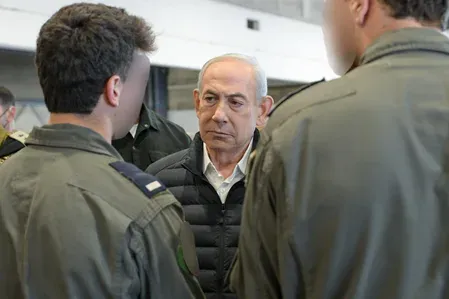
Speaking during a situation assessment with senior commanders of units deployed in southern Lebanon, Zamir stressed that the military must sustain a high level of readiness for the renewal of combat operations and the elimination of threats. He underscored that the IDF's primary objective remains the protection of communities in northern Israel.
“We are in the midst of a multi-front operation and continue to defend against Hezbollah,” Zamir said, signalling that the ceasefire had not translated into a drawdown of Israeli military posture.
Hezbollah's Reported Condition
Zamir claimed that Hezbollah has suffered a severe and significant blow and is currently in a very “difficult position.” He noted that over the preceding two days, the Israeli military had reportedly neutralised a significant tier of mid-level command within several Hezbollah units. The assertion, while unverified independently, points to a sustained Israeli campaign targeting the group's operational structure even as a ceasefire was nominally in effect.
Notably, this is not the first time Israel has declared a ceasefire while simultaneously maintaining offensive readiness in Lebanon — a pattern that has drawn scrutiny from regional observers and diplomats.
US Vice President Vance on Iran Talks and Lebanon
Meanwhile, US Vice President JD Vance said on Sunday that negotiators had already made “great progress” in talks with Iran at a Swiss resort overlooking Lake Lucerne. The senior delegations were meeting to discuss Tehran's nuclear programme and wider regional security issues.
“We’ve already made great progress over just the last few hours, and I expect that we’ll make additional progress in the hours to come,” Vance told reporters before the talks resumed.
Asked whether he had a message for Israeli Prime Minister Benjamin Netanyahu regarding Israel’s military operations in Lebanon, Vance remained measured but optimistic. “There, of course, are going to be sometimes disagreements about precisely how to get there, but I actually feel great about where we are in Lebanon. There’s still some additional wood to chop, but we’re going to keep on working,” he said.
Broader Regional Context
The Lebanon ceasefire and the Iran nuclear talks are unfolding simultaneously, reflecting the interlocked nature of the Middle East’s security architecture. Renewed fighting in Lebanon has the potential to derail diplomatic momentum on the Iran front, making the fragility Zamir described a concern that extends well beyond Israeli-Lebanese borders. This comes amid a broader US effort to stabilise the region ahead of what officials have described as a critical diplomatic window.
What to Watch
Whether the Lebanon ceasefire holds in the coming days will be a key indicator of whether broader diplomatic efforts — including the Iran talks in Switzerland — can gain traction. Any resumption of large-scale hostilities would likely reset negotiations and test the limits of US diplomatic leverage in the region.
Point of View
With Vance threading the needle between pressuring Netanyahu and preserving diplomatic momentum. What mainstream coverage underplays is that a ceasefire declared fragile by the very military observing it is, functionally, a ceasefire in name only — and that distinction matters enormously for what comes next in Lebanon and in Geneva.
NationPress
20 Sept 2026
Frequently Asked Questions
What did Israeli military chief Eyal Zamir say about the Lebanon ceasefire?
Zamir described the Lebanon ceasefire, declared on 20 June, as ‘fragile’ in an IDF statement on 21 June. He directed senior commanders to maintain full combat readiness for a possible resumption of fighting and continued elimination of threats in southern Lebanon.
What is the current status of Israeli operations in Lebanon?
Despite the ceasefire, the IDF reportedly continued operations in southern Lebanon. Zamir stated that Israeli forces had neutralised a significant tier of Hezbollah’s mid-level command across several units in the two days preceding his statement.
What did US Vice President JD Vance say about the Iran nuclear talks?
Vance said negotiators had made ‘great progress’ in talks with Iran at a Swiss resort overlooking Lake Lucerne on 21 June. He expressed confidence that further advances were achievable in the hours ahead, as senior delegations discussed Tehran’s nuclear programme and regional security.
Did Vance address Israel’s military actions in Lebanon?
Yes. When asked about a message for Prime Minister Netanyahu regarding Israel’s Lebanon operations, Vance acknowledged potential disagreements on approach but said he felt ‘great’ about where things stood, adding there was ‘still some additional wood to chop.’
Why does the Lebanon ceasefire matter for the Iran nuclear talks?
The two diplomatic tracks are closely linked — renewed fighting in Lebanon could undermine the broader regional security framework being negotiated in Switzerland. A collapse of the ceasefire would likely increase pressure on the Iran talks and complicate US efforts to stabilise the Middle East.