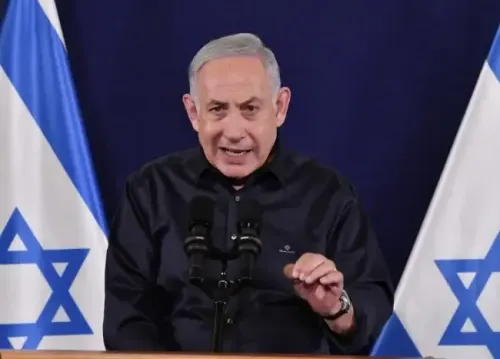
Israel election 2026: Exit polls show hung Knesset, Netanyahu and opposition tied
Synopsis
Israel's 2026 Knesset election has produced a political deadlock that defies easy resolution. Exit polls place Netanyahu and the opposition within one or two seats of each other, with neither bloc near the 61-seat majority threshold — and Israeli Arab parties, projected at 18 seats, now hold the balance of power in the most consequential Israeli election in a generation.
Key Takeaways
Exit polls project Netanyahu's bloc at 51–52 seats and the opposition at 49–51 seats — well below the 61-seat majority threshold in the 120-member Knesset .
Likud is projected as the single largest party with approximately 27 seats ; opposition leader Gadi Eisenkot's Yashar is forecast to win 21–22 seats .
Israeli Arab parties could collectively secure up to 18 seats , potentially acting as kingmakers in coalition talks.
Voter turnout reached 77.7% — the highest in 27 years , exceeding the 2022 figure by over seven percentage points .
The opposition declared victory after exit polls, but analysts say neither side has a clear route to forming a government.
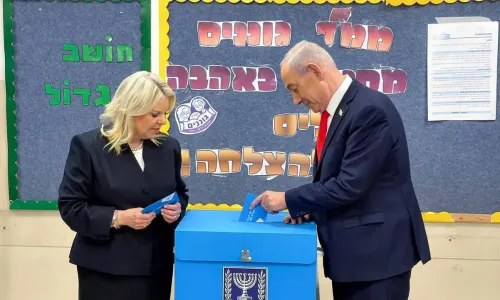
Israel's parliamentary election on 28 October 2026 has produced no clear winner, with exit polls indicating that both Prime Minister Benjamin Netanyahu's right-wing bloc and the opposition alliance seeking to unseat him have fallen short of the 61 seats required for a majority in the 120-member Knesset. The result sets the stage for what could be a prolonged and fractious coalition-building process.
What the Exit Polls Show
According to exit poll projections cited by The Jerusalem Post, Netanyahu's bloc was forecast to secure 51–52 seats, while the opposition bloc — comprising Yashar, B'Yachad, Yisrael Beytenu, and the Democrats — was projected to win 49–51 seats. Channels 11 and 13 placed both sides in a dead heat at 51 seats each, while Channel 12 gave Netanyahu's bloc a slight edge at 52 seats.
Despite the narrow gap, the opposition bloc declared victory shortly after the exit poll results were released — a claim that analysts cautioned was premature, given that neither side had a clear route to forming a government.
Key Players and Seat Projections
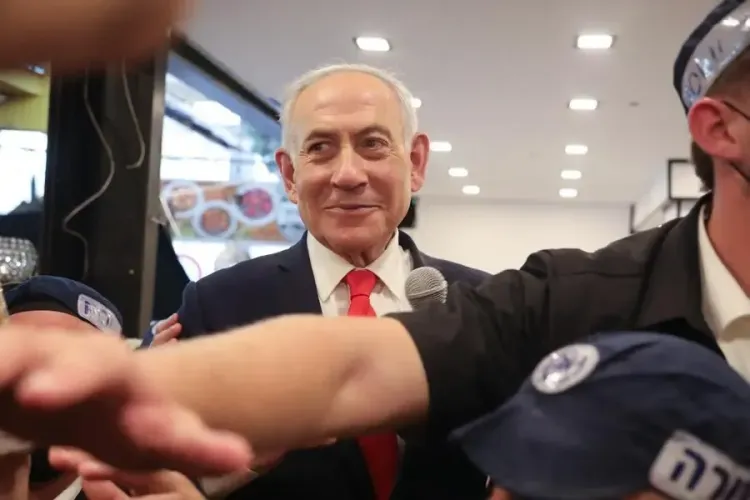
Netanyahu's Likud party was projected to remain the single largest party in the Knesset, with around 27 seats. The opposition is led by Gadi Eisenkot, a former Chief of Staff of the Israel Defence Forces (IDF), whose Yashar party was forecast to win 21–22 seats. Eisenkot's coalition, according to projections, could emerge with a slight aggregate advantage over Netanyahu's right-wing and far-right alliance in combined party strength.
Notably, Netanyahu's Likud core appears to have retained a substantial and loyal voter base, even as broader segments of the Israeli electorate have expressed opposition to his continued leadership.
Israeli Arab Parties as Kingmakers
One of the most significant dimensions of this election is the projected performance of Israeli Arab parties, which were forecast to collectively secure as many as 18 seats in the Knesset, according to The Guardian. Their combined strength could give them decisive leverage during coalition negotiations, potentially making them kingmakers in a hung parliament. Record participation among Israeli Arab voters was a defining feature of this election, adding an unprecedented layer to the electoral dynamics.
This is the first Israeli election in which Arab party representation at this scale could determine who forms the government — a development with significant implications for domestic policy and regional diplomacy.
Historic Voter Turnout
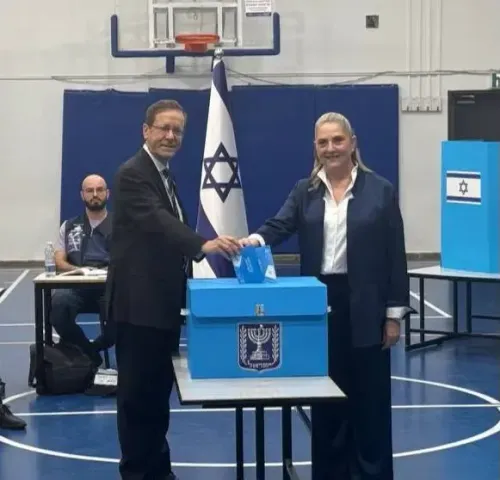
Voter turnout reached 77.7% of eligible voters by the time polling stations closed at 10 pm local time on Tuesday, according to the final update from Israel's Central Elections Committee. This marks the highest recorded turnout in an Israeli election in 27 years, exceeding the 2022 figure by more than seven percentage points — a signal of the extraordinary stakes both camps placed on this vote.
The election has been described by several observers as among the most consequential in Israel's modern political history, given the country's ongoing security pressures and deep internal divisions over the direction of its government.
What Happens Next
With neither bloc holding a clear path to 61 seats, the final distribution of votes and the positions of smaller parties will be decisive. Israel's President is expected to task the leader most likely to assemble a coalition with forming a government, a process that — given the fractured numbers — could take weeks. The role of Israeli Arab parties and potential defections or cross-bloc deals will be closely watched in the days ahead.
Point of View
A number large enough to determine who governs Israel. Whether Eisenkot is willing — or able — to build a coalition that depends on Arab party support will define the next chapter of Israeli politics. For Netanyahu, retaining Likud's position as the largest single party is a base to negotiate from, but his path to a fourth consecutive term now runs through smaller parties whose demands could pull his coalition further right. The record 77.7% turnout signals a public deeply engaged with the stakes — but also one that has delivered a result that offers no clean mandate to either camp.
NationPress
28 Oct 2026
Frequently Asked Questions
What did Israel's 2026 election exit polls show?
Exit polls projected Netanyahu's bloc at 51–52 seats and the opposition alliance at 49–51 seats, with neither side reaching the 61 seats required for a majority in the 120-member Knesset. Channel 12 gave Netanyahu a slight edge, while Channels 11 and 13 showed a dead heat at 51 seats each.
Who is leading the Israeli opposition in this election?
The opposition bloc is led by Gadi Eisenkot, a former Chief of Staff of the Israel Defence Forces. His Yashar party was projected to win 21–22 seats, making it the second-largest party in the Knesset after Netanyahu's Likud.
Why could Israeli Arab parties be decisive in forming the next government?
Israeli Arab parties were projected to collectively win up to 18 Knesset seats, a bloc large enough to tip the balance in coalition negotiations. With neither major camp near 61 seats, their support or abstention could determine who ultimately forms the government.
How significant was voter turnout in Israel's 2026 election?
Turnout reached 77.7% of eligible voters — the highest recorded in an Israeli election in 27 years, surpassing the 2022 turnout by more than seven percentage points. Record participation among Israeli Arab voters was a particularly notable feature of the election.
What happens now that neither bloc won a majority?
Israel's President is expected to ask the leader deemed most capable of forming a coalition to begin the government-formation process. Given the fractured seat distribution, coalition negotiations involving smaller parties — including potentially Israeli Arab parties — could take several weeks.