Israel strikes Iran's Karun Petrochemical Company in Khuzestan

Synopsis
Israel struck Iran's Karun Petrochemical Company in Khuzestan on 8 June, damaging the facility and triggering an evacuation of all workers at Bandar-e Mahshahr. The IRGC hit back by targeting two Israeli air bases — Nevatim and Tel Nof — as explosions rippled across Tehran, Isfahan, and Tabriz, marking one of the most direct and wide-ranging exchanges between the two countries to date.
Key Takeaways
Israel struck the Karun Petrochemical Company in Khuzestan province on Monday, 8 June , causing partial damage to the complex.
No casualties were reported, according to Valiollah Hayati , Khuzestan's deputy governor for security affairs.
Iran's Petrochemical Special Economic Zone Organisation evacuated all employees in Bandar-e Mahshahr following the strike.
The IRGC claimed it struck Israeli air bases Nevatim and Tel Nof in retaliation for Israeli missile strikes on Iranian radar sites.
Explosions were reported in Tehran , Isfahan , and near Tabriz early Monday, according to local sources.
The IRGC stated all its combat units are 'fully ready' for operations across all fronts.
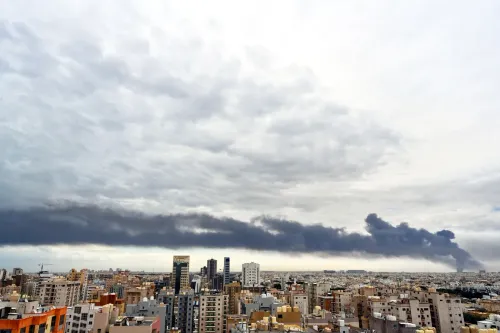
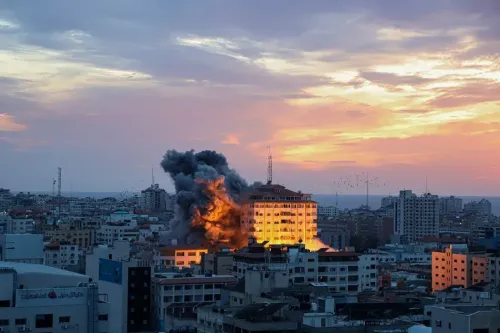
Israel on Monday, 8 June carried out an airstrike against the Karun Petrochemical Company in Iran's southwestern Khuzestan province, with state media reporting partial damage to the complex. No casualties have been reported so far, according to a senior provincial official.
Damage at the Petrochemical Complex
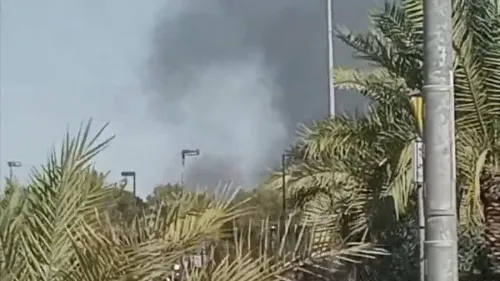
Valiollah Hayati, Khuzestan's deputy governor for security affairs, confirmed that part of the petrochemical complex sustained damage after being struck by Israeli projectiles, according to Iran's semi-official Fars news agency. Following the strike, Iran's Petrochemical Special Economic Zone Organisation said it had evacuated all employees in the port city of Bandar-e Mahshahr in Khuzestan, as reported by state-run IRIB.
IRGC Claims Strikes on Israeli Air Bases
Also on Monday morning, Iran's Islamic Revolutionary Guard Corps (IRGC) said its aerospace forces targeted two 'important and strategic' Israeli air bases — Nevatim and Tel Nof — in retaliation for Israel's missile strikes on several radar sites across three locations in Iran. The IRGC, in a statement published on its official outlet Sepah News, added that all its combat and operational units remain 'fully ready to carry out operations on all fronts, with action plans tailored to the enemy's scenarios.'
Escalating Tit-for-Tat Exchanges
The Monday strikes follow a Sunday escalation in which the IRGC's aerospace forces launched ballistic missiles at Israel's Ramat David air base in northern Israel, citing Israel's 'widespread crimes' in southern Lebanon, including the killing and displacement of civilians. This marks a sharp intensification of direct military exchanges between the two countries, moving beyond proxy engagements to strikes on each other's strategic infrastructure.
Explosions Reported Across Iran
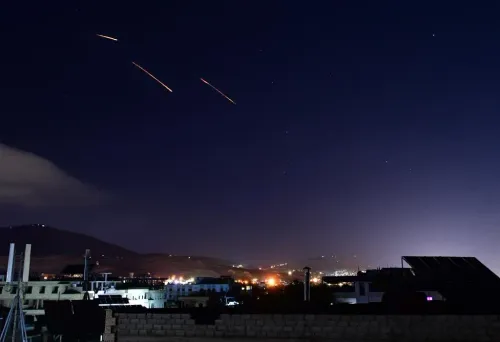
Explosions were heard early Monday in Iran's capital Tehran and in two other provinces, according to reports citing Fars. One explosion was reported west of Tehran, two in the central province of Isfahan, and one near Tabriz, the capital of the northwestern East Azarbaijan province. The cause of these explosions had not been officially confirmed at the time of reporting.
What Comes Next
The cycle of retaliatory strikes between Israel and Iran shows no sign of de-escalation. With the IRGC declaring all units combat-ready and Israel continuing to target Iranian infrastructure, the risk of a broader regional conflagration remains elevated. International calls for restraint are likely to intensify as the conflict edges closer to critical energy and military assets.
Point of View
Not just military sites, in a move that raises the stakes well beyond previous exchanges. The IRGC's counter-strikes on Nevatim and Tel Nof, two of Israel's most strategically important air bases, signal that Tehran is willing to match each Israeli move with a direct military response rather than relying solely on proxy forces. What is notable is the geographic spread of Monday's explosions — Tehran, Isfahan, and Tabriz — suggesting either a broader Israeli operation or secondary effects that officials have not yet explained. The absence of casualties at Karun, if confirmed, may reflect deliberate targeting calibration by Israel to maximise economic pressure while avoiding the humanitarian escalation that would complicate its international standing.
NationPress
27 Sept 2026
Frequently Asked Questions
What did Israel strike in Iran on 8 June?
Israel struck the Karun Petrochemical Company in Iran's southwestern Khuzestan province on 8 June, causing partial damage to the complex. No casualties were reported, according to Khuzestan's deputy governor for security affairs.
How did Iran respond to the Israeli airstrike?
Iran's Islamic Revolutionary Guard Corps (IRGC) said its aerospace forces struck two Israeli air bases — Nevatim and Tel Nof — in retaliation for Israeli missile strikes on Iranian radar sites. The IRGC also launched ballistic missiles at Israel's Ramat David air base on Sunday in a separate retaliatory action.
Why was Bandar-e Mahshahr evacuated?
Iran's Petrochemical Special Economic Zone Organisation evacuated all employees in Bandar-e Mahshahr, a port city in Khuzestan, following the Israeli strike on the nearby Karun Petrochemical Company as a precautionary security measure.
Where were explosions reported in Iran on Monday?
Explosions were reported west of Tehran, in two locations in the central province of Isfahan, and near Tabriz in the northwestern East Azarbaijan province early Monday, according to local sources cited by Iran's Fars news agency. Official confirmation of the cause was not immediately available.
What is the broader context of the Israel-Iran exchanges?
The Monday strikes are part of an escalating cycle of direct military exchanges between Israel and Iran. The IRGC launched ballistic missiles at Israel's Ramat David air base on Sunday, citing Israeli actions in southern Lebanon. Israel has been striking Iranian radar and military infrastructure, while Iran has responded with strikes on Israeli air bases.