Iran IRGC strikes Israel's Nevatim, Tel Nof airbases in retaliatory attack
Synopsis
Iran's IRGC has struck two of Israel's most strategic airbases — Nevatim and Tel Nof — in a direct retaliatory move after Israeli missiles hit Iranian radar sites. With explosions reported across Tehran, Isfahan, and Tabriz, and a missile landing in the West Bank, this is one of the most intense direct Iran-Israel military exchanges on record, and both sides have signalled they are prepared to escalate further.
Key Takeaways
Iran's IRGC struck Israel's Nevatim and Tel Nof airbases on 8 June , calling them 'important and strategic' targets.
The strikes were retaliation for Israeli missile attacks on radar sites in three Iranian locations.
Explosions were reported in Tehran , Isfahan , and near Tabriz on the same morning.
The Israel Defense Forces confirmed its Air Force struck military targets in western and central Iran.
On Sunday, Iran had already launched ballistic missiles at Israel's Ramat David Air Base in northern Israel.
A missile or interception debris struck the occupied West Bank , damaging three homes ; no casualties were immediately reported.
Iran's Islamic Revolutionary Guard Corps (IRGC) announced on Monday, 8 June that its aerospace forces struck two 'important and strategic' Israeli air bases — Nevatim and Tel Nof — in direct retaliation for Israel's missile strikes on radar sites across three locations inside Iran. The IRGC confirmed the strikes via its official outlet, Sepah News, marking a sharp escalation in the ongoing exchange of fire between the two countries.
What the IRGC Said
In its statement, the IRGC said the strikes on Nevatim and Tel Nof airbases were a direct response to Israeli missile attacks on Iranian radar installations. The Corps added that all its 'combat and operational units are fully ready to carry out operations on all fronts,' signalling that further action remains on the table.
Explosions Inside Iran
Separately, explosions were reported in multiple locations across Iran on the same morning. One explosion was heard west of Tehran, two in the central province of Isfahan, and one near Tabriz, the capital of the northwestern East Azarbaijan province, according to local sources cited in reports quoting the semi-official Fars news agency.
Israel Confirms Its Own Strikes
The Israel Defense Forces (IDF) confirmed via Telegram that the Israeli Air Force struck military targets in western and central Iran on Monday morning. The IDF statement did not specify the exact targets hit inside Iran.
Sunday's Escalation: The Trigger
The Monday exchange followed a significant escalation on Sunday, when the IRGC said it had launched ballistic missiles against the Ramat David Air Base in northern Israel, citing what it described as Israel's 'widespread crimes' in southern Lebanon — including the killing and displacement of civilians. The IRGC statement identified the Ramat David base as the launch point for the Lebanon attacks.
Also on Sunday, Ali Abdollahi, chief commander of Iran's Khatam al-Anbiya Central Headquarters, warned that Israel would face more 'crushing and regret-inducing blows' if it expanded its operations in southern Lebanon and the southern Beirut suburb of Dahieh.
West Bank Strike and Air-Raid Sirens
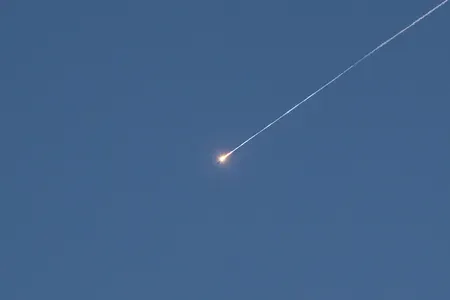
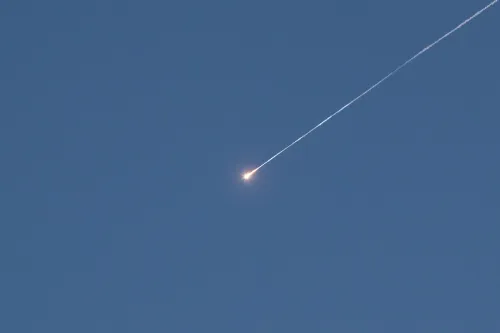
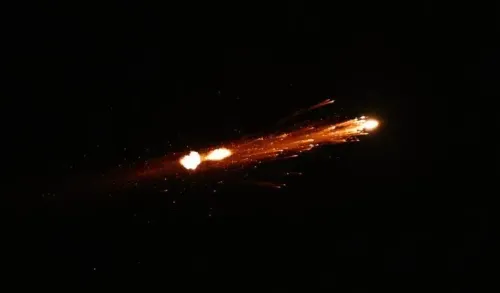
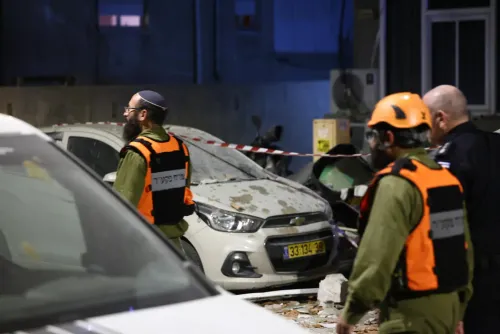
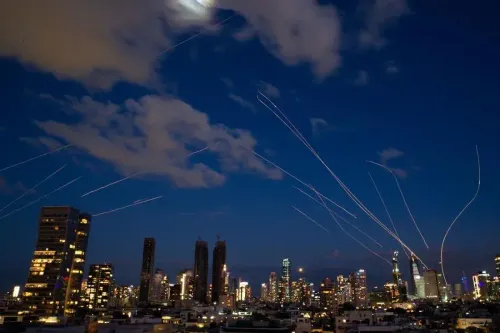
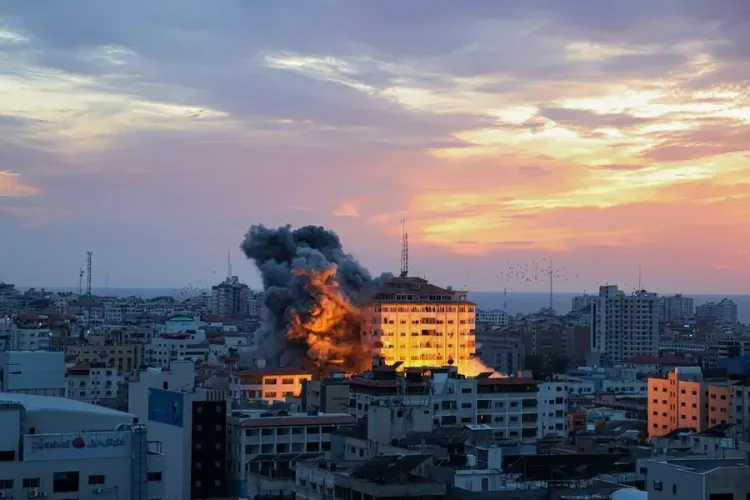
An Iranian missile — or debris from an interception — struck a settlement in the occupied West Bank on Monday, damaging three homes, according to Israel's Channel 12 News. Israel's Magen David Adom rescue service reported no immediate casualties. Video footage circulating on social media showed a large plume of smoke rising from the affected area. The incident triggered air-raid sirens across the Jerusalem area and parts of the West Bank, with explosions audible as air-defence systems attempted to intercept incoming missiles.
This rapidly evolving situation represents one of the most direct military exchanges between Iran and Israel in recent months, and both sides have signalled readiness for further action.
Point of View
Acknowledged exchange of strikes on sovereign military infrastructure. The IRGC naming Nevatim and Tel Nof, two of Israel's most operationally critical bases, is a deliberate signal of capability, not just intent. Israel's confirmation of its own strikes inside Iran closes the loop on mutual escalation. The critical question now is whether either side has a defined off-ramp, or whether each retaliatory cycle simply raises the floor for the next one. The Lebanon dimension — with Hezbollah's Dahieh suburb and southern Lebanon cited as triggers — suggests this is not a bilateral Iran-Israel crisis alone, but a multi-front pressure test with no clear circuit-breaker in sight.
NationPress
22 Sept 2026
Frequently Asked Questions
Which Israeli airbases did Iran's IRGC strike on 8 June?
Iran's IRGC said its aerospace forces struck the Nevatim and Tel Nof airbases, describing them as 'important and strategic' targets. The strikes were confirmed via the IRGC's official outlet, Sepah News, on Monday, 8 June.
Why did Iran strike Israeli airbases?
The IRGC said the strikes were a direct retaliation for Israeli missile attacks on radar sites in three locations inside Iran. Iran had also cited Israel's military operations in southern Lebanon and the Dahieh suburb of Beirut as broader justification for its escalating responses.
Did Israel confirm its strikes inside Iran?
Yes. The Israel Defense Forces confirmed via Telegram that the Israeli Air Force struck military targets in western and central Iran on Monday morning, though it did not specify the exact sites targeted.
What happened in the West Bank during the exchange?
A missile — or debris from an interception — struck a settlement in the occupied West Bank on Monday, damaging three homes, according to Israel's Channel 12 News. Israel's Magen David Adom rescue service reported no immediate casualties. Air-raid sirens were triggered across the Jerusalem area and parts of the West Bank.
What did Iran's military warn ahead of the Monday strikes?
On Sunday, Ali Abdollahi, chief commander of Iran's Khatam al-Anbiya Central Headquarters, warned that Israel would face more 'crushing and regret-inducing blows' if it expanded attacks on southern Lebanon and the Beirut suburb of Dahieh. The IRGC also said all its combat and operational units remain fully ready for action on all fronts.