Japan PM's Office urged JIP to go further on non-nuclear principles review
Synopsis
Japan's Prime Minister's Office has reportedly been pushing the JIP — its junior coalition partner — to go further than the LDP publicly can on revisiting the country's Three Non-Nuclear Principles. Secret consultations with former defence officials, a US nuclear missile deployment on the horizon, and a PM who already backed revision before taking office: Japan's post-war nuclear taboo is under its most coordinated pressure in decades.
Key Takeaways
Japan's Prime Minister's Office reportedly urged the Japan Innovation Party (JIP) to 'go a step further' in reconsidering the Three Non-Nuclear Principles .
The JIP submitted a proposal to PM Sanae Takaichi in June 2025 calling for a 'realistic review' of the principle barring nuclear weapons introduction into Japan.
Senior JIP officials held secret discussions with former defence official Kazuhisa Shimada and ex-JGSDF chief Kiyofumi Iwata ; the proposal adopted Shimada's views almost verbatim.
A key trigger is the US development of a nuclear-armed sea-launched cruise missile with a range of 2,000–2,500 km , expected to deploy after 2032 and potentially port-call at Yokosuka .
PM Takaichi had signalled openness to revising the non-nuclear entry principle even before becoming prime minister.
Japan's Prime Minister's Office has reportedly pressed the Japan Innovation Party (JIP) to 'go a step further' in reconsidering the country's decades-old Three Non-Nuclear Principles, according to local media reports. The disclosure adds a significant new dimension to an already sensitive debate over Japan's nuclear posture.
What the Three Non-Nuclear Principles Are
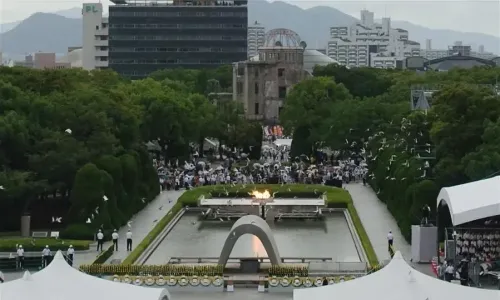
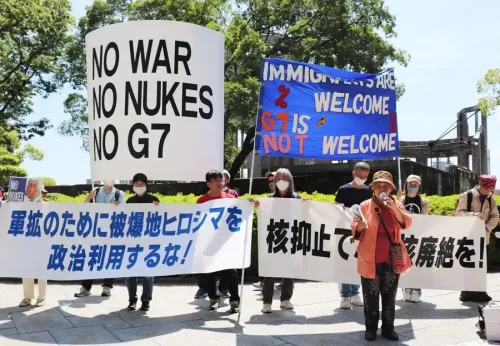
Japan's Three Non-Nuclear Principles — 'not possessing, not producing, and not permitting the introduction of nuclear weapons into the country' — have been a cornerstone of the nation's post-war security doctrine. The principles carry deep historical resonance for Japan, the only country to have suffered atomic bombings in wartime.
The JIP Proposal and Secret Consultations
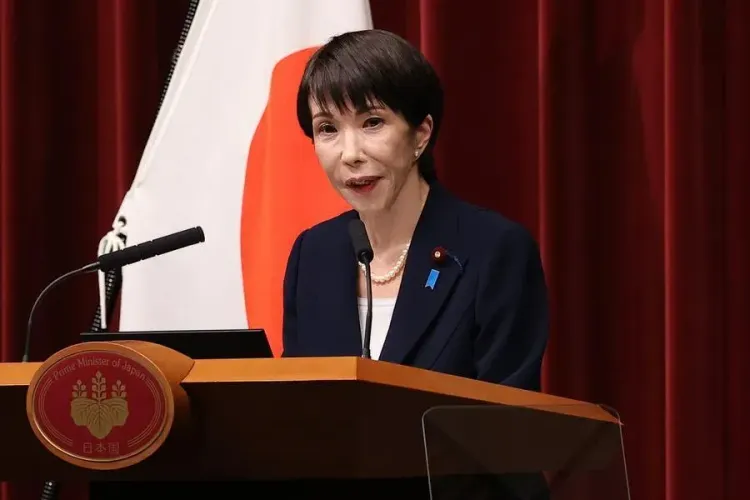
In June 2025, the JIP — the junior coalition partner of the ruling Liberal Democratic Party (LDP) — submitted a formal proposal to Prime Minister Sanae Takaichi calling for a 'realistic review' of the principle barring the introduction of nuclear weapons into Japan. According to reports, the proposal also stated that Japan should 'consult with the United States and take necessary measures' to enhance the effectiveness of US extended nuclear deterrence.
Notably, before the proposal was finalised, several senior JIP officials — including co-representative Fumitake Fujita — held undisclosed discussions on its wording with former senior defence ministry official Kazuhisa Shimada and Kiyofumi Iwata, former chief of staff of the Japan Ground Self-Defense Force. The proposal reportedly adopted Shimada's views almost verbatim.
What the PM's Office Reportedly Said
A report by Mainichi Shimbun cited a JIP source as saying: 'The LDP is constrained by all sorts of baggage, and there are things it just can't bring itself to say. The Prime Minister's Office has told us, "We want you to go a step further."' The same report noted that senior JIP officials had 'maintained close communication with people close to the prime minister,' including Chief Cabinet Secretary Minoru Kihara and Sadamasa Oue, a special advisor to the prime minister on security policy.
The US Missile Factor
One significant driver behind the push to revisit the non-nuclear principles, according to Mainichi Shimbun, is the United States' ongoing development of a nuclear-armed sea-launched cruise missile. The missile is estimated to have a range of 2,000 to 2,500 km and is expected to be deployed after 2032. Submarines carrying the weapon could operate in waters around Japan and make port calls at the US naval base in Yokosuka — a scenario that would directly implicate the third non-nuclear principle.
Takaichi's Prior Position
The reported pressure from the Prime Minister's Office aligns with Takaichi's own publicly stated views. Even before assuming the premiership, she had signalled willingness to revise the principle prohibiting the introduction of nuclear weapons into Japan — a position that was considered politically taboo for decades. The latest disclosures suggest her administration may be using the JIP as a vehicle to advance a policy shift the LDP itself cannot openly champion.
As Japan continues to revise its broader security framework amid regional tensions, the question of whether the Three Non-Nuclear Principles will be formally diluted is expected to remain a defining fault line in domestic and diplomatic debate.
Point of View
Combined with direct lines to the Chief Cabinet Secretary and a PM security advisor, points to a coordinated — not spontaneous — policy shift. Japan's Three Non-Nuclear Principles have survived decades of strategic pressure; what is different now is that the pressure is being applied from inside the governing coalition, not just from external allies.
NationPress
3 Oct 2026
Frequently Asked Questions
What are Japan's Three Non-Nuclear Principles?
Japan's Three Non-Nuclear Principles are a long-standing national policy of 'not possessing, not producing, and not permitting the introduction of nuclear weapons into the country.' They were established in the post-war era and carry particular weight given Japan's history as the only nation to have suffered atomic bombings.
What did the JIP propose regarding the non-nuclear principles?
In June 2025, the Japan Innovation Party submitted a proposal to Prime Minister Sanae Takaichi calling for a 'realistic review' of the principle barring nuclear weapons from being introduced into Japan. It also called for consultations with the United States to strengthen extended nuclear deterrence.
Why is the US sea-launched cruise missile relevant to this debate?
The United States is developing a nuclear-armed sea-launched cruise missile with an estimated range of 2,000 to 2,500 km, expected to be deployed after 2032. Submarines carrying this missile could operate near Japan and make port calls at the US naval base in Yokosuka, which would directly test the third non-nuclear principle.
What role did the Prime Minister's Office play in the JIP proposal?
According to a Mainichi Shimbun report, the Prime Minister's Office told the JIP it wanted the party to 'go a step further' in pushing for a review of the non-nuclear principles. JIP officials also reportedly maintained close communication with Chief Cabinet Secretary Minoru Kihara and PM security advisor Sadamasa Oue while drafting the proposal.
What is PM Takaichi's position on Japan's non-nuclear principles?
Even before becoming prime minister, Sanae Takaichi had signalled her willingness to revise the principle prohibiting the introduction of nuclear weapons into Japan — a stance that was long considered politically off-limits in Japanese domestic politics.