Kenya Ebola cases rise to 8 as patient attendant tests positive
Synopsis
Kenya's Ebola outbreak has reached eight confirmed cases, with a 49-year-old patient attendant the latest to test positive for the Bundibugyo strain — a variant with no approved vaccine or treatment. All seven earlier patients have received monoclonal antibodies and are reportedly responding, but the spread within healthcare settings signals a critical pressure point for containment.
Key Takeaways
Kenya confirmed its eighth Ebola case on 19 October — a 49-year-old male patient attendant testing positive for the Bundibugyo strain .
All seven previously confirmed patients have received monoclonal antibodies and are reportedly responding well.
There are no approved vaccines or specific treatments for the Bundibugyo strain, according to the WHO ; candidate products are under clinical trial.
As of 17 October , health officials traced 128 of 130 identified contacts of the index patient.
Kenya's first Ebola case was confirmed on 6 October ; the index patient had arrived from the Democratic Republic of the Congo on 3 October .
Authorities say the risk of community-level transmission is low, with all exposed individuals placed under quarantine.
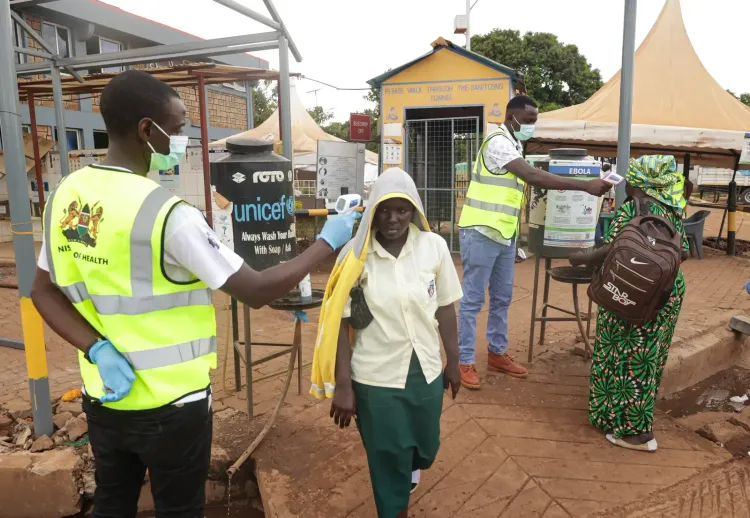
Kenya's Ebola tally climbed to eight confirmed cases on 19 October after a 49-year-old hospital patient attendant tested positive for the Bundibugyo strain of the virus, health authorities announced. The latest case marks a continued spread within healthcare settings, even as officials said community transmission remains unlikely.
New Case and Isolation Measures
Patrick Amoth, Director-General for Health at Kenya's Ministry of Health, confirmed the new patient during an interview with Kenyan broadcaster Citizen TV. The 49-year-old man developed symptoms including fever, headache, and muscle pain and has since been placed in isolation as health teams prepare to begin treatment.
Amoth said that on the previous Sunday, 38 people were tested, with one returning a positive result — the eighth confirmed case overall.
Treatment and Recovery of Earlier Patients
All seven previously confirmed patients have received monoclonal antibodies, and those who have undergone the treatment are reportedly responding well. 'All of them, I can confirm categorically, have received monoclonal antibodies,' Amoth said.
Notably, there are no approved vaccines or specific treatments for the Bundibugyo strain of Ebola, according to the World Health Organisation (WHO). Candidate products are currently being evaluated in clinical trials, the WHO has noted.
How the Outbreak Spread
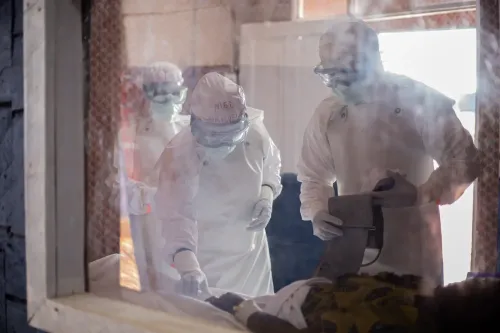
The eighth case follows an announcement on Saturday of four new infections — a close male relative of the index patient and three health workers who had attended to the first patient while he was hospitalised. The pattern underscores the particular vulnerability of healthcare workers in outbreak settings.
Kenya's first confirmed Ebola case was announced on 6 October. The index patient, a Kenyan national who had been residing in the Democratic Republic of the Congo (DRC), arrived in Nairobi on 3 October. He subsequently died while undergoing treatment at a Nairobi hospital and was accorded a safe and dignified burial at a public cemetery to minimise transmission risk.
Contact Tracing and Community Risk
Amoth sought to allay public fears, stating there was a low possibility that quarantined individuals had transmitted the disease at the community level. As of 17 October, health officials had identified 130 contacts of the index patient and successfully traced 128 of them. Contact tracing for cases confirmed after that date is ongoing.
The Ministry of Health said authorities have actively placed all individuals exposed to confirmed cases under quarantine, with surveillance continuing across affected clusters. The outbreak's trajectory will be closely watched in the coming days as contact tracing for the most recent cases progresses.
Point of View
Not just quarantine perimeters. The absence of an approved vaccine or treatment for the Bundibugyo strain is a critical gap that the WHO and global health bodies have not yet bridged despite prior outbreaks of this sub-type. The speed and completeness of contact tracing — 128 of 130 so far — is one genuine bright spot, but each new case in a healthcare setting resets that clock.
NationPress
19 Oct 2026
Frequently Asked Questions
How many Ebola cases has Kenya confirmed so far?
Kenya has confirmed eight Ebola cases as of 19 October 2026, the latest being a 49-year-old patient attendant who tested positive for the Bundibugyo strain. The first case was confirmed on 6 October after an index patient arrived from the Democratic Republic of the Congo.
What is the Bundibugyo strain of Ebola?
The Bundibugyo strain is one of the six known species of Ebola virus, first identified in Bundibugyo district of Uganda in 2007. According to the WHO, there are currently no approved vaccines or specific treatments for this strain, though candidate products are being evaluated in clinical trials.
Are Ebola patients in Kenya receiving any treatment?
All seven previously confirmed patients have received monoclonal antibodies, and health officials say those treated are responding well. However, monoclonal antibody therapy for Bundibugyo is experimental, and no approved treatment exists for this specific strain.
Is there a risk of community transmission in Kenya?
Health authorities say the risk of community-level transmission is currently low. As of 17 October, officials had traced 128 of 130 identified contacts of the index patient, and all individuals exposed to confirmed cases have been placed under quarantine.
How did the Ebola outbreak begin in Kenya?
The outbreak began when Kenya's index patient, a Kenyan man who had been living in the Democratic Republic of the Congo, arrived in Nairobi on 3 October. Kenya confirmed its first Ebola case on 6 October. The index patient died during treatment and was given a safe and dignified burial to minimise transmission risk.