Khalistani extremist networks fuelling transnational crime: Report
Synopsis
The FBI's 'Operation Hard Ball' raids in Stockton, California didn't just dismantle parts of the Lawrence Bishnoi syndicate — they surfaced a Khalistan flag at a raided property, giving physical form to what a Khalsa Vox report calls the organised crime-separatist nexus. Combined with US indictments linking Bishnoi and Goldy Brar to the 2023 Nijjar assassination, the picture that emerges is less a liberation movement and more a cross-border gang war draped in ideology.
Key Takeaways
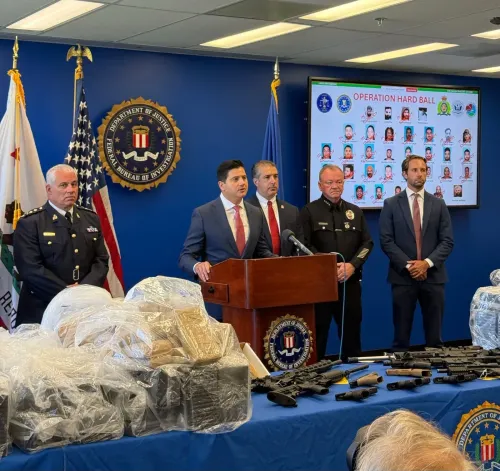
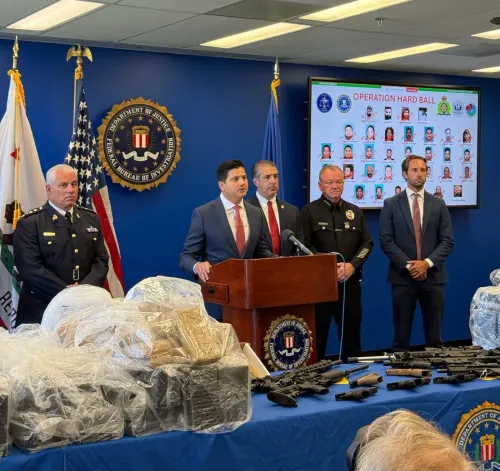
The FBI's 'Operation Hard Ball' raided properties in Stockton, California , dismantling parts of the Lawrence Bishnoi crime syndicate on charges including drug trafficking , extortion , and targeted killings .
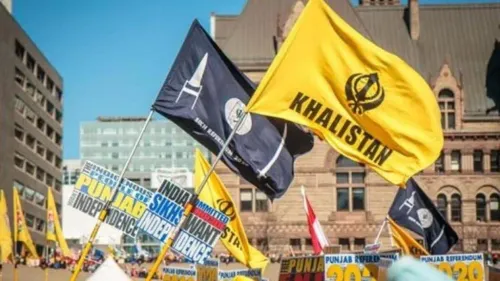
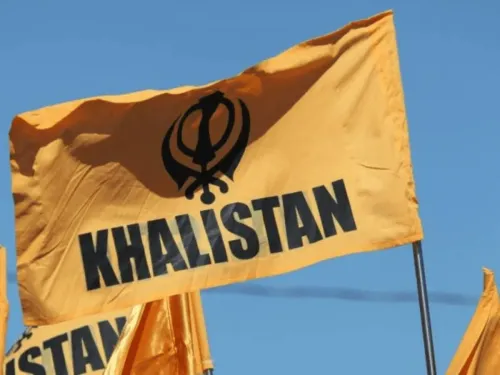
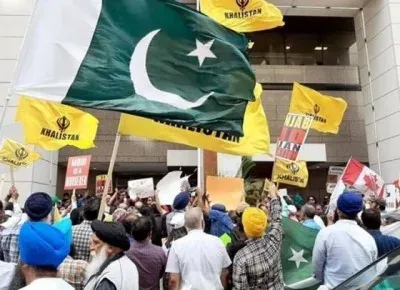
A Khalistan flag was recovered at one of the raided properties, which a Khalsa Vox report says illustrates the intersection of separatist ideology and organised crime.
US indictments charge Lawrence Bishnoi and Goldy Brar with ordering the 2023 assassination of Hardeep Singh Nijjar in Surrey, British Columbia .
Local Sikhs in Stockton have reportedly described living under a 'campaign of terror' linked to diaspora-exploiting criminal networks.
The report calls on Western governments to address the extremism-organised crime nexus, warning that raids alone cannot provide a lasting solution.
A detailed report by Khalsa Vox has drawn a direct line between Khalistani extremist networks and organised transnational crime, citing the FBI's 'Operation Hard Ball' as evidence of a deepening nexus between separatist ideology and gang warfare operating across North America. The findings come amid growing international scrutiny of diaspora-linked criminal syndicates with roots in the Punjab separatist movement.
Operation Hard Ball and What It Uncovered
In raids across California, including the city of Stockton, FBI agents dismantled sections of the Lawrence Bishnoi crime syndicate, arresting suspects on charges that include drug trafficking, extortion, racketeering, and targeted killings, according to the report. Among the evidence recovered at one of the raided properties in Stockton was a Khalistan flag — an detail the report characterised as emblematic of the overlap between separatist symbolism and criminal enterprise.
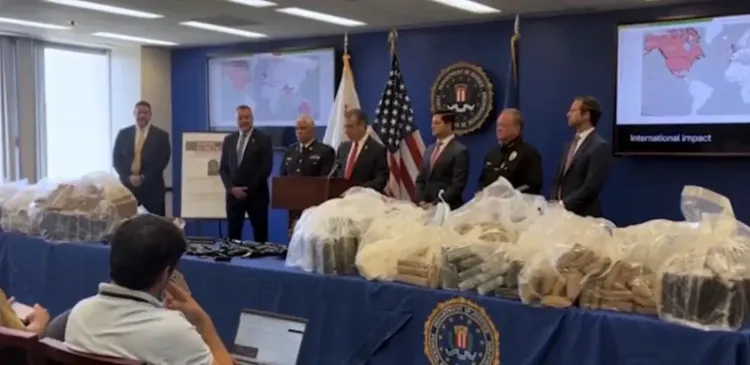
'Photographs from the operation show law enforcement surrounding homes, making arrests, and uncovering the paraphernalia of a violent enterprise. This wasn't abstract activism. It was the visible intersection of organised crime and separatist symbolism,' the report stated.
Stockton's Long-Standing Links to Extremist Activity
Stockton, home to one of the oldest Sikh gurdwaras in the United States, has repeatedly featured in accounts of gang violence, extortion targeting the Punjabi community, threats, and shootings attributed to syndicates including the Bishnoi gang, the report noted. Local Sikhs have reportedly described living under a 'campaign of terror', alleging that these networks exploit diaspora connections for narcotics trafficking, weapons smuggling, and intimidation.
The recovery of a Khalistan flag during the raid, according to the report, suggests that separatist ideology functions as both a cover and a driving force for criminal operations — not a genuine political movement with grassroots backing in Punjab, where Sikhs are described as continuing to prosper within India's democratic framework.
The Nijjar Assassination and the Gang War Angle
The report's most consequential finding concerns the 2023 assassination of Hardeep Singh Nijjar outside a gurdwara in Surrey, British Columbia. US indictments, it noted, now charge imprisoned gangster Lawrence Bishnoi and his Canada-based associate Goldy Brar with ordering the killing. Prosecutors allege that Bishnoi directed operatives from his jail cell using smuggled phones, providing photographs and addresses of Nijjar.
'Far from the state-sponsored narrative initially pushed by Canadian officials, this emerges as a brutal chapter in a Khalistani-linked gang war fought over control of drug routes, extortion rackets, and influence in diaspora gurdwaras,' the report said.
Western Governments Under Scrutiny
The report argued that Western governments have, for too long, treated vocal diaspora protests and gurdwara politics as legitimate advocacy while 'downplaying links to terrorism designations, assassinations in India, and now proven gang warfare abroad.' It stressed that unless policymakers address the nexus between extremism and organised crime, law enforcement raids alone are unlikely to deliver a lasting solution.
'Diaspora communities deserve safety, not imported turf wars,' the report concluded, urging a structural policy response that goes beyond individual operations.
Point of View
Per US indictments, increasingly looking like a gang hit ordered from a prison cell over drug routes and gurdwara influence. Western governments face an uncomfortable reckoning: years of treating Khalistani advocacy as protected political speech may have provided cover for criminal infrastructure to deepen. The policy gap between free-speech protections and counter-extremism obligations is real, and diaspora communities — the majority of whom have no connection to these networks — pay the price in intimidation and fear.
NationPress
10 Oct 2026
Frequently Asked Questions
What is the FBI's Operation Hard Ball?
Operation Hard Ball is an FBI operation that conducted raids across California, including Stockton, targeting the Lawrence Bishnoi crime syndicate. Suspects were arrested on charges ranging from drug trafficking and extortion to racketeering and targeted killings.
What is the significance of the Khalistan flag found during the raids?
A Khalistan flag was recovered at one of the raided properties in Stockton, California. According to a Khalsa Vox report, this indicates that Khalistani separatist ideology is being used as both a cover and a motivating force within organised criminal networks, rather than representing a genuine political movement.
How is the Lawrence Bishnoi gang linked to the Nijjar assassination?
US indictments charge imprisoned gangster Lawrence Bishnoi and his Canada-based associate Goldy Brar with ordering the 2023 killing of Hardeep Singh Nijjar outside a gurdwara in Surrey, British Columbia. Prosecutors allege Bishnoi directed operatives from jail using smuggled phones.
Why is Stockton, California considered significant in this context?
Stockton is home to one of the oldest Sikh gurdwaras in the United States and has repeatedly featured in reports of gang violence, extortion, and shootings linked to syndicates such as the Bishnoi gang. Local Sikhs have reportedly described living under a sustained campaign of intimidation by these networks.
What does the report recommend for Western governments?
The Khalsa Vox report argues that Western governments must move beyond treating Khalistani advocacy as routine political speech and directly address the nexus between extremism and organised crime. It warns that law enforcement raids alone are insufficient without structural policy change.