Kuwait destroys hostile drones in 'Iranian aggression', installations damaged
Synopsis
Kuwait's armed forces destroyed hostile drones for the third consecutive day, with the IRGC claiming strikes on US military infrastructure at Ali Salem base. One Nepalese national was killed Thursday — the first confirmed fatality — as Iran's campaign against Gulf targets widens beyond military sites to civilian vehicles and government facilities.
Key Takeaways
Kuwait's armed forces detected and destroyed hostile drones on Saturday, 1 August , attributing the attacks to Iran .
Targeted sites included a government facility in northern Kuwait and civilian vehicles on Bubiyan Island ; material damage reported, no casualties in this incident.
One person — a Nepalese driver employed by a subcontractor of a Chinese company — was killed in northern Kuwait on Thursday during a previous Iranian attack.
Iran's IRGC claimed it struck two drone hangars and a fuel tank at the US Ali Salem Air Base in Kuwait on Thursday, and separately claimed destruction of a 'very large' US ammunition depot the previous week.
The IRGC also claimed strikes on a US Fifth Fleet watchtower and an Amazon data centre in Bahrain , and three depots at the Al-Adiri Camp in Kuwait — none independently verified.
The attacks are part of a broader Iran-US confrontation spilling into Gulf states, with a new front also emerging in the Red Sea involving Yemen's Houthis.
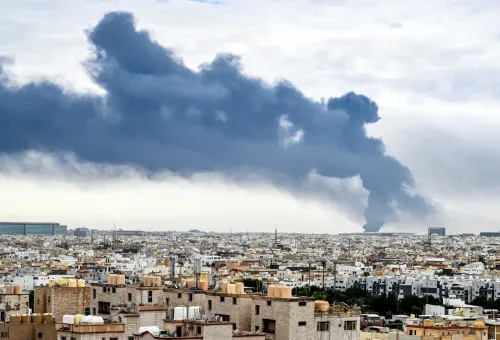
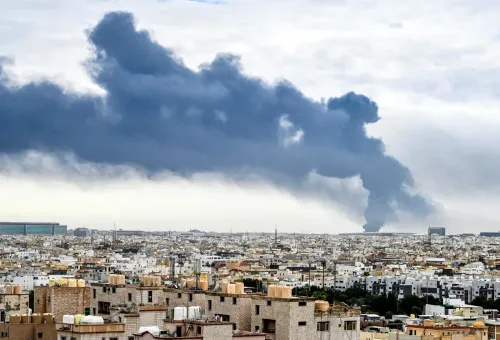
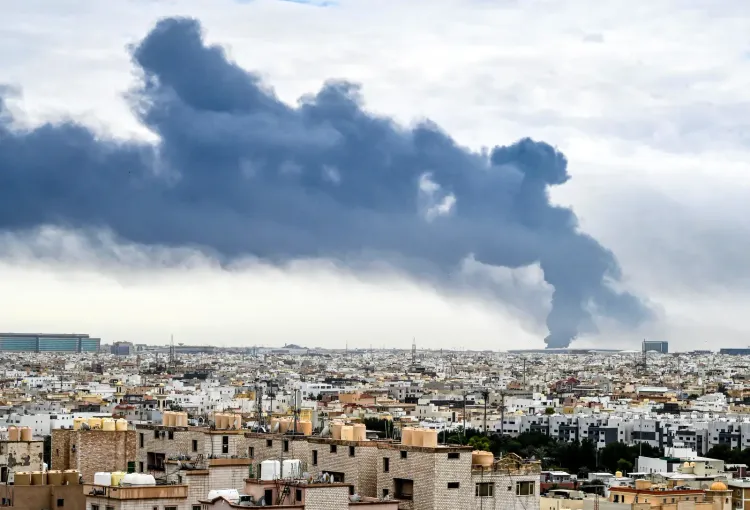
Kuwait's armed forces on Saturday, 1 August detected and destroyed multiple hostile drones in the country's airspace, with several vital installations targeted in what Kuwaiti authorities described as 'Iranian aggression.' Falling debris caused material damage across sites, though no casualties were reported in the latest incident.
Key Developments
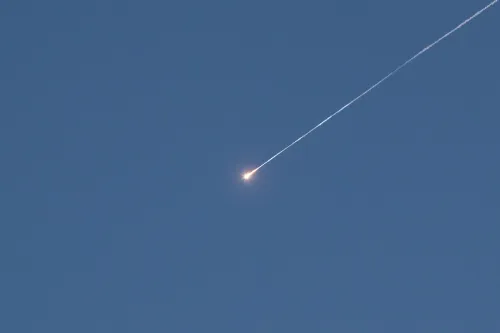
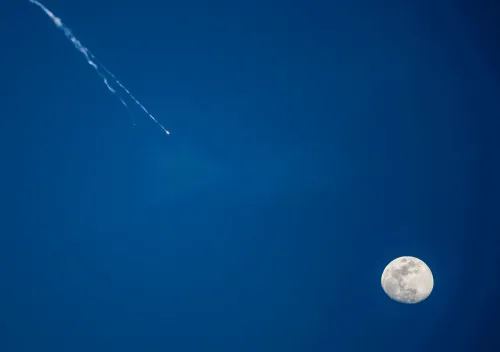
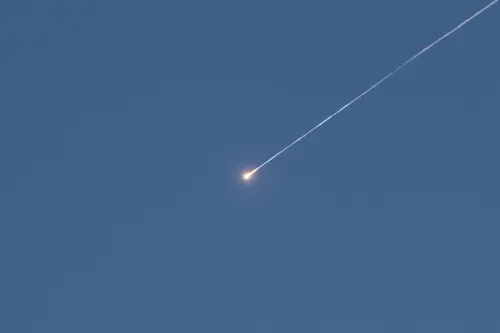
According to a statement posted on social media platform X by the General Staff of the Kuwaiti Armed Forces, the drones — detected since early Saturday — targeted a government facility in northern Kuwait and civilian vehicles on Bubiyan Island. Explosions heard across the country were caused by interceptions carried out by Kuwaiti air defence systems, the military confirmed.
Earlier the same day, the General Staff had already announced that air defence systems were actively intercepting hostile targets, signalling that the threat had been identified before the strikes reached their intended sites.
Pattern of Attacks on Kuwait
This is not an isolated incident. Kuwait has faced repeated drone and missile attacks in recent weeks, all attributed by its authorities to Iran. On Friday, the Kuwaiti Army reported that hostile drones had again entered its airspace and targeted vital and military facilities, with debris causing material damage and no casualties at that time either.
Critically, on Thursday, one person was killed in northern Kuwait during what the Kuwaiti military described as an Iranian attack — marking the first confirmed fatality in this escalation cycle. According to Kuwait's armed forces and the Chinese Embassy in Kuwait, the victim was a Nepalese driver employed by a subcontractor of a Chinese company operating in the region.
Iran's IRGC Claims and US Bases Targeted
Iran's Islamic Revolutionary Guard Corps (IRGC) separately claimed responsibility for striking the US air base at Ali Salem in Kuwait on Thursday, stating it had set fire to and destroyed two drone hangars and a fuel tank for aircraft and military helicopters, according to Sepah News Agency.
The IRGC further claimed that the previous week, its forces had struck and 'completely destroyed' a 'very large' US ammunition depot at Ali Al Salem Air Base using 'advanced and ultra-heavy' kamikaze drones, and had also attacked facilities housing US forces at the base, allegedly causing casualties.
Beyond Kuwait, the IRGC claimed to have completed a military operation against the data centre of US company Amazon in Bahrain, demolished three US ammunition and equipment depots at the Al-Adiri Camp in Kuwait, and struck the watchtower of the US Fifth Fleet headquarters in Bahrain, reportedly causing significant damage. These claims have not been independently verified.
Regional Context
The attacks on Kuwait are unfolding amid a sharp escalation in the broader Iran-US confrontation, which is increasingly spilling over into Gulf states. Renewed exchanges of airstrikes between the United States and Iran resumed after days of pause, while a new front has opened in the Red Sea involving Yemen's Houthis and Saudi Arabia.
Notably, this marks at least the third consecutive day of drone activity over Kuwaiti territory, signalling a sustained rather than sporadic campaign. The targeting of civilian vehicles and a government facility — alongside US military infrastructure — suggests a deliberate effort to widen the pressure footprint beyond purely military targets.
What Happens Next
Kuwait has not yet announced a formal diplomatic response to the attacks beyond military statements. The international community, particularly Gulf Cooperation Council (GCC) partners and Washington, will be watching whether Kuwait formally invokes any bilateral defence arrangements with the United States. With the regional situation still fluid, further drone activity over Kuwaiti airspace in the coming days cannot be ruled out.
Point of View
Raising the stakes for Kuwait's government to respond beyond military statements. What is conspicuously absent is a formal Kuwaiti diplomatic response or any GCC collective statement, which points to the acute bind small Gulf states face: they host US forces, but cannot afford open confrontation with a neighbour that can reach their territory at will. The IRGC's sweeping claims — Amazon data centres, Fifth Fleet watchtowers, multiple ammunition depots — remain unverified and carry the hallmarks of information warfare layered onto kinetic operations. The real test is whether Washington's response framework, already stretched across multiple Gulf fronts, can deter further escalation before a larger casualty event forces Kuwait's hand.
NationPress
15 Sept 2026
Frequently Asked Questions
What happened in Kuwait on 1 August 2025?
Kuwait's armed forces detected and destroyed hostile drones in the country's airspace on Saturday, 1 August, with a government facility in northern Kuwait and civilian vehicles on Bubiyan Island among the sites targeted. Falling debris caused material damage; no casualties were reported in this specific incident.
Who is behind the drone attacks on Kuwait?
Kuwaiti authorities have attributed the repeated drone and missile attacks to Iran. Iran's Islamic Revolutionary Guard Corps (IRGC) has separately claimed responsibility for strikes on US military infrastructure at the Ali Salem Air Base in Kuwait.
Has anyone been killed in the attacks on Kuwait?
Yes. One person was killed in northern Kuwait on Thursday during what the Kuwaiti military described as an Iranian attack. The victim was a Nepalese driver employed by a subcontractor of a Chinese company operating in the region, according to Kuwait's armed forces and the Chinese Embassy in Kuwait.
What did the IRGC claim to have struck in Kuwait and Bahrain?
The IRGC claimed to have struck two drone hangars and a fuel tank at the US Ali Salem Air Base in Kuwait, demolished three US ammunition depots at Al-Adiri Camp in Kuwait, destroyed a 'very large' US ammunition depot at Ali Al Salem Air Base with kamikaze drones, and struck the US Fifth Fleet watchtower and an Amazon data centre in Bahrain. These claims have not been independently verified.
How does the Kuwait situation fit into the broader regional picture?
The drone attacks on Kuwait are part of an escalating Iran-US confrontation that is increasingly spilling into Gulf states. Renewed US-Iran airstrikes resumed after a brief pause, and a new front has opened in the Red Sea involving Yemen's Houthis and Saudi Arabia, making this a multi-theatre regional escalation.