Sri Lanka health delegation visits India to bolster food safety systems
Synopsis
Sri Lanka sent a health ministry delegation to India's FSSAI in late July, seeking a regulatory blueprint for its own food safety overhaul. The visit — backed by the WHO — targeted digital governance tools, labelling enforcement, and online food marketing oversight, signalling Colombo's intent to align with international health security frameworks.
Key Takeaways
A Sri Lankan Ministry of Health delegation visited New Delhi from 27 to 31 July for a food safety study exchange.
The visit was supported by WHO , FSSAI , and Sri Lanka's Ministry of Health .
Delegation comprised officials from the FCAU , Directorate of Environment, Occupational Health and Food Safety , and the Medical Research Institute .
Key focus areas included digital food safety governance , labelling oversight , and online food marketing regulation.
Insights will inform Sri Lanka's push to establish a food safety bureau and meet IHR (2005) , JEE , and NAPHS obligations.
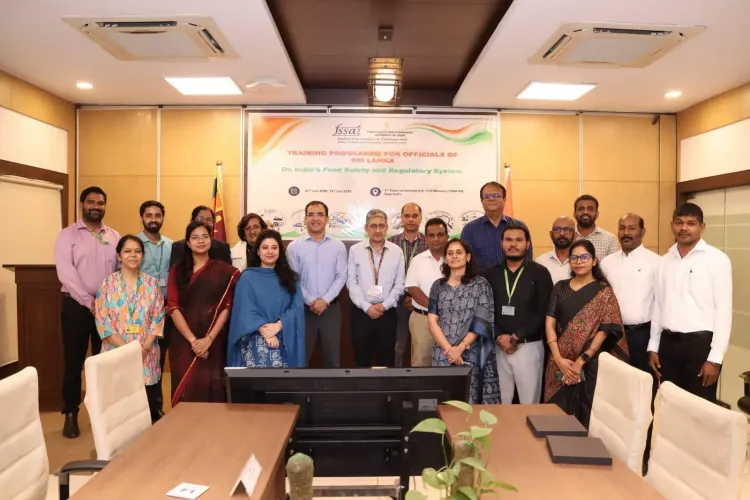
A Sri Lankan Ministry of Health delegation completed a study visit to India from 27 to 31 July, aimed at strengthening the island nation's food safety governance, modernising regulatory frameworks, and improving consumer protection. The findings from the visit, highlighted in a report on Wednesday, 26 August, are expected to directly inform Sri Lanka's efforts to establish a dedicated food safety bureau and advance its commitments under key international health frameworks.
Purpose and Scope of the Visit
The delegation, comprising officials from Sri Lanka's Directorate of Environment, Occupational Health and Food Safety, the Food Control Administration Unit (FCAU), and the Medical Research Institute (MRI), travelled to New Delhi for a structured technical exchange. The visit was jointly supported by Sri Lanka's Ministry of Health, the World Health Organization (WHO), and India's Food Safety and Standards Authority of India (FSSAI).
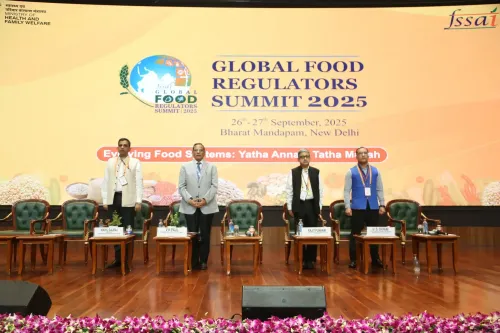
The delegation held meetings with Indian counterparts at the FSSAI to understand how food safety systems are governed, regulated, and monitored at scale across a large and diverse country like India.
Key Areas of Learning
Officials were briefed on India's adoption of digital technologies to drive efficiency, transparency, and evidence-based decision-making within its food regulatory ecosystem. Discussions also covered mechanisms to monitor food advertising and labelling requirements, including emerging challenges posed by online food marketing — a rapidly growing regulatory frontier for both nations.
The insights are expected to help Sri Lanka strengthen food labelling oversight and advance its priorities under the International Health Regulations (2005), the Joint External Evaluation (JEE), and the National Action Plan for Health Security (NAPHS).
What the WHO Said
Rajesh Sambhajirao Pandav, WHO Representative to Sri Lanka, underscored the value of such cross-border knowledge exchange. 'Strengthening food safety requires strong systems, effective regulation and continuous learning. Opportunities for technical exchange such as this allow countries to learn from one another's experiences and identify practical approaches that can be adapted to national contexts,' he said.
Pandav further noted, 'As food systems continue to evolve, partnerships and knowledge exchange remain important tools for building stronger, more resilient food safety systems that protect health and support consumer confidence.'
Broader Context and What Comes Next
The visit comes as Sri Lanka has been actively working to modernise its food safety architecture amid growing concerns over food quality, labelling gaps, and the rapid expansion of digital food commerce. This is not an isolated initiative — it is part of a broader push by Colombo to align its regulatory standards with international benchmarks. India's FSSAI, one of Asia's more mature food regulatory bodies, offers a practical reference model for countries at an earlier stage of regulatory development. How Sri Lanka translates these learnings into legislative and institutional action will determine the long-term impact of the exchange.
Point of View
And the gap between regulatory intent and enforcement has real consumer consequences. India's FSSAI is far from perfect, but it offers something Sri Lanka currently lacks: a digitally integrated, multi-tier enforcement model with a legislative spine. The harder question is whether Sri Lanka has the political will and budget to operationalise what it has observed — study visits without follow-through legislation are common in South Asian health diplomacy. The WHO's visible involvement adds accountability pressure, but the real test will come when Colombo tables its food safety bureau proposal in parliament.
NationPress
26 Aug 2026
Frequently Asked Questions
Why did Sri Lanka send a health delegation to India?
Sri Lanka sent the delegation to study India's food safety regulatory model at the FSSAI, with the goal of strengthening its own governance systems, establishing a food safety bureau, and improving labelling and advertising oversight. The visit was part of a broader effort to align with international health security frameworks.
When did the Sri Lankan delegation visit India?
The delegation visited India from 27 to 31 July, conducting meetings at the Food Safety and Standards Authority of India (FSSAI) in New Delhi as part of a structured technical exchange.
Who supported the Sri Lanka-India food safety exchange?
The visit was jointly supported by Sri Lanka's Ministry of Health, the World Health Organization (WHO), and India's FSSAI. WHO Representative Rajesh Sambhajirao Pandav publicly endorsed the exchange as a model for regional health cooperation.
What will Sri Lanka do with the insights from the India visit?
The insights are expected to help Sri Lanka establish a dedicated food safety bureau, strengthen food labelling enforcement, and advance commitments under the International Health Regulations (2005), the Joint External Evaluation (JEE), and the National Action Plan for Health Security (NAPHS).
What is the FSSAI and why is it relevant to Sri Lanka?
The Food Safety and Standards Authority of India (FSSAI) is India's apex food regulatory body, responsible for setting standards, licensing, and enforcement across the country. For Sri Lanka, which is building its own food safety infrastructure, FSSAI's experience with digital governance and multi-tier regulation offers a practical reference model.