GPS attack could cripple US economy, House lawmakers warn amid China-Russia threat

Synopsis
A bipartisan House panel has sounded the alarm: GPS — the invisible backbone of the US economy — has no ground-based backup, while China and Russia already have one. With jamming incidents rising and a single system-wide failure potentially costing over $1 billion a day, the hearing signals Washington is finally treating GPS resilience as a national security emergency.
Key Takeaways
A House Energy and Commerce Subcommittee hearing on 7 June warned that a GPS attack could be 'devastating' to the US economy .
China and Russia have built ground-based GPS backups; the United States has not, according to NextNav CEO Mariam Sorond .
The GPS constellation comprises 32 satellites and has maintained 99.99% signal availability since 1995 , but localised jamming and spoofing are rising.
A British military aircraft reportedly lost GPS signals due to suspected Russian jamming , cited as evidence of active adversarial capability.
Overreliance on GPS poses a 'more than $1 billion a day economic and national security risk,' according to the National Association of Broadcasters .
Proposed backup systems including the Broadcast Positioning System (BPS) face spectrum disputes that lawmakers say must be resolved without disrupting existing services.
US lawmakers on Thursday, 7 June issued stark warnings that a successful attack on the Global Positioning System (GPS) could inflict severe damage on the American economy, as a House Energy and Commerce Subcommittee on Communications and Technology hearing examined escalating threats from China and Russia and weighed competing technologies for backup positioning, navigation, and timing services.
Key Warnings from Lawmakers
Subcommittee Chairman Richard Hudson told the panel that GPS today underpins far more than navigation — serving sectors from energy infrastructure and financial transactions to emergency response systems. 'Put simply, a catastrophic failure of GPS as a result of adversary spoofing or jamming would be devastating to our economy,' Hudson said. He pointed to a recent incident in which a British military aircraft reportedly lost GPS signals due to suspected Russian jamming.
Ranking Member Doris Matsui warned that most Americans underestimate their dependence on the technology. 'GPS helps keep your internet running, your payments moving, and your bank account safer from fraud,' she said. 'It helps keep first responders find you when you call 911.' She cautioned that a major disruption could cascade across communications, aviation, energy, agriculture, and supply chains.
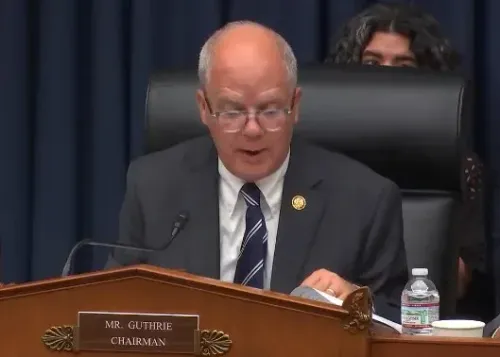
Committee Chairman Brett Guthrie added that adversarial jamming and spoofing are already active threats. 'Overseas, our adversaries are actively jamming and spoofing GPS in conflict zones, putting our service members at even greater risk,' he said. 'A disruption to GPS here at home has the potential to be catastrophic for the economy.'
How Reliable Is GPS Today
Lisa Dyer, Executive Director of the GPS Innovation Alliance, described GPS as 'one of America's greatest innovations,' noting that since becoming operational in 1995, the system 'has not experienced a single system wide outage.' The GPS constellation currently comprises 32 satellites and delivers signal availability of 99.99 per cent. However, Dyer warned that localised jamming and spoofing incidents are increasingly affecting aviation and maritime operations, and called for stronger enforcement against illegal interference alongside accelerated modernisation of GPS infrastructure.
The Case for a Terrestrial Backup
Mariam Sorond, chief executive officer of NextNav, argued that the United States remains uniquely exposed because it lacks a ground-based backup network. 'China and Russia have built ground based backups to GPS. The United States has not,' she said, calling GPS 'a national treasure' but also 'a single point of failure.'
Sam Matheny of the National Association of Broadcasters outlined the Broadcast Positioning System (BPS), which leverages existing broadcast towers and licensed spectrum. He said the system was designed to address a 'more than $1 billion a day economic and national security risk' created by overreliance on GPS. Several other witnesses also promoted alternative and complementary PNT systems that could continue operating if GPS signals were disrupted.
Spectrum Disputes and the Road Ahead
The hearing also exposed sharp disagreements over proposals involving the lower 900 MHz spectrum band. Consumer groups, technology companies, and industry representatives cautioned that changes to spectrum allocation could interfere with services used by utilities, public safety agencies, retailers, transportation operators, and agricultural businesses.
Lawmakers from both parties stressed that any future backup system must be rigorously tested and must bolster resilience without imposing significant costs on consumers or disrupting existing services. Originally developed by the US military and later opened for civilian use, GPS now serves billions of users worldwide across aviation, telecommunications, banking, logistics, and precision agriculture. The debate over its vulnerabilities — and what replaces it if it fails — is set to intensify as adversarial capabilities continue to advance.
Point of View
While the United States — whose economy is arguably more GPS-dependent than any other — has not. The $1 billion-a-day risk figure has circulated in policy circles for years without triggering binding action, suggesting that the real obstacle is not awareness but the spectrum politics that stall any backup deployment. Until Congress resolves the 900 MHz dispute and mandates a resilience standard, the warnings will remain precisely that — warnings.
NationPress
24 Oct 2026
Frequently Asked Questions
Why are US lawmakers concerned about a GPS attack?
Lawmakers warn that GPS underpins critical US infrastructure including financial transactions, communications, aviation, and emergency services, meaning a successful jamming or spoofing attack could cause economic losses exceeding $1 billion a day. A bipartisan House subcommittee held a hearing on 7 June to examine the threat and debate backup alternatives.
What is GPS jamming and spoofing?
GPS jamming involves broadcasting interference signals that overwhelm GPS receivers, while spoofing involves transmitting false GPS signals to mislead devices about their location or timing. Both techniques are reportedly being developed and deployed by China and Russia, including in active conflict zones.
Does the United States have a backup to GPS?
No. According to NextNav CEO Mariam Sorond, the United States lacks a terrestrial backup network for GPS, while China and Russia have already built ground-based alternatives. Witnesses at the hearing urged Congress to accelerate development of a layered positioning, navigation, and timing system.
What is the Broadcast Positioning System proposed as a GPS backup?
The Broadcast Positioning System (BPS) uses existing broadcast towers and licensed spectrum to provide positioning and timing services independent of GPS satellites. The National Association of Broadcasters presented it as a cost-effective backup, though disputes over the lower 900 MHz spectrum band remain unresolved.
How reliable is GPS currently?
GPS Innovation Alliance Executive Director Lisa Dyer told the hearing that the 32-satellite GPS constellation has delivered 99.99% signal availability and has not suffered a single system-wide outage since becoming operational in 1995. However, she cautioned that localised jamming and spoofing incidents are increasingly affecting aviation and maritime operations.