South Korea's President Lee calls for aggressive police reform on 81st Police Day
Synopsis
On South Korea's 81st Police Day, President Lee Jae Myung turned a ceremonial occasion into a sharp accountability moment — demanding aggressive institutional reform and an independent oversight body just as the police have absorbed sweeping new investigative powers stripped from prosecutors. With violent crime rattling the public, the pressure on the force has never been higher.
Key Takeaways
President Lee Jae Myung addressed the 81st Police Day in Seoul on 21 October 2026 , calling for aggressive police self-reform.
He demanded a special independent system to vet police investigations, shielded from external influence.
The call follows the Lee administration's prosecution reform , which transferred broad investigative powers from prosecutors to the police.
Recent violent crimes — including a random stabbing spree in Incheon — have heightened public safety concerns and increased scrutiny of the police.
Lee warned that public trust in police is wavering and cannot be rebuilt through words alone.
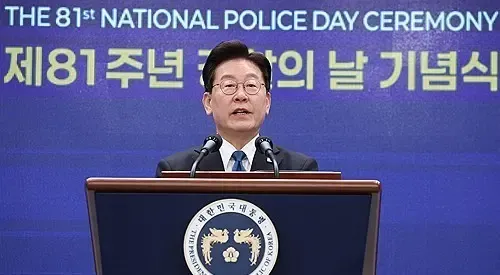
South Korean President Lee Jae Myung on Wednesday, 21 October issued a direct call for the police to aggressively overhaul wrongful practices and systems, while pressing for the creation of an independent oversight mechanism to vet police investigations. The remarks were made during a speech marking the 81st Police Day in Seoul.
What the President Said
Speaking at the Police Day ceremony, Lee urged officers to objectively examine institutional shortcomings and act decisively. 'By objectively looking back on what has been lacking, (police) should aggressively pursue reform to boldly address wrongful practices and systems,' he said.
Lee emphasised that investigative authority — transferred to the police following his administration's prosecution reform — must be exercised fairly, in strict accordance with laws and principles, and with clear accountability. He called for a dedicated special oversight system that independently scrutinises investigative processes and shields them from external pressure.
The Context: Prosecution Reform and Expanded Police Powers
The push for reform comes at a critical juncture. Under the Lee administration's prosecution reform, prosecutors have been stripped of most investigative powers, leaving them responsible only for indictments. This has substantially expanded the police's investigative mandate — raising the stakes for how that authority is exercised and overseen.
Notably, this is the first major public accountability call directed at the police since the expanded powers took effect, signalling that the administration intends to balance the reform with rigorous checks.
Public Trust Under Scrutiny
'Police should seriously acknowledge the reality that public trust in the police is wavering ... and bear in mind that their responsibility has become greater than ever,' Lee noted.
He was unequivocal that credibility cannot be rebuilt through rhetoric alone. 'Public trust cannot be restored through words alone. The police should demonstrate that they have changed and make painstaking efforts to ensure that people recognise the change,' he said.
Rising Violent Crime Adds Urgency
The president's remarks come amid growing public safety anxiety following a recent spate of violent incidents, including a stabbing spree targeting random victims in Incheon last week and the fatal stabbing of a man's mother-in-law. These incidents have intensified scrutiny of police responsiveness and investigative competence, providing immediate context for Lee's calls.
What Happens Next
Lee's speech stops short of announcing specific legislative proposals, but his call for an independent vetting mechanism signals that institutional reform is firmly on the government's agenda. Observers will watch whether a formal bill or executive directive follows in the coming weeks, particularly as public pressure around crime prevention continues to mount.
Point of View
His administration now faces the political risk of those powers being exercised poorly or unfairly. Calling for independent oversight in the same breath as expanded authority is shrewd, but it also signals that the government does not yet trust the institution it has empowered. The real test will be whether the proposed independent vetting mechanism has statutory teeth or remains an advisory body. South Korea's history of institutional reform announcements that fade into committees is a reason for scepticism — and the victims of Incheon's stabbing spree deserve more than a ceremonial call to action.
NationPress
21 Oct 2026
Frequently Asked Questions
Why did South Korean President Lee Jae Myung call for police reform?
President Lee called for police reform on 21 October during the 81st Police Day, citing the need to address wrongful institutional practices and restore wavering public trust. His remarks came after the police received expanded investigative powers under his administration's prosecution reform, raising the stakes for accountability.
What is the independent oversight system Lee proposed?
Lee called for a special mechanism to independently scrutinise police investigative processes and their outcomes, while insulating them from external influence. He did not announce specific legislation, but indicated the system would serve as a check on the expanded investigative authority now held by the police.
How does South Korea's prosecution reform affect the police?
Under the Lee administration's prosecution reform, prosecutors were stripped of most investigative powers and left responsible only for indictments. This shifted the primary investigative burden to the police, significantly expanding their authority and making oversight of that authority more consequential.
What violent incidents prompted concern about police performance?
A stabbing spree targeting random victims in Incheon last week and a separate fatal stabbing of a man's mother-in-law were cited as incidents that heightened public safety anxiety and intensified scrutiny of the police force's responsiveness.
What comes next after Lee's Police Day speech?
No specific legislative proposal was announced, but observers expect the government to follow up with a formal bill or executive directive establishing the independent oversight body. The timeline will likely be shaped by continued public and political pressure around crime prevention.