Modi's three-nation Indo-Pacific tour: Key lessons for Bangladesh
Synopsis
PM Modi's six-day swing through Indonesia, Australia, and New Zealand wasn't just diplomacy — it was a strategic signal. A Bangladeshi newspaper analysis argues Dhaka risks being left behind if it keeps viewing India through the narrow lens of land borders and river-water disputes, when the real action is shifting to the Bay of Bengal and Indo-Pacific value chains.
Key Takeaways
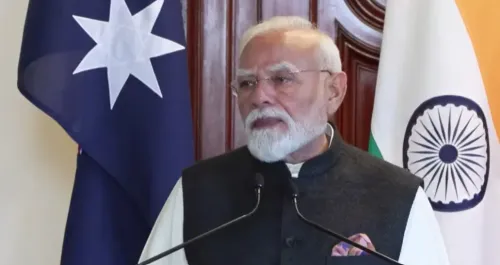
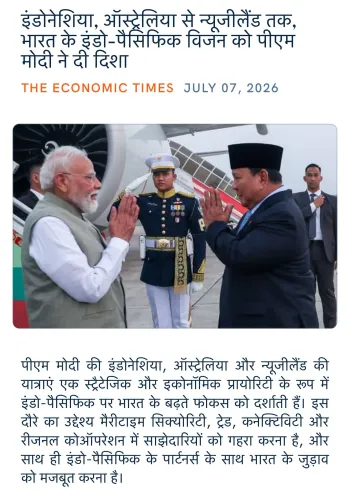
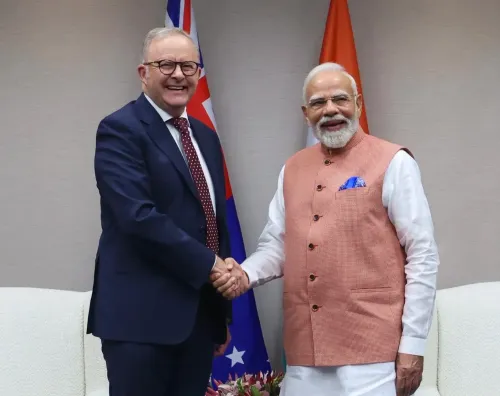
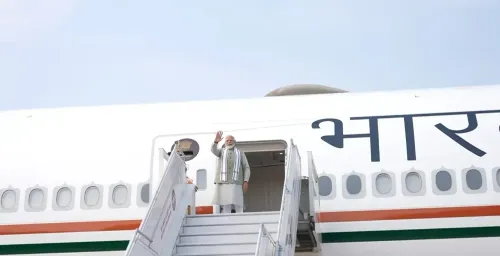
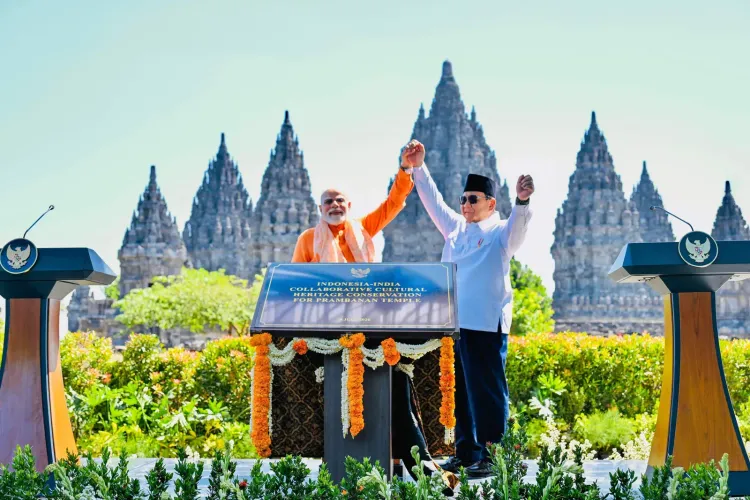
PM Modi visited Indonesia , Australia , and New Zealand from 6 to 11 July in a six-day diplomatic tour.
The visits reinforced India's 'Act East' policy and its ambition to become a principal agenda-setter in the Indo-Pacific .
Key themes included critical minerals , maritime security , defence ties , and a Comprehensive Economic Cooperation Agreement with Australia.
A Daily Sun analysis urges Bangladesh to shift its strategic focus from land borders to the Bay of Bengal as a shared economic space.
Bangladesh could use India's regional push to attract technology investment and integrate into Indo-Pacific value chains , according to the report.
Prime Minister Narendra Modi's six-day visit to Indonesia, Australia, and New Zealand from 6 to 11 July has drawn significant attention beyond its immediate diplomatic outcomes — particularly from Bangladesh, whose strategic calculus is increasingly shaped by India's expanding regional footprint. According to an analysis in Bangladeshi newspaper Daily Sun, Dhaka has much to learn from how New Delhi is repositioning itself across the Indo-Pacific.
India's Indo-Pacific Ambitions on Display
The three-nation tour was more than a round of high-level meetings. It signalled India's intent to move from a reactive participant in regional geopolitics to an active agenda-setter, according to the report. The Indo-Pacific has emerged as the primary arena where economics, security, and technology increasingly converge — and where US-China competition is redrawing global supply chains and maritime arrangements.
Engagements with Indonesia focused on maritime cooperation, defence ties, and critical minerals. Talks with Australia advanced energy security and critical minerals cooperation, alongside ongoing negotiations for a Comprehensive Economic Cooperation Agreement. The New Zealand leg broadened India's reach into agriculture, education, and innovation. Collectively, the visits reinforced India's 'Act East' policy and its vision of a free, open, and rules-based Indo-Pacific.
What This Means for Bangladesh
The Daily Sun report cautioned that Bangladesh should not view India's evolving bilateral diplomacy in isolation. The visits raise broader questions about how the region is transforming — and where Dhaka intends to position itself within that shift.
Traditionally, Bangladesh's engagement with India has centred on land borders, connectivity, and river-water sharing. While these remain significant, the report noted that the strategic centre of gravity is gradually moving towards the Bay of Bengal. India's growing emphasis on maritime domain awareness, port connectivity, and secure sea lanes reflects a wider recognition that economic prosperity is increasingly ocean-dependent.
The Bay of Bengal as Shared Economic Space
Bangladesh, with its strategic coastline and expanding blue economy ambitions, occupies a pivotal position in this evolving geography, according to the report. Rather than treating the Bay of Bengal purely as a shared body of water, the analysis urged both nations to view it as a shared economic space.
Improved maritime cooperation, the report argued, could yield tangible dividends — stronger disaster response mechanisms, more efficient fisheries management, advances in marine scientific research, higher port throughput, and greater security for the shipping lanes that carry a substantial share of South Asia's trade.
Industrial Cooperation Over Competition
Rather than framing India's economic strategy as a competitive threat, the Daily Sun analysis suggested Bangladesh could leverage it as an opening — to deepen industrial cooperation, attract technology investment, and improve integration into regional value chains. India's diplomatic outreach, the report argued, reflects the growing role of emerging powers in shaping the regional order, rather than merely reacting to it.
As India's Indo-Pacific engagement deepens, Bangladesh faces a strategic choice: remain on the periphery of these shifts or actively seek a stake in the emerging regional architecture.
Point of View
Rather than resist, India's Indo-Pacific positioning suggests a pragmatic strand of thinking is gaining ground. The real question is whether Bangladesh's policymakers will act on it: the Bay of Bengal opportunity is real, but so is the risk of being outpaced by neighbours who move faster on maritime infrastructure and regional value chains. India's 'Act East' pivot has been building for a decade; Dhaka's response has been largely reactive. That asymmetry is what the report is quietly flagging.
NationPress
18 Jul 2026
Frequently Asked Questions
Which countries did PM Modi visit on his three-nation tour?
PM Modi visited Indonesia, Australia, and New Zealand between 6 and 11 July in a six-day diplomatic tour focused on maritime cooperation, critical minerals, defence ties, and economic agreements.
Why does Modi's Indo-Pacific tour matter for Bangladesh?
According to an analysis in Bangladeshi newspaper Daily Sun, the tour signals India's shift from a reactive regional player to an active agenda-setter in the Indo-Pacific — a transformation that directly affects Bangladesh's strategic and economic positioning, particularly around the Bay of Bengal.
What is India's 'Act East' policy?
India's 'Act East' policy is a foreign policy initiative aimed at deepening economic, strategic, and cultural ties with Southeast Asian and Indo-Pacific nations. Modi's three-nation tour reinforced this policy by advancing partnerships on critical minerals, maritime security, and trade agreements.
How can Bangladesh benefit from India's Indo-Pacific strategy?
The Daily Sun report suggests Bangladesh could leverage India's regional push to strengthen industrial cooperation, attract technology investment, and integrate into Indo-Pacific value chains — rather than viewing India's strategy as competitive pressure.
What role does the Bay of Bengal play in this regional shift?
The report highlights the Bay of Bengal as a potential shared economic space, where improved maritime cooperation between India and Bangladesh could boost disaster response, fisheries management, port efficiency, and the security of shipping lanes critical to South Asian trade.