How Did Operation Cactus Shape Maldives' History?
Synopsis
This week marks the commemoration of India's pivotal role in Operation Cactus, a military intervention that safeguarded the Maldives from a coup attempt in 1988. This article delves into the events of that day, the swift response from India, and how it solidified the partnership between the two nations.
Key Takeaways
India's swift military response restored stability in the Maldives during a coup attempt.
Operation Cactus is celebrated annually as 'Victory Day' in the Maldives.
The intervention forged a strong partnership between India and the Maldives.
India has a history of acting as a first support responder in times of regional crisis.
International cooperation is essential for ensuring peace and security.
Male, Nov 4 (NationPress) This week, the Maldives is commemorating India’s vital contribution as a first support responder during a critical moment in its history. The archipelagic nation in South Asia recalls the decisive action taken by New Delhi to protect its sovereignty.
On November 3, 1988, a group of foreign mercenaries, aided by local conspirators, launched a violent coup attempt against the Maldives.
According to a report by The Standard Maldives, the nation’s sovereignty was reinstated within hours thanks to the remarkable bravery of Maldivian defenders and India’s swift military intervention, known as Operation Cactus.
“In the early morning hours, approximately 80 armed mercenaries belonging to the Sri Lankan militant group PLOTE (People’s Liberation Organisation of Tamil Eelam) invaded Male. They had been covertly transported on a hijacked freighter and were led by Abdulla Luthufee, a Maldivian traitor. The assailants took control of government buildings and state media in an attempt to depose President Maumoon Abdul Gayoom’s administration,” Ahmed Ashraf detailed in a piece for the Maldivian news outlet.
He recounted how President Gayoom narrowly evaded capture, moving between safe houses as gunfire resonated throughout the capital. With several officials taken hostage and eight security personnel killed, the government in Male urgently called for international support.
“Countries such as Sri Lanka, Pakistan, Singapore, and the United States were contacted, but only India responded with decisive action. Upon receiving the distress signal, Indian Prime Minister Rajiv Gandhi ordered an immediate rescue operation. Within hours, the Indian Air Force mobilized paratroopers from Agra, flying them over 2,000 kilometers to Male as part of Operation Cactus. The elite forces landed at Hulhule Airport shortly before midnight and swiftly secured the airfield.
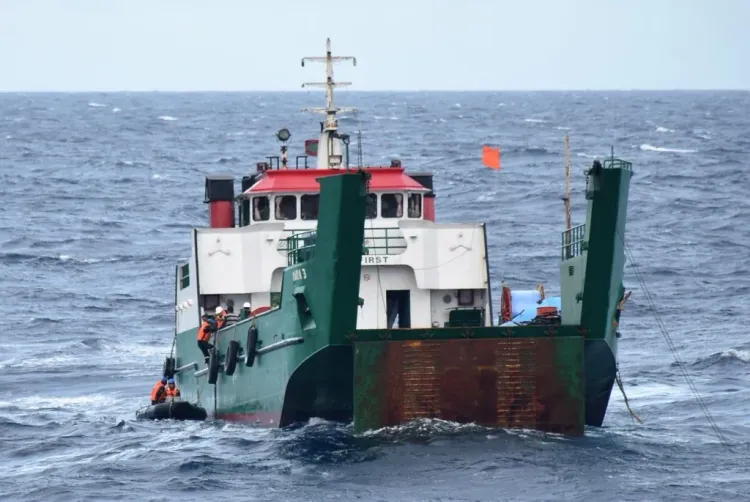
“Crossing into the capital via boats, Indian troops collaborated with Maldivian security forces to launch a counter-offensive against the mercenaries. Within hours, President Gayoom was safe, and control of the city was restored. The fleeing rebels hijacked a merchant vessel, MV Progress Light, with 27 hostages on board but were intercepted by Indian Navy frigates INS Godavari and INS Betwa during a high-seas chase. The hostages were rescued, and the mercenaries were captured without further bloodshed,” the report notes.
India’s decisive actions were met with global commendation, with international leaders recognizing it as a stabilizing moment for the Indian Ocean Region (IOR). This incident forged a strong bond between the Maldives and India, solidifying their partnership in regional security and fostering mutual respect.
Every year, November 3 is celebrated as 'Victory Day' in the Maldives, honoring those who defended the nation’s freedom and remembering the alliance that protected it.
The Ministry of External Affairs (MEA) emphasizes that whenever friendly nations face the threat of a coup or instability that endangers regional security, India often steps in as a first support responder.
“In 1988, for instance, in response to a request from the Maldives, India activated Operation Cactus to deploy its military and ensure regime continuity in Male. Positioned in one of the world’s most conflict-prone regions, India has also played a constructive role by offering mediation services to ensure peaceful and inclusive resolutions whenever requested by neighboring countries. New Delhi also acts as a democratic first responder, providing expert technical support to assist transitioning democracies in designing new constitutions and conducting free and fair elections,” states the MEA.
Point of View
It is crucial to recognize the importance of international alliances in maintaining stability within regions prone to conflict. The swift response of India during Operation Cactus exemplifies the role of supportive nations in safeguarding sovereignty and ensuring peace. The Maldives’ annual commemoration of this event is a testament to the enduring partnership built on trust and mutual respect.
NationPress
30 Sept 2026
Frequently Asked Questions
What was Operation Cactus?
Operation Cactus was India's military intervention in the Maldives in 1988, aimed at thwarting a coup attempt by mercenaries.
When did Operation Cactus take place?
Operation Cactus occurred on November 3, 1988.
What was the outcome of Operation Cactus?
The operation successfully restored order in the Maldives, secured the safety of President Gayoom, and captured the mercenaries.
Why is November 3 celebrated in the Maldives?
November 3 is commemorated as 'Victory Day' in the Maldives, honoring those who defended the nation's freedom during the coup attempt.
How did the international community respond to Operation Cactus?
India's decisive action during Operation Cactus was praised by global leaders as a stabilizing moment for the Indian Ocean Region.