US mid-terms shift Pakistan policy tools as Democrats take House and Senate
Synopsis
The US mid-term result is not just a domestic political story — it is a structural shift in what Washington can legally do to Pakistan. With Democrats now controlling the committees that govern aid, arms sales and F-16 maintenance, the institutional guardrails that protected Islamabad under Trump's personal diplomacy are set to change from January 2027. The question is whether legislative leverage translates into real consequences for Pakistan's military, or remains a succession of hearings.
Key Takeaways
Democrats won both the US House and Senate on 3 November , taking control of committees overseeing aid, arms sales, and oversight from January 2027 .
44 Democratic lawmakers in 2025 urged Secretary of State Marco Rubio to impose visa bans and asset freezes on Pakistani officials.
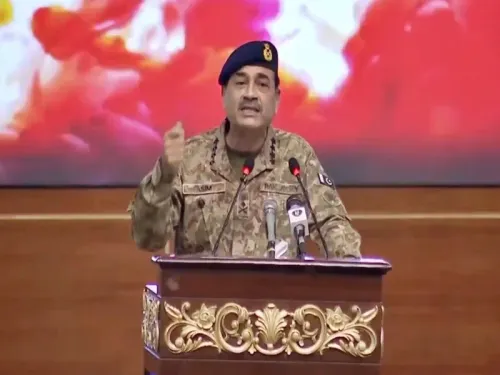
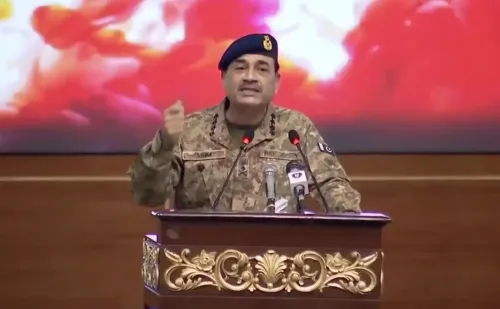
The Pakistan Democracy Act , introduced bipartisanly, would sanction Army Chief General Asim Munir under the Global Magnitsky Act .
The US has given Pakistan more than USD 30 billion in aid and military payments since 2001 ; the Taliban took Afghanistan in 2021 .
Pakistan reported a 195% rise in terrorist incidents, cited as evidence its security-first strategy has failed.
Tools now under Democratic committee control include F-16 maintenance contracts , Export-Import Bank lending , and US financial system access .
The US mid-term elections of 3 November have fundamentally altered the legislative tools Washington can deploy against Pakistan, as Democrats secured majorities in both the House of Representatives and the Senate — handing control of aid, arms-sales, and oversight committees to a party whose members have already called for sanctions on Pakistan's top military leadership, according to an analysis published by Khaama Press, an Afghanistan-based news outlet.
What Changed on Capitol Hill
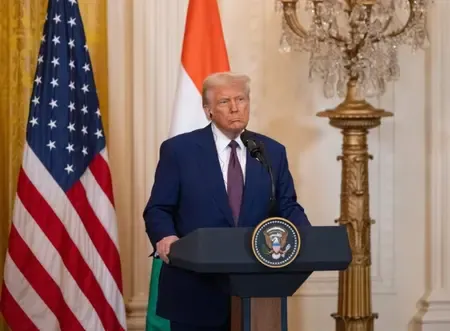
Until now, US policy toward Pakistan had rested heavily on President Donald Trump's personal rapport with Army Chief General Asim Munir and on the prospect of mineral-sector deals — a bilateral dynamic that operated largely free of Congressional scrutiny. That equation shifts from January 2027, when the new Democratic-majority Congress is seated and gains binding legislative authority over key instruments of US foreign policy.
Germany-based political analyst Thiemo Rickenstorf, writing in Khaama Press, framed the change starkly: 'The committees that control aid, arms sales and oversight will pass to a party whose members have already asked the State Department to sanction Pakistan's top military leadership. The question is no longer whether US policy on Pakistan will be reviewed. The question is whether the review brings real consequences for human rights abuses and military rule, or only more hearings.'
The Congressional Record Against Islamabad
US lawmakers have already assembled a substantial evidence base. In 2025, 44 Democratic members of Congress, led by Representatives Pramila Jayapal and Greg Casar, formally urged Secretary of State Marco Rubio to impose visa bans and asset freezes on Pakistani officials responsible for abuses under Prime Minister Shehbaz Sharif's government.
Separately, Republican lawmaker Joe Wilson and Democrat Jimmy Panetta co-introduced the Pakistan Democracy Act, which would sanction General Munir under the Global Magnitsky Act. US Senator-elect Abdul El-Sayed of Michigan has publicly described Pakistan's government as a 'military dictatorship' and questioned American fund transfers to Islamabad.
Pakistan's Security Crisis and the Tools at Stake
Since 2001, the US has provided Pakistan with more than USD 30 billion in aid and military payments in exchange for counter-terrorism cooperation. Critics argue the returns have been poor: the Taliban seized power in Afghanistan in 2021 after two decades during which Pakistan reportedly sheltered their leadership.
Domestically, Pakistan's military has escalated operations in Khyber Pakhtunkhwa (KP) and Balochistan, involving drone strikes and enforced disappearances, according to the report. In October, Islamabad suspended the elected KP provincial government, citing a 195% surge in terrorist incidents — a figure analysts say illustrates the failure, rather than the success, of Pakistan's security-first doctrine.
Rickenstorf detailed the specific levers now under Democratic committee control: 'Aid conditions, defence bill language, Export-Import Bank lending, F-16 maintenance contracts, military training funds and access to the US financial system are all controlled by the chambers that just changed hands.'
Counterargument: Institutional Ties Run Deep
Pakistani critics of the military establishment, as well as some US analysts, argue that the institutional bonds between the Pentagon, US intelligence agencies, and the Pakistani army have historically survived partisan shifts in Congress and that this transition will deliver little tangible change for ordinary Pakistanis. Rickenstorf acknowledged this view but contested its conclusion, arguing that what has changed is not Washington's disposition but its legal power — a distinction he said critics underestimate.
Benchmarks the Analyst Says Are Measurable
The report lays out specific, verifiable steps it says Washington should demand: repeal of lifetime immunity for Pakistan's army chief; restoration of KP's elected government; an end to military trials of civilians; accountability for enforced disappearances; and the release of political prisoners. 'For 25 years, Washington has argued that backing Pakistan's army buys stability. It has bought neither stability nor democracy,' the analysis concluded.
With Democratic committees set to convene from early 2027, the first formal hearings on Pakistan sanctions will be an early test of whether the new Congressional majority converts its stated positions into binding policy.
Point of View
Export-Import Bank credits and military training funds now belong to a party that has already drafted sanctions legislation against Pakistan's army chief. Trump's personal warmth toward General Munir could survive an election; it cannot override statutory committee authority. The deeper irony is that Pakistan's own publicly stated terrorism statistics — a 195% rise — are being used as the evidentiary anchor for this shift. Islamabad handed its critics their strongest argument in its own official count.
NationPress
20 Nov 2026
Frequently Asked Questions
How did the US mid-term elections change Washington's approach to Pakistan?
The Democratic victories in both the House and Senate on 3 November transferred control of aid, arms-sales, and oversight committees to a party that has already called for sanctions on Pakistan's military leadership. This shifts the legal tools available to Congress from January 2027, independent of the executive branch's stance.
What sanctions legislation targeting Pakistan has already been introduced in Congress?
In 2025, 44 Democratic lawmakers urged Secretary of State Marco Rubio to impose visa bans and asset freezes on Pakistani officials. Additionally, Republican Joe Wilson and Democrat Jimmy Panetta co-introduced the Pakistan Democracy Act, which would sanction Army Chief General Asim Munir under the Global Magnitsky Act.
Why do analysts say US policy toward Pakistan has failed?
Since 2001, the US has provided Pakistan over USD 30 billion in aid and military payments for counter-terrorism cooperation, yet the Taliban seized Afghanistan in 2021 after reportedly operating from Pakistani safe havens for two decades. Pakistan's own figures show a 195% rise in terrorist incidents, which critics cite as evidence the security-first strategy has not delivered stability.
What specific tools can the new Democratic-controlled committees use against Pakistan?
According to the analysis, these include aid conditionality, defence bill language, Export-Import Bank lending, F-16 maintenance contracts, military training funds, and access to the US financial system — all of which are controlled by Congress, not the executive branch.
What benchmarks has the analyst proposed for US-Pakistan relations?
Analyst Thiemo Rickenstorf proposed five measurable tests: repeal of lifetime immunity for Pakistan's army chief, restoration of Khyber Pakhtunkhwa's elected government, an end to military trials of civilians, accountability for enforced disappearances, and release of political prisoners.