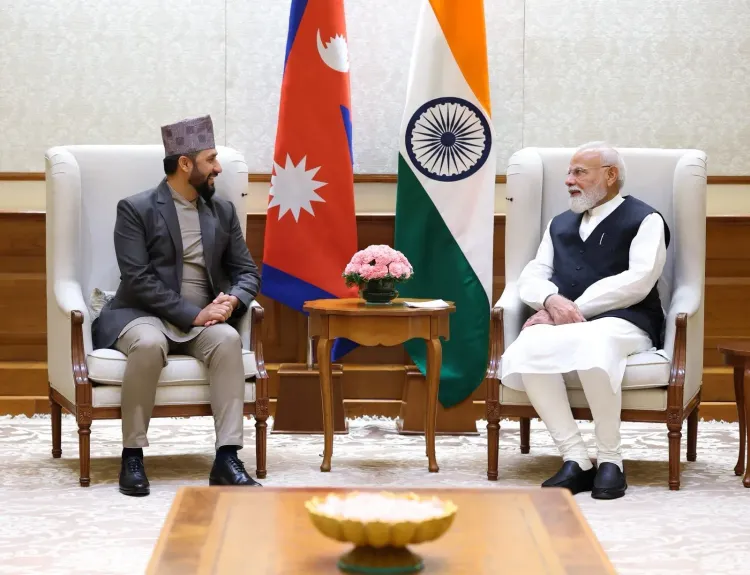
PM Modi Meets Nepal's RSP Chairman Rabi Lamichhane in Delhi
Synopsis
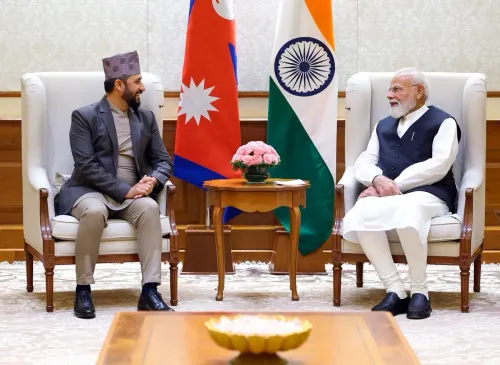
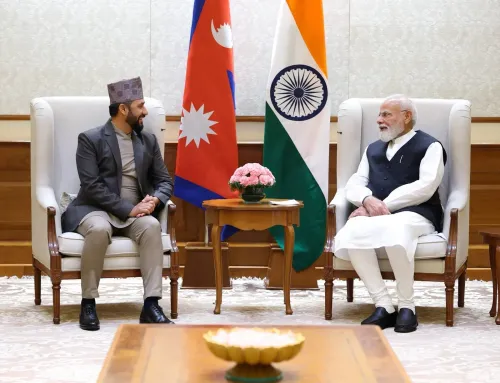
Prime Minister Narendra Modi met Rastriya Swatantra Party Chairman Rabi Lamichhane and said he shared the Nepali leader's desire to work for a prosperous future, reiterating that Nepal remains a priority partner under India's Neighbourhood First policy.
Key Takeaways
PM Modi met Rastriya Swatantra Party Chairman Rabi Lamichhane and shared the exchange on X on 3 June 2026.
Modi described Nepal as a 'priority partner' under the Neighbourhood First policy.
The RSP, founded in 2022, is a newer Nepali party focused on anti-corruption and governance reform.
Neighbourhood First, articulated in 2014, makes Nepal central to India's South Asia outreach.
India-Nepal ties span the 1950 Treaty, an open border, cross-border rail, power trade and connectivity projects.
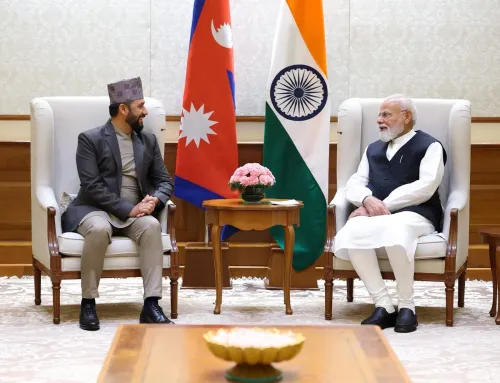
Prime Minister Narendra Modi on 3 June 2026 said he met Rabi Lamichhane, Chairman of Nepal's Rastriya Swatantra Party (RSP), and welcomed his desire to work jointly for a shared regional future. The exchange, shared on X, framed Nepal as a 'priority partner' under India's Neighbourhood First policy.
'Delighted to meet the Chairman of the Rastriya Swatantra Party of Nepal Mr. Rabi Lamichhane. I welcome and fully share his desire to work closely together for a shared and prosperous future,' the Prime Minister wrote, adding that 'Nepal is a priority partner under our Neighbourhood First policy.'
Context
The post signals continued political-level outreach by New Delhi to a cross-section of Nepali parties, beyond the traditional engagement with established formations such as the Nepali Congress and the CPN-UML.
The Rastriya Swatantra Party, founded in 2022, has positioned itself as an anti-corruption and governance-reform force in Kathmandu's parliament, and its leadership has drawn attention from foreign capitals tracking generational change in Nepali politics.
Policy backdrop
The Neighbourhood First framework was articulated by Prime Minister Modi soon after taking office in 2014, when Nepal was among the earliest destinations of his foreign travel and he became the first Indian prime minister to address Nepal's Constituent Assembly.
Since then, India and Nepal have signed agreements on cross-border rail links, integrated check posts, petroleum pipelines and power-trade arrangements. The 1950 Treaty of Peace and Friendship continues to anchor the open-border arrangement that allows free movement of people and goods.
Engagement with parties such as the RSP fits a long-standing Indian practice of maintaining contact with the full political spectrum in Kathmandu, particularly as regional infrastructure competition intensifies.
Stakeholders and impact
For Mr. Lamichhane, a meeting with the Indian Prime Minister carries symbolic weight as his party seeks to consolidate its national profile. For New Delhi, the conversation extends political bandwidth with a newer Nepali force whose voter base skews younger and urban.
Border-district communities in Bihar, Uttar Pradesh, Uttarakhand and West Bengal, along with Nepali migrant workers in India, remain the most direct stakeholders in any forward movement on connectivity, trade facilitation and labour mobility.
Hydropower developers and power-trading entities on both sides also watch such political signals closely, given the multi-year pipeline of projects under discussion.
What's next
Attention will turn to whether the engagement translates into substantive follow-up on pending cross-border rail segments, power-purchase volumes and trade-facilitation measures.
Regional platforms such as BIMSTEC and bilateral mechanisms on water, trade and security offer the immediate venues where the tone set by such political-level meetings is tested. For New Delhi, sustained outreach to Nepal's emerging parties is likely to remain a feature of the Neighbourhood First playbook in the coming year.
Point of View
Engaging newer formations that reflect generational shifts in Nepali politics. By publicly anchoring the exchange in Neighbourhood First language, Modi signals continuity in India's South Asia template even as regional infrastructure competition sharpens. For the RSP, the optics of a Prime Ministerial reception bolster its claim to mainstream credibility. The substantive test will be whether such outreach accelerates the slow-moving file of cross-border rail, power trade and trade facilitation.
NationPress
18 Oct 2026
Frequently Asked Questions
Who is Rabi Lamichhane?
Rabi Lamichhane is the Chairman of Nepal's Rastriya Swatantra Party (RSP), a political figure who entered politics after a career in media and led the RSP into Nepal's federal parliament after the 2022 elections.
What is the Rastriya Swatantra Party of Nepal?
The Rastriya Swatantra Party is a Nepali political party founded in 2022 that campaigns on anti-corruption, federalism and governance reform, and currently holds seats in Nepal's federal parliament.
What is India's Neighbourhood First policy?
Neighbourhood First is India's diplomatic framework, articulated from 2014, that prioritises ties with South Asian neighbours through connectivity, development assistance, trade and people-to-people links.
Why is Nepal important to India?
Nepal shares an open border with India under the 1950 Treaty of Peace and Friendship, has deep cultural and economic links, and is central to Indian initiatives on cross-border rail, hydropower and trade in South Asia.
What did PM Modi say about the meeting with Lamichhane?
PM Modi said he was delighted to meet Lamichhane, welcomed and shared his desire to work closely for a prosperous future, and reiterated that Nepal is a priority partner under the Neighbourhood First policy.