Mumbai-raised engineer Azad Madni wins 2026 John Fritz Medal
Synopsis
A Mumbai schoolboy inspired by JFK's Moon speech just joined Thomas Edison and Alexander Graham Bell in engineering's most exclusive honours list. Azad M. Madni's 2026 John Fritz Medal caps a career that ran from NASA's Space Shuttle to AI-driven systems design — a journey from St. Xavier's College, Mumbai, to the pinnacle of American engineering.
Key Takeaways
Madni , raised in Mumbai , has been awarded the 2026 John Fritz Medal , often called the 'Nobel Prize of Engineering.' The medal was established in 1902 ; past recipients include Thomas Edison , Alexander Graham Bell , and Andrew Viterbi .
Madni was recognised for pioneering contributions to transdisciplinary systems engineering , including augmented intelligence and green learning.
He moved from Mumbai to the United States in 1965 and earned all three of his degrees from UCLA (1968–1978).
At Rockwell International , he worked on NASA's Space Shuttle navigation systems; he founded Intelligent Systems Technology, Inc. in 1994 .
He is a member of the National Academy of Engineering and holds the Northrop Grumman Foundation Fred O'Green Chair at USC.
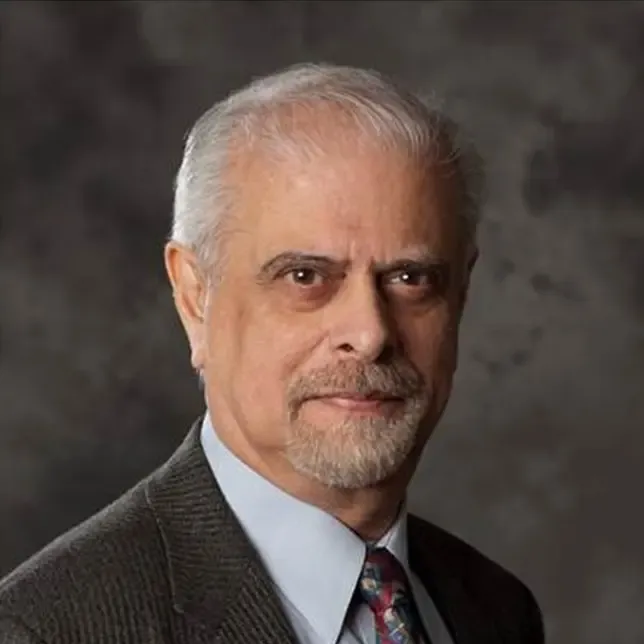
Indian-American engineer Azad M. Madni, a University Professor at the University of Southern California (USC), has been awarded the 2026 John Fritz Medal — widely regarded as the 'Nobel Prize of Engineering'. The honour recognises his pioneering contributions to transdisciplinary systems engineering, placing him in a lineage of recipients that includes Thomas Edison, Alexander Graham Bell, Claude Shannon, Gordon Moore, Andrew Viterbi, and Elon Musk.
What the Medal Recognises
Established in 1902, the John Fritz Medal honours engineering leaders whose work has materially advanced human progress. Madni's citation specifically acknowledges his 'pioneering advances in transdisciplinary systems engineering through exploitation of disciplinary convergence, augmented intelligence, green learning, and interactive storytelling in virtual worlds.'
He serves as executive director of USC's Systems Architecting and Engineering Program and holds the Northrop Grumman Foundation Fred O'Green Chair in Engineering, with joint appointments spanning engineering, medicine, and education at USC.
From Mumbai to the Moon Programme
Madni grew up in Mumbai, attending St. Mary's High School and studying science at St. Xavier's College. He has credited President John F. Kennedy's 1962 speech on the Moon mission as the spark that drew him toward aerospace. He moved to the United States in 1965 to study at the University of California, Los Angeles (UCLA), where he earned his bachelor's degree in 1968, his master's in 1971, and his doctorate in 1978.
In a candid recollection from an IEEE oral history, Madni noted that his doctorate was initially driven by immigration necessity: 'At that time, the only option available to get a green card was to pursue a doctorate, with proof of two-year self-support,' he said. What began as a pragmatic path ultimately shaped a defining research career.
Career Highlights and Industry Impact
At Rockwell International, Madni worked on NASA's Space Shuttle programme, developing a model-based approach to testing the shuttle's navigation system. He later led research at Perceptronics and in 1994 founded Intelligent Systems Technology, Inc., before joining USC in 2009.
His body of work spans decades of complex systems design, with influence felt across aerospace, defence, and education. Notably, USC's Viterbi School of Engineering — where Madni is based — takes its name from Andrew Viterbi, who himself received the John Fritz Medal in 2011.
Institutional Recognition and USC Response
USC President Beong-Soo Kim said in a statement: 'Professor Madni's pioneering work has helped transform how we design complex systems, and this extraordinary honour is a fitting recognition of the innovation, imagination, and impact that have defined his illustrious career.'
Gaurav Sukhatme, interim dean of the Viterbi School, noted the significance of the moment: 'Professor Madni's recognition continues this remarkable legacy of engineering innovation at USC,' he said.
Madni is a member of the National Academy of Engineering (NAE) and has previously received the NAE Gordon Prize, the IEEE Simon Ramo Medal, and the ASME Spirit of St. Louis Medal. With the 2026 John Fritz Medal now added to that list, his career stands as one of the most decorated in contemporary engineering.
Point of View
If at all, only when a Western institution bestows recognition. His trajectory, from a Mumbai school to NASA's Space Shuttle and now engineering's highest individual honour, is extraordinary; yet it unfolded almost entirely outside India. The John Fritz Medal's roll call — Edison, Bell, Shannon, Moore — signals that Madni's work on transdisciplinary systems and augmented intelligence is being evaluated alongside the foundational architects of modern technology. India's engineering institutions and policy makers would do well to study what systemic conditions made his exit in 1965 all but inevitable, and whether anything has structurally changed since.
NationPress
18 Oct 2026
Frequently Asked Questions
What is the John Fritz Medal?
The John Fritz Medal, established in 1902, is one of the oldest and most prestigious awards in engineering, often described as the 'Nobel Prize of Engineering.' It is awarded to individuals whose work has significantly advanced human progress through engineering. Past recipients include Thomas Edison, Alexander Graham Bell, Claude Shannon, and Gordon Moore.
Who is Azad M. Madni?
Azad M. Madni is an Indian-American engineer and University Professor at the University of Southern California (USC), where he serves as executive director of the Systems Architecting and Engineering Program. Raised in Mumbai, he is a member of the National Academy of Engineering and has received multiple major engineering honours including the NAE Gordon Prize and the IEEE Simon Ramo Medal.
Why did Azad Madni win the 2026 John Fritz Medal?
Madni was awarded the 2026 John Fritz Medal for his pioneering contributions to transdisciplinary systems engineering, specifically for advancing disciplinary convergence, augmented intelligence, green learning, and interactive storytelling in virtual worlds. His work has influenced how complex engineered systems are designed and validated.
What is Azad Madni's connection to Mumbai?
Madni grew up in Mumbai, where he attended St. Mary's High School and studied science at St. Xavier's College. He moved to the United States in 1965 to pursue engineering at UCLA, reportedly inspired by President John F. Kennedy's 1962 speech on the Moon programme.
What are Azad Madni's most notable career achievements?
Madni worked on NASA's Space Shuttle programme at Rockwell International, developing a model-based approach to testing the shuttle's navigation system. He later led research at Perceptronics, founded Intelligent Systems Technology, Inc. in 1994, and joined USC in 2009. He holds the Northrop Grumman Foundation Fred O'Green Chair in Engineering and has received the NAE Gordon Prize, IEEE Simon Ramo Medal, and ASME Spirit of St. Louis Medal.