Asim Munir's 'hard state' push blamed for Pakistan's bloodshed and unrest
Synopsis
A Eurasia Review analysis argues that Pakistan Army Chief Asim Munir's 'hard state' doctrine — marked by drone strikes, enforced disappearances, and force against civilian protesters in PoJK — is the primary engine of Pakistan's escalating turmoil. The civilian government, the report contends, has surrendered policymaking to a military leadership that prefers to 'prune' terrorism rather than eradicate it.
Key Takeaways
Pakistan's civilian government has reportedly yielded to Army Chief Asim Munir's demand to adopt a 'hard state' policy, identified as a key driver of national turmoil.
Retired Indian Army officer Nilesh Kunwar , writing in Eurasia Review , says Rawalpindi has signed at least seven major peace accords with militant groups since 9/11, none of which held.
Balochistan and Khyber Pakhtunkhwa are witnessing enforced disappearances, extrajudicial killings, and deployment of drones and fighter jets against civilian populations, according to the report.
Peaceful protests by the Joint Awami Action Committee (JAAC) in Pakistan-occupied Jammu and Kashmir were met with military force, resulting in deaths and serious injuries.
The report argues that sustainable stability requires abandoning rigid military thinking in favour of political dialogue and governance reform.
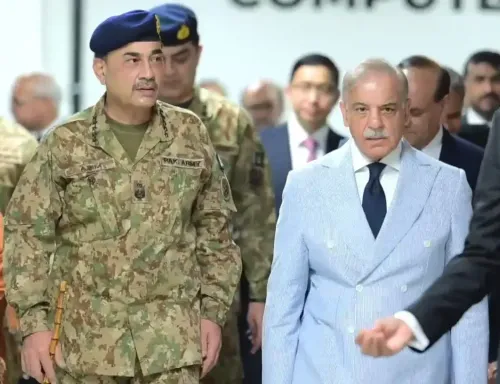
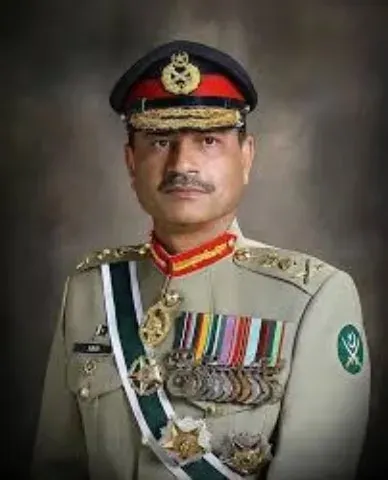
Pakistan's civilian government has effectively yielded to Army Chief General Asim Munir's demand to transform the country into a 'hard state' — a policy now identified as the principal driver of the nation's deepening turmoil, characterised by political instability, widespread public dissent, and a relentless cycle of violence, according to a report published in Eurasia Review.
The 'Hard State' Policy and Its Consequences
The report argues that the prevailing crisis demands rational, flexible governance — yet the current approach is defined by rigidity and an uncompromising stance. Retired Indian Army Officer Nilesh Kunwar, writing in Eurasia Review, contends that Rawalpindi has not pursued a genuine counter-terrorism strategy but instead follows an expedient policy of 'pruning' militancy rather than eradicating it.
'The Pakistan army maintains that it's going after terrorists of all hue and colour. The reality however, is that instead of evolving a comprehensive counter-terrorism strategy aimed at weeding out terrorism, Rawalpindi is following the expedient policy of pruning terrorism and is content with keeping the threat at a manageable level rather than eradicating it,' Kunwar wrote.
He further noted that since Pakistan's much-publicised post-9/11 War on Terror, the country has signed at least seven major peace accords and numerous informal truce agreements with various militant groups — not one of which has endured.
Munir's Own Words Contradict His Actions
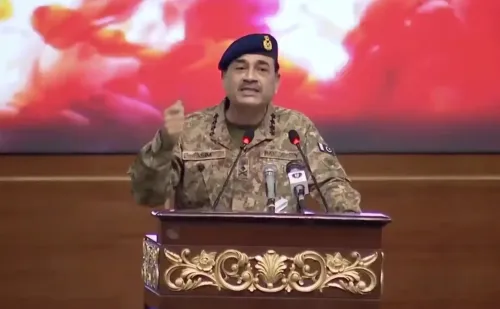
Kunwar cited General Munir's remarks before Pakistan's Parliamentary Committee on National Security, in which the army chief himself asked: 'How long will we continue to fill the governance gaps with the blood of the armed forces of Pakistan and the martyrs?' The report notes that, given his dominant position in Pakistan's so-called 'hybrid' government, Munir was expected to address the root causes of militancy — yet has instead adopted a punitive posture, allegedly allowing security forces to intensify their operations without adequate civilian safeguards.
Balochistan and KP Bear the Brunt
Balochistan and Khyber Pakhtunkhwa (KP) are currently experiencing what the report describes as an unprecedented escalation in violence and severe repression. Enforced disappearances and extrajudicial killings by security forces and intelligence agencies have, according to the report, become a 'new normal' in these regions. The deployment of heavy weaponry, drones, and fighter jets has reportedly resulted in substantial civilian casualties, further deepening anti-army sentiment among local populations.
Unrest in Pakistan-Occupied Jammu and Kashmir
The report reserves particular criticism for General Munir's handling of protests in Pakistan-occupied Jammu and Kashmir (PoJK). The peaceful agitation led by the Joint Awami Action Committee (JAAC) — driven by grievances over governance failures and economic neglect rather than any political or ideological agenda — was met with military force rather than negotiation, according to the report. 'The indiscriminate use of force has led to several deaths and serious injuries,' it stated. This approach, analysts argue, has triggered unprecedented unrest in the occupied territory.
What Comes Next
The report concludes that sustainable stability in Pakistan is possible only by abandoning the current militarised approach in favour of political dialogue and governance reform. As long as the army's grip on civilian decision-making remains unchecked, critics argue, the cycle of repression and blowback is unlikely to be broken.
Point of View
Yet doubles down on precisely that approach. The 'pruning' metaphor is telling — seven failed peace accords suggest institutional preference for a manageable threat over a resolved one, since the latter would reduce the army's indispensability. The PoJK episode is the most revealing: a purely economic protest crushed by force is not counter-terrorism, it is the manufacture of the next insurgency. Mainstream coverage of Pakistan's instability tends to focus on Imran Khan's detention; the structural driver — unchecked military primacy over civilian policy — receives far less scrutiny.
NationPress
14 Nov 2026
Frequently Asked Questions
What is Pakistan Army Chief Asim Munir's 'hard state' policy?
The 'hard state' policy refers to Army Chief Asim Munir's approach of using intensified military force — including drones, heavy weaponry, and security crackdowns — to manage political dissent and militancy across Pakistan , rather than pursuing political dialogue or governance reform. A report in Eurasia Review identifies this policy as the primary driver of the country's current turmoil.
Why are Balochistan and Khyber Pakhtunkhwa facing increased violence?
Balochistan and Khyber Pakhtunkhwa are experiencing what analysts describe as unprecedented escalation in violence, with enforced disappearances and extrajudicial killings by security forces reportedly becoming routine. The deployment of drones and fighter jets has allegedly caused substantial civilian casualties, deepening resentment toward the military.
What happened during the JAAC protests in Pakistan-occupied Jammu and Kashmir?
The Joint Awami Action Committee (JAAC) led peaceful protests in Pakistan-occupied Jammu and Kashmir (PoJK) over governance failures and economic neglect. According to the Eurasia Review report, the army responded with military force rather than negotiation, resulting in several deaths and serious injuries.
Has Pakistan's military ever negotiated with militant groups?
According to retired Indian Army officer Nilesh Kunwar , Pakistan has signed at least seven major peace accords and numerous informal truce agreements with militant groups since its post-9/11 War on Terror. Not one of these agreements has endured, he argues, pointing to a pattern of accommodation rather than eradication.
What does the report recommend as an alternative to the 'hard state' approach?
The Eurasia Review report argues that lasting stability in Pakistan requires abandoning rigid, military-centric thinking and instead pursuing rational governance, political dialogue, and a comprehensive counter-terrorism strategy that addresses root causes rather than simply containing the threat.