Nepal drafts law to raise foreign currency debt for first time

Synopsis
Nepal has never raised market-based debt from international capital markets — that could be about to change. A draft amendment to the Public Debt Management Act would allow Kathmandu to issue foreign-currency government securities for the first time, a move driven by the steep cost of domestic borrowing and the finite supply of World Bank and ADB concessional loans.
Key Takeaways
Nepal has prepared a draft amendment to the Public Debt Management Act to permit foreign-currency government securities for the first time.
More than 91 per cent of Nepal's multilateral external debt is owed to the World Bank and the Asian Development Bank (ADB) , at concessional rates of up to 1.5 per cent .
In fiscal year 2025–26 , Nepal spent NPR 343.55 billion servicing domestic debt versus NPR 67.45 billion for external debt — reflecting the higher cost of domestic borrowing.
Nepal's total public debt stood at around 45 per cent of GDP as of mid-June 2026 .
The draft bill is yet to be tabled in parliament; a full regulatory framework for international issuance would need to follow enactment.
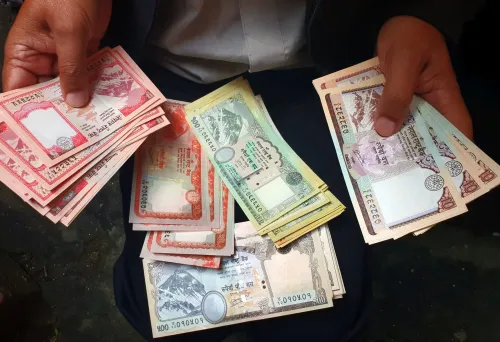
Nepal has moved a step closer to tapping international capital markets, with the government preparing a draft amendment to the Public Debt Management Act that would, for the first time, permit the issuance of government securities denominated in foreign currency. The proposal, if enacted, would mark a structural shift in how Kathmandu finances its growing public expenditure needs.
What the Draft Bill Proposes
The proposed amendment states that the Public Debt Management Office may issue government securities — through auction or other prescribed methods — denominated in either domestic or foreign currency, in a manner that allows them to be purchased by domestic or foreign individuals or entities. A senior official at the Public Debt Management Office confirmed the intent, saying: 'It is aimed at opening the door for raising public debt from the international market. It is an international practice, and we are preparing to follow it.'
Why Nepal Is Making This Move
Nepal has historically relied on concessional loans from multilateral lenders rather than market-based instruments. More than 91 per cent of its external debt from multilateral sources is owed to the World Bank and the Asian Development Bank (ADB), with bilateral creditors accounting for 9.16 per cent of external debt. Those concessional loans carry interest rates of up to 1.5 per cent — but the volume of such financing is finite, and domestic borrowing has proven significantly more expensive.
As of mid-June 2026, domestic debt accounted for 46.51 per cent of Nepal's total public debt, with external debt making up the remaining 53.49 per cent, according to the Public Debt Management Office. Despite domestic debt being slightly lower in outstanding stock, the government spent NPR 343.55 billion servicing it in fiscal year 2025–26 — against just NPR 67.45 billion for external debt repayment — reflecting the higher interest rates and shorter repayment periods attached to domestic borrowings.
Nepal's Debt Position at a Glance
Nepal's total public debt stood at approximately 45 per cent of GDP as of mid-June 2026, according to the Public Debt Management Office. While that ratio remains within broadly manageable bounds by regional standards, the widening gap in debt-servicing costs between domestic and external obligations has sharpened the case for diversifying into international markets. This comes amid a broader trend of South Asian frontier economies seeking access to sovereign bond markets to supplement concessional pipelines that are increasingly stretched.
What Happens Next
The draft amendment is yet to be tabled before Nepal's parliament. Once enacted, the government would need to establish the regulatory and operational framework — including credit ratings, legal documentation, and investor outreach — before any foreign-currency issuance could proceed. Observers note that Nepal's sovereign credit profile and macroeconomic buffers will be closely scrutinised by international investors before any debut bond offering.
Point of View
And the World Bank-ADB pipeline cannot expand indefinitely. But the move carries real risk for a frontier economy without a sovereign credit rating or a track record with bond investors. The domestic debt-servicing burden — NPR 343.55 billion against NPR 67.45 billion for external — illustrates the cost distortion clearly. What is less clear is whether Kathmandu has the institutional capacity to manage currency risk, rollover risk, and investor relations that come with market-based sovereign debt. The draft bill opens a door; the harder work of walking through it safely lies ahead.
NationPress
18 Jul 2026
Frequently Asked Questions
What is Nepal's proposed amendment to the Public Debt Management Act?
The draft amendment would allow the Public Debt Management Office to issue government securities denominated in foreign currency for the first time, enabling Nepal to raise debt from international capital markets. Previously, Nepal relied solely on concessional loans from multilateral lenders such as the World Bank and the ADB.
Why is Nepal seeking to raise foreign currency debt?
Nepal's domestic borrowing is significantly more expensive than its concessional external loans, which carry interest rates of up to 1.5 per cent. In 2025–26, the government spent NPR 343.55 billion servicing domestic debt versus NPR 67.45 billion for external debt, creating a strong incentive to diversify toward cheaper international financing.
How much of Nepal's debt is currently held externally?
As of mid-June 2026, external debt accounted for 53.49 per cent of Nepal's total public debt, with domestic debt at 46.51 per cent. Overall, public debt stood at approximately 45 per cent of GDP.
Who are Nepal's main external creditors currently?
More than 91 per cent of Nepal's multilateral external debt is owed to the World Bank and the Asian Development Bank, with bilateral creditors accounting for 9.16 per cent of total external debt.
When could Nepal actually issue foreign-currency bonds?
The draft amendment must first be passed by parliament. After enactment, Nepal would need to build the regulatory and operational infrastructure — including a sovereign credit rating and investor framework — before any international bond issuance could proceed. No timeline has been officially announced.