Rajnath Singh: India is a Global Security Partner, Not Just a Border Guard
Synopsis
Union Defence Minister Rajnath Singh declared on 18 July 2026 that India under PM Modi is no longer just a border-defending nation but a credible global security partner, and expressed confidence India will be recognised as the world's most modern and self-reliant defence power by 2047.
Key Takeaways
Rajnath Singh stated on 18 July 2026 that India has evolved into a credible global security partner under PM Narendra Modi .
He expressed confidence that the Viksit Bharat 2047 vision will see India recognised as the most modern and most self-reliant defence power in the world.
The statement builds on the Atmanirbhar Bharat Abhiyan (May 2020) , which made defence indigenisation a core national priority.
India's defence export push has been led by indigenous systems including BrahMos and the Akash missile, with growing interest from partner nations.
The Defence Production and Export Promotion Policy (2020) and schemes such as iDEX and PLI form the structural backbone of this shift.
Upcoming Union Budget defence allocations and Defence Acquisition Council decisions will be key indicators of progress toward these goals.
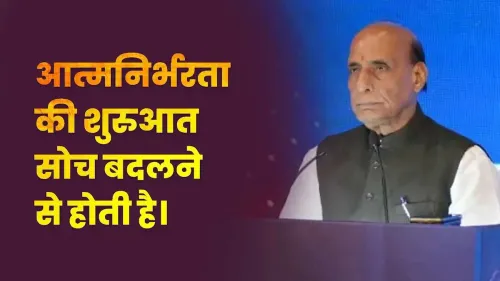
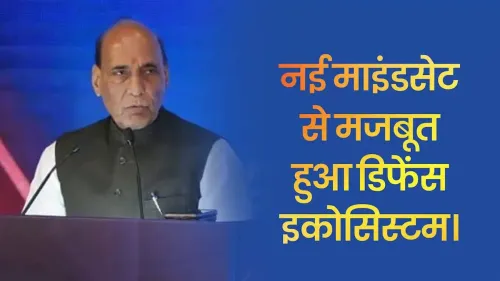
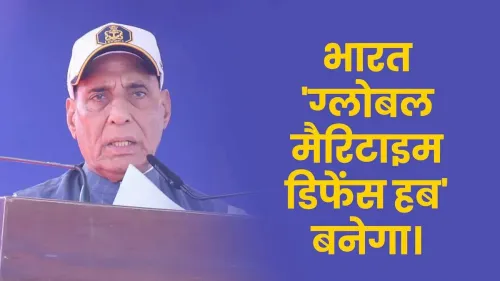
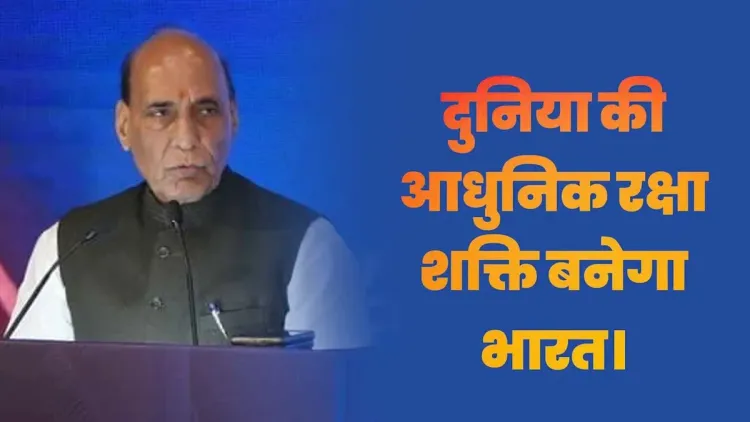
Union Defence Minister Rajnath Singh on Saturday, 18 July 2026 declared that India under Prime Minister Narendra Modi has evolved beyond defending its own borders to become a credible global security partner, and expressed confidence that the world will recognise India as the most modern and self-reliant defence power by 2047.
Posting in Hindi on X, Singh wrote: 'प्रधानमंत्री @narendramodi के नेतृत्व में भारत आज केवल अपनी सीमाओं की रक्षा करने वाला देश नहीं, बल्कि दुनिया का एक विश्वसनीय सुरक्षा साझेदार बनकर उभर रहा है।' ('Under the leadership of Prime Minister Modi, India today is not merely a country that guards its own borders, but is emerging as a credible security partner for the world.') He added that he was confident the world would see Viksit Bharat 2047 fulfil its resolve and recognise India as the most modern and most self-reliant defence power.
Context
The statement reflects a deliberate repositioning of India's defence identity — from a historically import-dependent military buyer to an active exporter and partner in global security architecture. Singh has been the principal political voice for this shift since taking charge of the Ministry of Defence in 2019, overseeing successive negative import lists that restrict procurement of foreign weapons in favour of domestic alternatives.
The post was accompanied by a video, signalling it was part of a broader communication campaign rather than a spontaneous remark. It arrives as India's defence establishment continues to pursue ambitious indigenisation milestones ahead of the centenary of independence.
Policy Backdrop
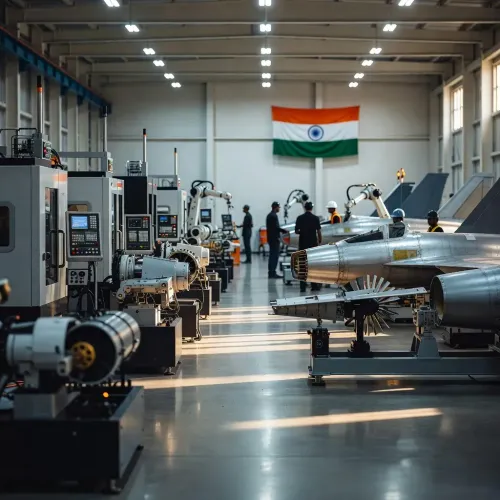
The ideological and legislative foundation for Singh's assertion rests on the Atmanirbhar Bharat Abhiyan, launched in May 2020, which designated defence production as a core pillar of national self-reliance. Alongside it, the Defence Production and Export Promotion Policy (2020) set explicit targets for domestic manufacturing and overseas sales of Indian-made systems.
Indigenous platforms such as BrahMos and the Akash surface-to-air missile have been at the forefront of India's defence export push, with multiple countries expressing interest in procurement. Frameworks such as the India-US Defence Technology and Trade Initiative and co-production agreements have deepened technology partnerships, reinforcing India's ambition for strategic autonomy without sacrificing interoperability with key allies.
The Viksit Bharat 2047 vision — a government-wide roadmap for a developed India by the centenary of independence — explicitly links economic development goals with defence modernisation, framing a capable and self-reliant military as inseparable from national development.
Stakeholders and Impact
India's domestic defence industry, including public-sector undertakings and a growing private-sector base incentivised through the Production-Linked Incentive (PLI) scheme and the iDEX innovation ecosystem, stands to gain most directly from the policy direction Singh articulated. Sustained political signalling of this kind reinforces long-term investment confidence for manufacturers.
For partner nations — particularly in the Indo-Pacific, Southeast Asia, and parts of Africa — India's emergence as a security partner offers an alternative source of platforms, training, and strategic engagement. This aligns with India's broader Quad commitments and its stated goal of being a 'net security provider' in its neighbourhood and beyond.
The Indian Armed Forces are the primary beneficiaries of indigenisation in operational terms, as reduced import dependence shortens supply chains and insulates capabilities from geopolitical disruptions in procurement.
What's Next
Attention will now turn to the next Union Budget defence allocation and any fresh negative import lists or export memoranda of understanding announced in the coming months. Progress reports on the Defence Acquisition Council's decisions, alongside iDEX and PLI scheme milestones, will be closely watched as concrete indicators of whether the ambition Singh articulated is translating into measurable outcomes.
If India sustains its indigenisation trajectory and expands defence export partnerships, Singh's framing of India as the world's most self-reliant defence power by 2047 will be tested against verifiable benchmarks — from export revenue figures to the operational induction of next-generation indigenous platforms across all three services.
Point of View
And an international one being reminded that India is an available, capable partner. By anchoring the claim in the Viksit Bharat 2047 framework, he ties defence ambition to a long-term national narrative that transcends electoral cycles, making it harder for critics to dismiss as electioneering. The shift from 'border defender' to 'global security partner' is not merely rhetorical — it reflects a genuine structural change in India's procurement and export posture since 2020. However, the credibility of the 2047 claim will ultimately rest on verifiable milestones: export revenues, induction timelines for indigenous platforms, and the depth of co-production agreements with strategic partners.
NationPress
18 Jul 2026
Frequently Asked Questions
What did Rajnath Singh say about India's defence role?
Rajnath Singh said on 18 July 2026 that India under PM Modi is no longer just a country that defends its own borders but is emerging as a credible global security partner, and that by 2047 the world will see India as the most modern and most self-reliant defence power.
What is Viksit Bharat 2047 and how does it relate to defence?
Viksit Bharat 2047 is the government's vision for a fully developed India by the centenary of independence in 2047. Defence modernisation and self-reliance are explicitly part of this roadmap, with indigenisation targets and export ambitions framed as integral to national development.
What is Atmanirbhar Bharat's role in India's defence policy?
The Atmanirbhar Bharat Abhiyan , launched in May 2020 , designated defence production as a core pillar of self-reliance. It introduced negative import lists restricting foreign procurement and set targets for domestic manufacturing and exports of defence equipment.
Which Indian defence systems are being exported?
Indigenous platforms such as the BrahMos supersonic cruise missile and the Akash surface-to-air missile system have been at the forefront of India's defence export push, with several countries expressing interest in procuring them.
What should we watch for next in India's defence policy?
Key indicators to watch include the next Union Budget defence allocation, fresh negative import lists, new export memoranda of understanding, and progress reports from the Defence Acquisition Council on iDEX and PLI scheme milestones.