What Are the Election Manifestos of Nepal's Major Parties?
Synopsis
As Nepal gears up for the upcoming General Elections, the major political parties unveil their foreign policy agendas. The RSP, NC, and CPN-UML emphasize the significance of fostering friendly relations with neighboring countries, especially India and China. With diverse approaches, these parties aim to navigate Nepal's geopolitical landscape effectively.
Key Takeaways
Nepal's political landscape is evolving with new foreign policy agendas.
The RSP aims for strategic partnerships with India and China.
NC prioritizes national interests and non-involvement in military conflicts.
CPN-UML promotes friendship and cooperation with all nations.
Kathmandu, Feb 19 (NationPress) As Nepal approaches the General Elections on March 5, the three dominant political entities — the Nepali Congress (NC), Communist Party of Nepal–Unified Marxist Leninist (CPN-UML), and the Rastriya Swatantra Party (RSP) — introduced their respective foreign policy strategies on Thursday, underscoring the importance of fostering amicable relations with neighboring states.
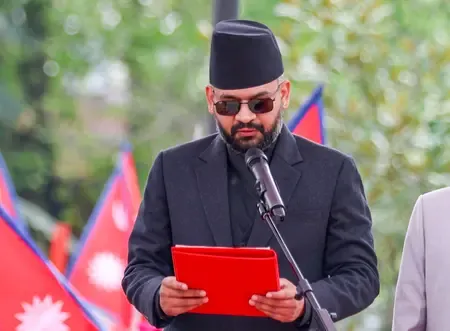
While the foreign policy frameworks of the established parties — NC and UML — are well-documented due to their history in governance, the RSP's foreign policy goals, which aspires to form the next government, were highly anticipated. The party has nominated former Kathmandu Metropolitan City Mayor Balen Shah as its candidate for Prime Minister.
In the manifesto released on Thursday, the RSP expressed its intention to implement a strategy of “balanced and dynamic diplomacy”, aiming to transform Nepal from a “buffer state” into a “vibrant bridge” by fostering trilateral economic collaborations and improving regional connectivity, especially with the neighboring powerhouses, India and China.
Recognizing the strategic interests of both India and China in Nepal, as well as the changing global power dynamics, the RSP highlighted that Nepal must embrace a proactive and adaptable diplomatic approach to leverage the evolving geopolitical landscape and the ascent of neighboring economies.
Referencing various domains where India has achieved significant advancements over the last decade—such as digital public infrastructure, rapid high-quality physical infrastructure development, economic formalization, coordination between industrial and service sectors, and enhanced governmental capabilities—the RSP indicated that Nepal could draw valuable lessons from its southern neighbor's developmental experiences.
Likewise, the party underscored the necessity of cultivating stronger ties with China in mobilizing concessional financing for top-tier infrastructure projects, implementing state-directed development strategies, and emulating China’s successful models of inter-provincial competition to drive Nepal’s socio-economic transformation.
The NC, in its manifesto, articulated that under its foreign policy, Nepal would refrain from engaging in any form of defense, military, or security conflicts, nor partake in strategic competition among major powers amidst escalating global rivalry. The party reiterated its enduring principle of maintaining friendships with all nations founded on equality, emphasizing that Nepal’s national interests would always take precedence.
“Our relations with neighboring and friendly nations will be grounded in equality and mutual respect, and will advance based on mutual benefits and economic partnerships,” stated the venerable party.
Conversely, the CPN (UML) reiterated its long-standing foreign policy doctrine of “friendship with all, enmity with none,” committing to further fortify amicable relations and cooperation with neighboring friendly nations while deepening engagement with the broader international community. The party asserted that under its leadership, Nepal would harbor no ill will towards any neighbor, nor undertake any actions that could jeopardize their interests.
Point of View
It's crucial to highlight that the unfolding political landscape in Nepal reflects a growing awareness of international dynamics among local parties. With the emphasis on diplomacy and regional partnerships, the manifestos indicate a collective aspiration to navigate complex geopolitical challenges while prioritizing national interests. This approach not only fosters stability but also opens avenues for economic growth and collaboration.
NationPress
7 Oct 2026
Frequently Asked Questions
What are the main foreign policy goals of the RSP?
The RSP aims to adopt a 'balanced and dynamic diplomacy' approach, transforming Nepal from a 'buffer state' to a 'vibrant bridge' through trilateral economic partnerships and enhanced connectivity with India and China.
How does the NC plan to engage with international powers?
The Nepali Congress emphasized its commitment to avoiding military conflicts and maintaining friendships based on equality, prioritizing Nepal's national interests in foreign relations.
What is the CPN-UML's foreign policy doctrine?
The CPN-UML adheres to the principle of 'friendship with all, enmity with none,' focusing on strengthening relationships with neighboring countries while engaging with the international community.