Great Barrier Reef health tool built on 30 years of data, say Australian researchers

Synopsis
A University of Sydney team has built a reef 'health check' tool — the first to benchmark each reef against its own 30-year history rather than a universal standard. The three-tier classification (healthy, coping, struggling) could fundamentally change how scientists prioritise conservation on the Great Barrier Reef and beyond.
Key Takeaways
Researchers at University of Sydney developed a framework using over 30 years of data to assess Great Barrier Reef health.
The tool classifies reefs into three states: healthy , coping , and struggling , based on coral cover relative to each reef's own historical baseline.
Reefs enter a 'coping' state when coral cover falls below 65 per cent of their historical maximum; below 35 per cent signals a 'struggling' state.
Lead author Kate Whitton noted that a reef with 30 per cent coral cover may be healthy in one location but indicate serious decline in another.
Complex coral structures are more vulnerable to disturbances, leaving reefs flatter and less hospitable to marine life when lost.
The framework is designed to help scientists recommend timely interventions for imperilled reefs and is potentially applicable globally.
Researchers at Australia's University of Sydney (USYD) have developed a new scientific framework that uses more than 30 years of reef data to more accurately measure the impact of climate change-driven disturbances on the Great Barrier Reef. The tool, published in the journal Marine Environmental Research, gives scientists a standardised 'health check' to assess reef condition and guide timely conservation interventions.
What the Framework Does
The framework quantifies reef degradation over time by tracking two key indicators: coral cover and algal buildup. High coral cover signals a reef capable of sustaining healthy marine life, while elevated algae levels indicate declining reef health. Crucially, the tool compares each reef against its own historical baseline — data collected since the late 1980s — rather than applying a single universal threshold across all reef systems.
'A reef with 30 per cent coral cover might be considered healthy in one location but indicate substantial decline in another,' said Kate Whitton, a PhD candidate at USYD and lead author of the study. The framework can be applied to measure the impact of severe disturbances including coral bleaching, cyclones, and floods.
Three Categories of Reef Health
The study classifies reefs into three ecological states: healthy, coping, and struggling. According to the research, reefs generally transitioned into a 'coping' state when coral cover fell below approximately 65 per cent of their historical maximum. Declines below 35 per cent were associated with a 'struggling' state, marked by significant algae growth and major losses of reef-building corals.
Why Coral Shape Matters
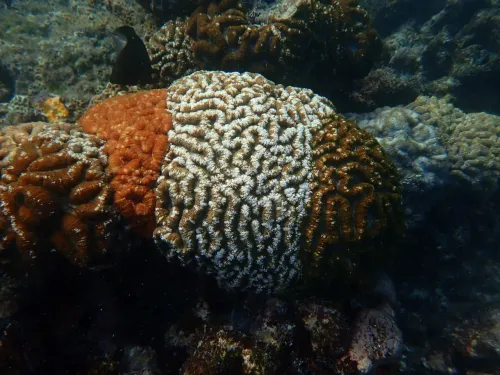
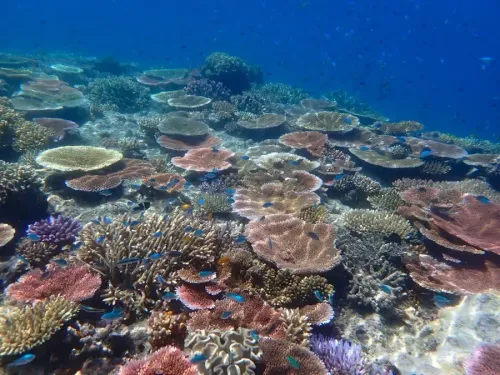
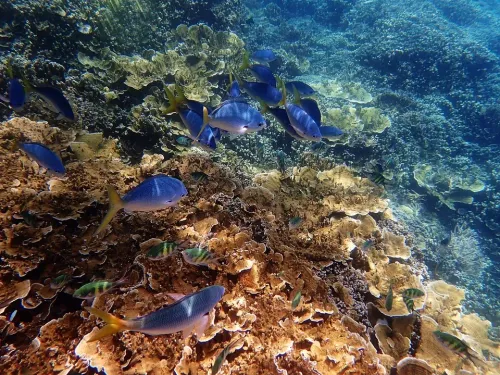
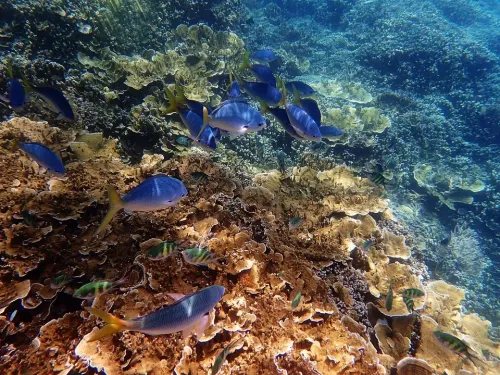
The researchers also found that complex coral forms — branching and plate-like structures — were significantly more vulnerable to disturbances than simpler, rounded corals. As these complex forms are lost, reefs become flatter, offering fewer shelters for fish and reduced protection from storm waves. This structural simplification makes it harder for organisms to thrive and for corals to regenerate, compounding the long-term damage from each disturbance event.
Significance for Conservation
This comes amid growing concern over the frequency and severity of mass bleaching events on the Great Barrier Reef, which has experienced multiple bleaching episodes in recent years linked to rising sea temperatures. The new framework is designed to help scientists identify the most imperilled reef sections and recommend targeted interventions before degradation becomes irreversible. Researchers say the tool is adaptable and could be applied to reef systems beyond Australia. The next step, according to the USYD team, is broader adoption by reef monitoring programmes globally.
Point of View
But in how: benchmarking each reef against its own history rather than a universal standard is a methodological shift that could expose degradation that aggregate statistics routinely mask. The Great Barrier Reef has endured repeated mass bleaching events, yet policy responses have often lagged scientific urgency. A tool that translates decades of data into actionable categories — healthy, coping, struggling — narrows the gap between research and intervention. The harder question is whether reef management funding and political will can keep pace with the science.
NationPress
2 Oct 2026
Frequently Asked Questions
What is the new Great Barrier Reef health assessment framework?
It is a scientific tool developed by researchers at the University of Sydney that uses more than 30 years of reef data to classify reefs as healthy, coping, or struggling based on coral cover and algal levels. The framework benchmarks each reef against its own historical data rather than a single universal standard.
Who led the research and where was it published?
The study was led by Kate Whitton, a PhD candidate at the University of Sydney, and published in the journal Marine Environmental Research. The findings were announced on 18 August.
What do the three reef health categories mean?
A 'healthy' reef maintains coral cover close to its historical maximum. A 'coping' reef has seen coral cover fall below about 65 per cent of that maximum. A 'struggling' reef has declined below 35 per cent, with significant algae growth and loss of reef-building corals.
Why does the framework compare reefs to their own history?
Because absolute coral cover varies widely between reef systems, a single threshold cannot accurately indicate health across all locations. By comparing each reef to its own baseline data collected since the late 1980s, the tool provides a more precise and contextually relevant assessment.
How does coral shape affect reef resilience?
Complex coral forms such as branching and plate-like structures are more vulnerable to disturbances than simple, rounded corals. When these are lost, reefs become structurally simpler — flatter, with fewer fish shelters and less storm protection — making recovery harder.