US won't talk to Iran until ship attacks stop, Vance warns
Synopsis
The US has drawn a hard line: no diplomacy with Iran until Tehran stops targeting commercial ships in the Strait of Hormuz. With 15 million barrels flowing nightly under American protection and China reportedly cooperating on financial pressure, Vice-President Vance's statement signals a coercive strategy that pairs military presence with economic isolation — and leaves every option, including covert action, explicitly open.
Key Takeaways
Vance stated on 4 September that the US will not negotiate with Iran until attacks on commercial ships cease.
Vance said 15 million barrels of oil passed through the Strait of Hormuz the previous night due to US intervention.
All pressure tools are 'on the table' — economic, military, diplomatic, and covert — according to Vance.
China has reportedly responded to some US requests on Iran; Turkey , UAE , Saudi Arabia , Qatar , and Azerbaijan are also applying pressure.
The US says it has already destroyed Iran's nuclear enrichment capacity and is now focused on preventing its reconstruction.
No timeline has been set for ending US operations; Vance said the duration depends on Iran's conduct.
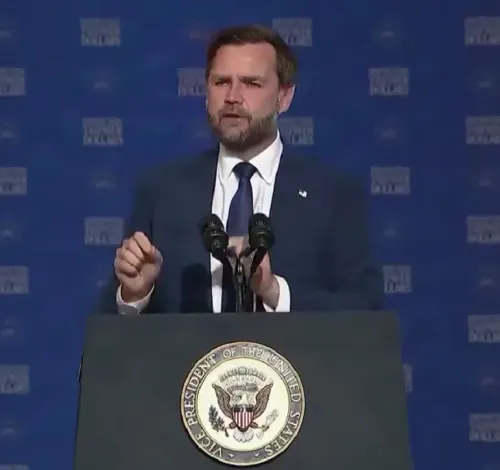
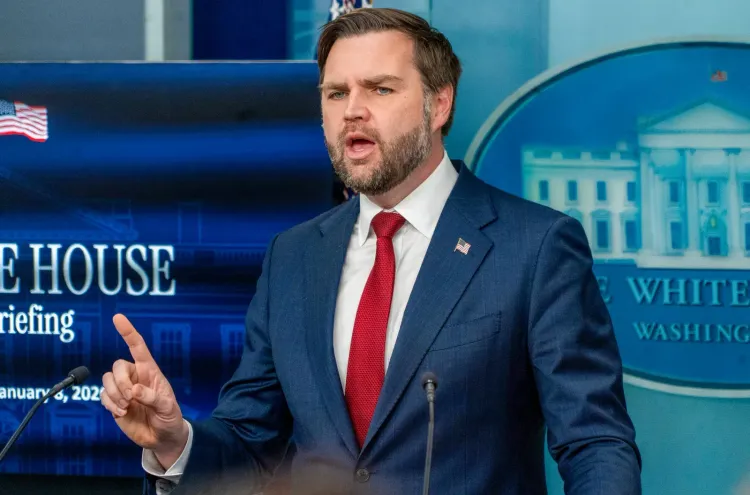
Vice-President J.D. Vance on 4 September declared that the United States will not enter negotiations with Iran until Tehran ceases its attacks on commercial shipping, warning that Washington holds a full spectrum of pressure tools — economic, military, diplomatic, and covert — to protect global energy supplies and prevent Iran from reconstituting its nuclear programme.
The Core US Condition
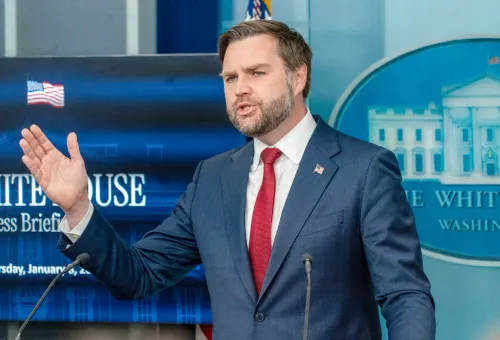
'The President's been very clear, we're not talking to them and we're not going to talk to them unless they stop shooting at commercial shipping,' Vance said at a White House press briefing. He declined to set any timeline for ending US operations, arguing that their duration depended entirely on Iran's conduct in the Strait of Hormuz. 'We're not going to set an artificial timeline,' he said, adding that disclosing a timetable while Iran continued threatening oil and gas vessels would be irresponsible.
Energy Flow and Military Posture
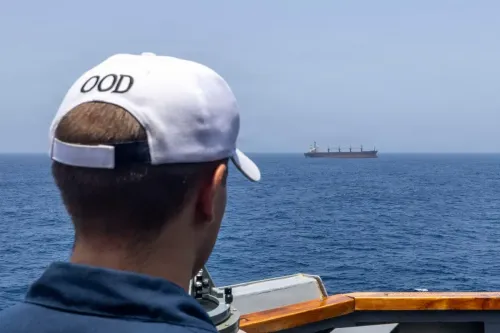
Vance pushed back against characterisations of the situation as an active war, insisting that major combat operations had ceased and that the immediate US objective was keeping energy corridors open. He cited a concrete figure to underscore the point: 15 million barrels of oil passed through the Strait of Hormuz the previous night, which he attributed directly to US intervention. 'The Iranians would like zero million barrels to come out of the Strait of Hormuz. Last night, 15 million barrels came out of the Strait of Hormuz,' he said. 'That's because of the United States of America.'
All Options on the Table
When asked whether the administration was considering arming Iranian dissidents, Vance declined to confirm or deny. He did, however, signal that President Donald Trump retained a broad range of options. 'Everything that could happen is on the table: Economic pressure, military pressure, diplomatic pressure, covert pressure,' he said. He also noted that the US had already destroyed Iran's nuclear enrichment capacity and was now focused on ensuring Tehran could not rebuild it.
China and Regional Partners Playing a Role
Vance said China had responded to some US requests regarding Iran, though he was uncertain whether Trump had spoken directly with Chinese President Xi Jinping about restricting financial services to Tehran. 'I think the Chinese, the PRC, being willing to play ball here,' he said, adding that Beijing had been 'much more responsible certainly than the Iranians,' even if it had not fulfilled every US ask. He also named Turkey, Azerbaijan, the United Arab Emirates, Saudi Arabia, and Qatar as countries applying pressure on Iran, with some cooperating privately without public acknowledgement.
Why the Strait of Hormuz Matters
The Strait of Hormuz is one of the world's most critical energy chokepoints, connecting Gulf oil-producing nations to international markets. Any sustained disruption risks spiking shipping costs, insurance premiums, and global crude prices — consequences that would ripple far beyond the Middle East and directly affect import-dependent economies including India. Vance argued that the absence of a global energy crisis at this juncture was itself evidence of US success in protecting the waterway, and that no other country possessed the capability to perform that role.
Point of View
Washington is applying reputational pressure on Beijing while leaving room for quiet deal-making. The claim that 15 million barrels moved through Hormuz 'because of the United States' is also a pointed message to Gulf partners and global markets: US military presence is the insurance policy, and that leverage is not free. The harder question — whether a maximalist no-talks posture accelerates or delays a durable resolution — goes unanswered.
NationPress
4 Sept 2026
Frequently Asked Questions
Why won't the US negotiate with Iran right now?
The US has set a clear precondition: Iran must stop attacking commercial ships in the Strait of Hormuz before any talks can begin. Vice-President J.D. Vance made this explicit at a White House press briefing on 4 September, saying the President had been unambiguous on the matter.
What pressure tools is the US using against Iran?
Vance said all options remain on the table, including economic, military, diplomatic, and covert pressure. The US has also reportedly engaged China, Turkey, UAE, Saudi Arabia, Qatar, and Azerbaijan to collectively squeeze Tehran.
How much oil is flowing through the Strait of Hormuz?
According to Vance, 15 million barrels of oil passed through the Strait of Hormuz in a single night, which he credited to active US military protection of the waterway. The strait is a critical chokepoint for global petroleum shipments.
Has the US destroyed Iran's nuclear facilities?
Vance indicated that the US had already destroyed Iran's nuclear enrichment capacity and said the current pressure campaign was partly aimed at ensuring Tehran does not attempt to rebuild it. He said no such rebuilding attempt had been observed so far.
Is China cooperating with the US on Iran?
Vance said China had responded positively to some US requests related to Iran, describing the PRC as 'much more responsible certainly than the Iranians.' He was uncertain whether President Trump had spoken directly with President Xi Jinping about restricting financial services to Tehran.