North Korea slams US over South Korea, Japan nuclear submarine push
Synopsis
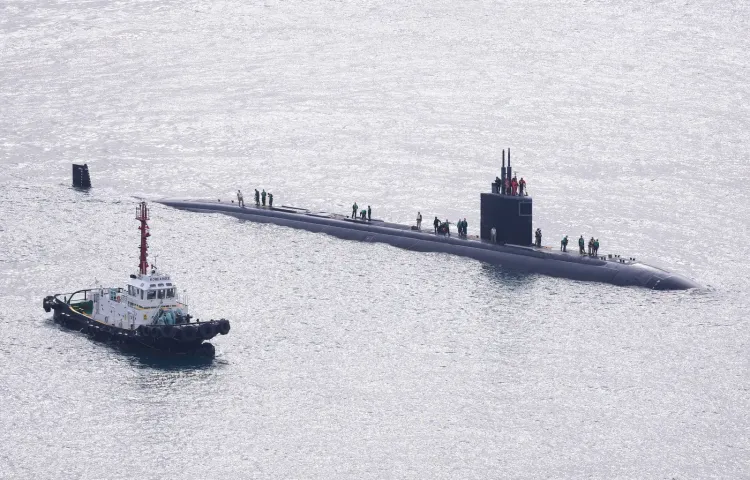
North Korea's state media has turned a US Navy official's Hawaii briefing on Seoul and Tokyo's nuclear submarine ambitions into fresh fuel for Pyongyang's nuclear expansion argument. By invoking AUKUS and coining the phrase 'AUKUS 2.0,' North Korea is framing Washington's Asia-Pacific submarine strategy as the real proliferation threat — and using it to justify its own unchecked nuclear buildup.
Key Takeaways
North Korea's KCNA on 16 September 2026 accused the US of instigating South Korea and Japan to seek nuclear-powered submarines.
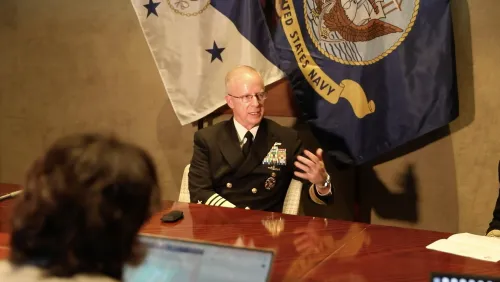
A US Navy official in Hawaii had assessed Seoul's submarine push as lacking a clear operational rationale, calling it a potential 'status symbol,' while viewing Japan 's bid more favourably.
Pyongyang's analyst labelled Washington 'the major chieftain of the worldwide nuclear proliferation.' North Korea warned that 'AUKUS 2.0' — extending nuclear technology transfers to non-nuclear US allies — 'has entered the phase of full-scale expansion.' AUKUS , announced in 2021 and signed in 2024 , is seen as a possible benchmark for a future Seoul-Washington nuclear submarine agreement.
Pyongyang used the critique to call for bolstering its 'nuclear war deterrent means both in quality and quantity.'
North Korea on Wednesday, 16 September 2026, accused the United States of deliberately inciting South Korea and Japan to pursue nuclear-powered submarines, deploying the allegation to justify its own accelerating nuclear weapons buildup. The criticism, aired through state media, marks Pyongyang's sharpest public rebuke yet of Washington's Asia-Pacific submarine diplomacy.
What Pyongyang Said
A commentary carried by the Korean Central News Agency (KCNA) featured an unnamed North Korean analyst on international affairs who claimed that a recent assessment by a US Navy official — delivered to reporters in Hawaii — was 'intended to instigate' Seoul and Tokyo 'to possess nuclear submarines.' The analyst accused Washington of acting as 'the major chieftain of the worldwide nuclear proliferation.'
The US Navy official's remarks, which reportedly assessed Seoul's pursuit of nuclear-powered submarines as lacking a 'clear operational rationale' and described them as a potential 'status symbol,' drew a more favourable appraisal of Japan's bid to acquire the vessels, according to reports citing Yonhap news agency.
The AUKUS Angle
North Korea also trained its fire on AUKUS — the trilateral security pact comprising the US, Britain, and Australia announced in 2021 and formalised in 2024 — which has opened the way for Canberra to acquire nuclear-powered submarines using American propulsion technology under a US-enabled exemption for the transfer of sensitive nuclear material.
The KCNA analyst warned that Washington's plan for what he termed 'AUKUS 2.0' — allegedly allowing nuclear technology transfers for munitions to non-nuclear allies — 'has entered the phase of full-scale expansion.' AUKUS is widely regarded in policy circles as a possible template for a future Seoul-Washington nuclear submarine agreement.
Pyongyang's Self-Justification
Labelling Seoul and Tokyo's submarine ambitions as 'reckless acts,' the commentary argued these moves revealed 'what dangerous extent the US military adventurism to contain its rival states in the Asia-Pacific region by setting up its allies as shock brigades has reached.' The analyst used the argument to assert that North Korea must 'bolster up its nuclear war deterrent means both in quality and quantity without the slightest stagnation and stalemate.'
Notably, Pyongyang has repeatedly cited perceived US-led encirclement as grounds for nuclear expansion — a pattern consistent with past statements following major US-South Korea or US-Japan security developments.
Broader Context and What Comes Next
The exchange reflects deepening fault lines in Northeast Asia's security architecture. South Korea has been increasingly vocal about acquiring nuclear-powered submarines amid concerns over North Korea's missile programme and broader regional maritime competition. Japan's defence posture has similarly shifted, with Tokyo expanding its defence budget and exploring extended deterrence arrangements with Washington.
Whether Washington formally extends AUKUS-style submarine cooperation to Seoul remains unresolved, and the US Navy official's measured remarks suggest internal debate continues. Pyongyang's response, however, signals that any such move would be met with intensified nuclear justification from the North.
Point of View
Not reflexive. By weaponising the US Navy official's own public remarks and invoking AUKUS, North Korea is constructing a legal and rhetorical framework to legitimise unlimited nuclear expansion — framing itself as a reactive power in a US-engineered proliferation chain. What mainstream coverage tends to underplay is the internal US debate visible in the official's own words: Washington has not yet decided whether Seoul qualifies for AUKUS-style access, which means the region's most consequential proliferation question remains open. North Korea's vocal opposition may itself become a factor in that Washington calculus — giving hawks in Seoul ammunition while giving hesitant US officials reason to pause.
NationPress
16 Sept 2026
Frequently Asked Questions
Why is North Korea criticising the US over nuclear submarines?
North Korea accused the US of deliberately encouraging South Korea and Japan to acquire nuclear-powered submarines, citing a US Navy official's public remarks in Hawaii. Pyongyang used the criticism to justify its own continued nuclear weapons expansion, arguing Washington is the primary driver of global nuclear proliferation.
What did the US Navy official say about South Korea and Japan's nuclear submarines?
The official assessed that South Korea needs a clear operational rationale for nuclear-powered submarines rather than pursuing them as a 'status symbol,' while expressing a more favourable view of Japan's pursuit. The remarks were made to reporters in Hawaii, according to reports.
What is AUKUS and why does North Korea mention it?
AUKUS is a trilateral security pact between the US, Britain, and Australia, announced in 2021 and formalised in 2024, that allows Australia to acquire nuclear-powered submarines using US propulsion technology. North Korea invoked it to argue Washington is normalising nuclear technology transfers to non-nuclear allies under what it called 'AUKUS 2.0,' framing this as a global proliferation threat.
Could South Korea get nuclear-powered submarines under an AUKUS-style deal?
AUKUS is widely regarded in policy circles as a possible template for a future Seoul-Washington submarine agreement, but no such deal has been formalised. The US Navy official's measured comments suggest Washington has not yet reached a consensus on extending AUKUS-style cooperation to South Korea.
How does this fit North Korea's broader nuclear strategy?
Pyongyang has consistently cited US-led security arrangements in the Asia-Pacific as justification for expanding its nuclear arsenal. Wednesday's commentary follows an established pattern of using external security developments — such as US-South Korea exercises or new alliance frameworks — to publicly legitimise increases in North Korea's nuclear deterrent 'both in quality and quantity.'