Norway joins France's nuclear deterrence initiative, policy unchanged
Synopsis
Norway has joined Macron's European nuclear deterrence framework — but with strict conditions: no nuclear weapons on Norwegian soil and no financial contribution to France's arsenal. As Britain, Germany, Poland and others circle the initiative, France is quietly assembling a European nuclear club, with Paris at the centre.
Key Takeaways
Norwegian PM Jonas Gahr Store announced on 28 May 2025 that Norway will join France 's nuclear deterrence initiative.
Norway will not allow nuclear weapons on its territory in peacetime and will not fund France's nuclear programme.
Norway and France signed a new bilateral defence agreement in Paris committing mutual military support.
Macron announced in March 2025 plans to increase France's nuclear warheads and add 'a European dimension' to its deterrence posture.
Countries including Sweden , Britain , Germany , Poland , the Netherlands , Belgium , Greece , and Denmark have reportedly expressed interest in the framework.
France and Poland discussed joint military exercises during Macron–Tusk talks in Gdansk in April.
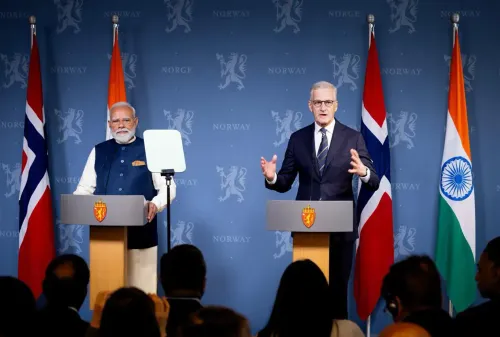
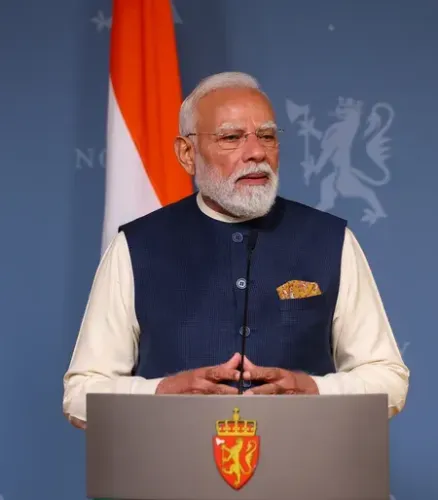
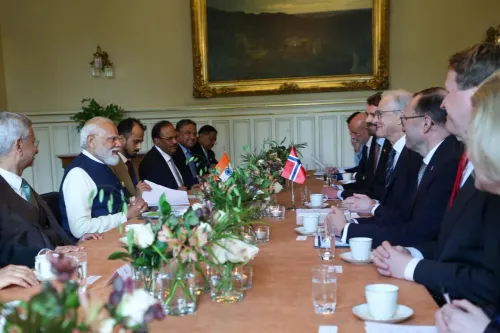
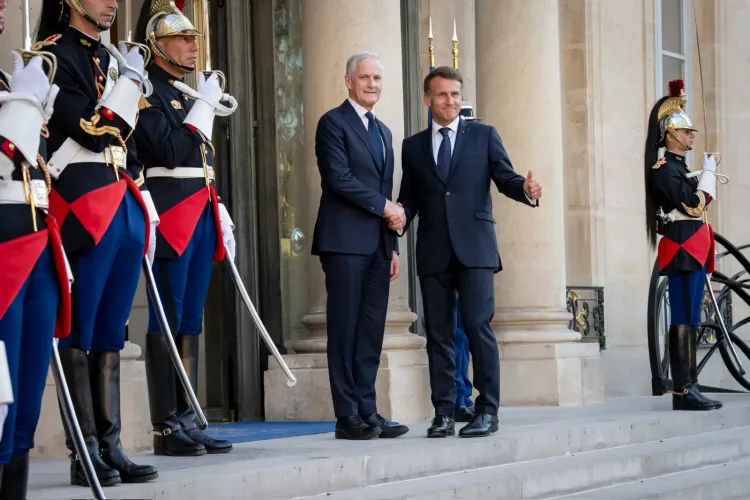
Norwegian Prime Minister Jonas Gahr Store on Wednesday, 28 May 2025 announced that Norway will join French President Emmanuel Macron's nuclear deterrence initiative, while firmly stating that the move will not alter Oslo's longstanding policy on nuclear weapons. Store travelled to Paris for talks with Macron, citing the current security situation in Europe as the primary driver of the decision.
What Norway Has Agreed To — And What It Has Not
Store was unambiguous in drawing a line between participation in the deterrence framework and any shift in nuclear posture. Norway will not permit nuclear weapons to be stationed on its territory in peacetime, he said, and will not contribute financially to France's nuclear weapons programme. The decision, according to Store, reflects Europe's need to assume greater responsibility for its own security rather than any change in Norway's foundational nuclear stance.
The France-Norway Defence Agreement
Later on Wednesday, Norway and France signed a new bilateral defence agreement in Paris, under which both countries commit to providing military support to each other if required. The agreement formalises a deeper security partnership that goes beyond the nuclear deterrence question and covers broader defence cooperation.
Macron's European Nuclear Ambition
The announcement follows Macron's declaration in March 2025 that France would strengthen its nuclear arsenal by increasing the number of warheads, and that Paris was prepared to add 'a European dimension' to its deterrence strategy. Several European nations — including Sweden, Britain, Germany, Poland, the Netherlands, Belgium, Greece, and Denmark — have reportedly expressed interest in the framework.
Last month, France and Poland deliberated on conducting joint military exercises as part of this initiative. Macron discussed the idea with Polish Prime Minister Donald Tusk during talks in Gdansk, northern Poland, in April. 'Among the options we will consider are information sharing, joint exercises and the possible deployment of forces,' Macron said at a joint press conference when asked about nuclear cooperation.
Tusk noted that discussions on nuclear security cooperation were being held discreetly, adding that Poland had joined 'an exclusive group that understands the need for European solidarity and sovereignty' by accepting France's invitation, according to the Polish Press Agency.
Broader Context: Europe's Shifting Security Calculus
Norway's entry into the initiative underscores a wider European reassessment of collective defence, accelerated by the ongoing conflict in Ukraine and uncertainty over long-term US security guarantees to the continent. This is the latest in a series of moves by European nations to deepen indigenous defence arrangements, with France positioning itself as the continent's primary nuclear anchor. Notably, Norway has historically maintained one of NATO's stricter self-imposed nuclear restrictions, making Wednesday's announcement a significant — if carefully hedged — step.
How the initiative evolves, particularly on questions of command-and-control and burden-sharing, will shape whether it becomes a genuine strategic framework or remains largely symbolic.
Point of View
No financial contribution. That framing is deliberate: Oslo is signalling solidarity without triggering a domestic political rupture over its decades-old nuclear restrictions. The deeper question is whether Macron's 'European dimension' can survive contact with the reality of 27 different national red lines. France is the only EU nuclear power, and building a credible extended deterrence around that singularity — without NATO's command structures — is a formidable political and strategic challenge. What looks like a coalition in formation may, on closer inspection, be a set of bilateral consultations with France at the hub, offering reassurance without binding obligation.
NationPress
11 Oct 2026
Frequently Asked Questions
What is France's European nuclear deterrence initiative?
It is a framework proposed by French President Emmanuel Macron under which France offers partner European nations closer coordination on nuclear deterrence, including consultations, information sharing, and joint military exercises. Macron announced plans to expand France's nuclear arsenal and incorporate a 'European dimension' into its deterrence posture in March 2025.
What has Norway agreed to under this initiative?
Norway has agreed to join the French-led nuclear deterrence framework, primarily as a political and security solidarity measure. However, Oslo has been explicit that it will not allow nuclear weapons to be stationed on Norwegian territory in peacetime and will not contribute financially to France's nuclear weapons programme.
Which other European countries have expressed interest in France's nuclear initiative?
Sweden, Britain, Germany, Poland, the Netherlands, Belgium, Greece, and Denmark have reportedly expressed interest in the framework. France and Poland have also discussed conducting joint military exercises as part of the initiative.
What did the Norway-France defence agreement signed on 28 May cover?
The bilateral defence agreement signed in Paris on 28 May 2025 commits Norway and France to providing mutual military support to each other if needed. It formalises a broader security partnership beyond the nuclear deterrence question.
Why is Norway's decision significant given its nuclear policy history?
Norway has historically maintained one of NATO's stricter self-imposed nuclear restrictions, prohibiting nuclear weapons on its soil in peacetime. Joining Macron's framework — even with those restrictions intact — marks a notable shift in how Oslo engages with European nuclear security discussions, reflecting growing concern over the continent's defence posture.