Pakistan airstrikes in Balochistan's Surab kill 30+ civilians, BNM calls it war crime
Synopsis
Pakistani Air Force strikes on a residential area in Balochistan's Surab district reportedly killed more than 30 civilians, including children under ten. The BNM is now demanding the EU strip Pakistan of its GSP+ trade privileges — a rare, concrete international pressure point that elevates this beyond a regional incident into a potential diplomatic flashpoint.
Key Takeaways
Pakistani Air Force strikes on the Gidar area of Surab district, Balochistan reportedly killed more than 30 civilians , including women and children, in the early hours of 13 August .
The Baloch National Movement (BNM) condemned the strikes as a 'blatant war crime' and a violation of the Geneva Conventions .
The BNM urged the European Union to immediately suspend Pakistan's GSP+ trade status over human rights non-compliance.
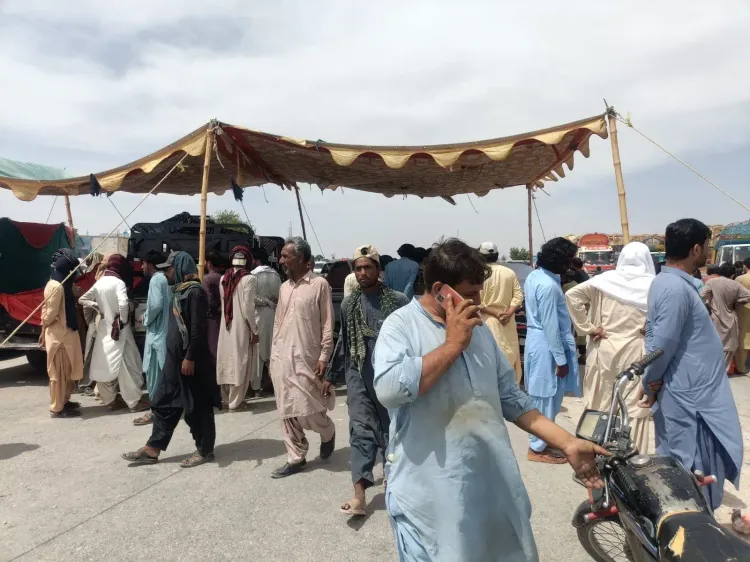
Relatives of the deceased staged a sit-in protest on the N-25 Quetta-Karachi highway , disrupting traffic in both directions.
The Baloch Yakjehti Committee (BYC) described the incident as part of a 'documented pattern' of aerial bombardment of civilian areas across Balochistan, citing prior incidents in Zehri and Mastung .
The Baloch Women Forum (BWF) called the strikes a 'blatant act of brutality' and demanded accountability from Pakistani security forces.
The Baloch National Movement (BNM) has condemned Pakistani Air Force strikes on the Gidar area of Surab district in Balochistan as a 'blatant war crime', after the attacks reportedly killed more than 30 civilians — including women and children under ten years old — and injured several others. The strikes occurred in the early hours of Wednesday, 13 August, with the military reportedly carrying out indiscriminate bombardment over residential areas.
What Happened in Surab
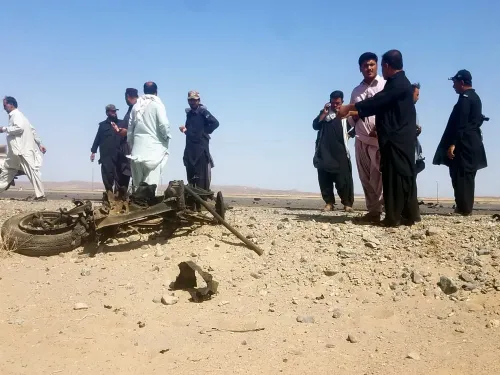
According to reports, the Pakistani Air Force conducted aerial strikes on residential localities in the Gidar area of Surab, causing significant damage to civilian property alongside the reported loss of life. The precise military justification for the strikes has not been independently verified. Pakistan's Inter-Services Public Relations (ISPR) — the official media wing of the country's armed forces — has not been cited in confirmed accounts of the incident, and civil society groups have urged international media to report independently rather than rely on ISPR narratives.
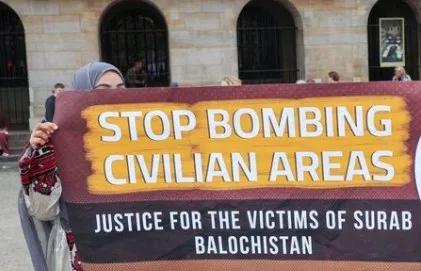
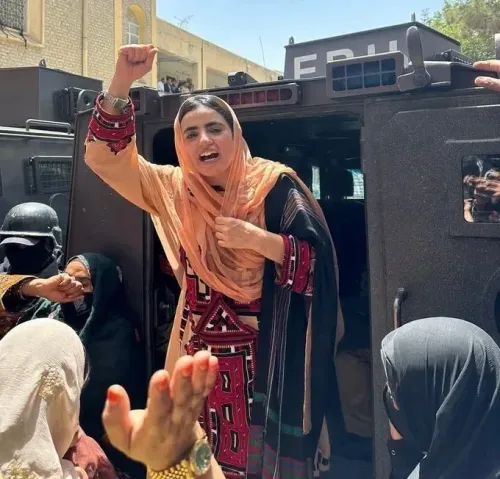
Following the strikes, relatives of the deceased and local residents staged a sit-in protest by placing the bodies of the dead in Surab's main square along the N-25 Quetta-Karachi highway, according to The Balochistan Post. The demonstration disrupted traffic on the key arterial route, leaving long queues of vehicles stranded on both sides. Protesters said they would maintain the sit-in until their demands were addressed.
BNM's Condemnation and International Demands
The BNM said the strikes constitute 'flagrant violations of international humanitarian law and the Geneva Conventions.' In a statement, the group said: 'The Pakistan Army is not acting alone in these acts — which include indiscriminate force against civilians, home demolitions, and forced displacement — as local politicians and political parties facilitating these crimes are equally complicit.'
The organisation called on the European Union (EU) and international bodies to take 'swift, effective action' and urged the EU to immediately suspend Pakistan's Generalised Scheme of Preferences Plus (GSP+) status and all associated trade preferences, arguing that such privileges are contingent on compliance with fundamental human rights standards. The BNM further called for an independent investigation by global rights organisations, warning that international inaction would 'undermine the credibility of global institutions.'
Civil Society Groups Respond
The Baloch Yakjehti Committee (BYC), a human rights body, described the attack as a 'massacre' and placed it within what it called a documented pattern of aerial bombardment across Balochistan. 'This is not an isolated incident. It follows a documented pattern of aerial bombardment of civilian areas across Balochistan, from Zehri to Mastung, where the Pakistani military has repeatedly targeted residential areas and subsequently labelled those killed as "militants" to evade accountability,' the BYC said.
The Baloch Women Forum (BWF) also condemned the strikes, stating that targeting civilians inside their homes is a 'blatant act of brutality' and a 'grave assault on civilian life.' It added: 'Women, children and elderly people cannot be treated as targets under any claim of security or military necessity.'
Broader Context
Balochistan has been the site of a long-running, low-intensity conflict between Pakistani security forces and Baloch separatist and nationalist groups. Civil society organisations have repeatedly alleged that military operations in the province disproportionately harm civilian populations, claims the Pakistani government has consistently denied. The BYC's reference to prior incidents in Zehri and Mastung suggests this is not the first time aerial assets have been deployed in the region's internal conflict.
The scale of international response — if any — to the BNM's demands regarding GSP+ suspension and an independent investigation will be closely watched in the coming days.
Point of View
Including children — places this incident in a different category from the low-intensity skirmishes that have defined Balochistan's conflict for decades. The BNM's demand to suspend Pakistan's GSP+ status is a calibrated move: it targets a concrete economic lever the EU holds, rather than appealing to vague humanitarian sentiment. Whether Brussels acts is another matter — Pakistan's GSP+ has survived previous human rights scrutiny. What is harder to dismiss is the BYC's framing of a pattern, not an aberration, supported by named prior locations. If that pattern holds up to independent verification, the accountability deficit is not just Pakistan's problem — it belongs to every international body that has looked away.
NationPress
27 Sept 2026
Frequently Asked Questions
What happened in Surab, Balochistan on 13 August?
The Pakistani Air Force reportedly carried out airstrikes on residential areas in the Gidar area of Surab district, Balochistan, in the early hours of 13 August, killing more than 30 civilians — including women and children — and injuring several others. The strikes caused significant damage to property and triggered a sit-in protest on the N-25 Quetta-Karachi highway.
Why did the BNM call the Surab airstrikes a war crime?
The Baloch National Movement said the strikes targeted residential areas and killed civilians, including children under ten, which it described as flagrant violations of international humanitarian law and the Geneva Conventions. The group argued that bombing civilian populations constitutes a war crime regardless of any stated military justification.
What is Pakistan's GSP+ status and why is the BNM demanding its suspension?
Pakistan's Generalised Scheme of Preferences Plus (GSP+) is a European Union trade arrangement that grants preferential tariff access in exchange for compliance with human rights and governance standards. The BNM is urging the EU to suspend this status immediately, arguing that the Balochistan airstrikes demonstrate Pakistan is not meeting the human rights conditions attached to the arrangement.
Is this the first time Pakistani forces have conducted airstrikes in Balochistan?
According to the Baloch Yakjehti Committee (BYC), the Surab strikes are not an isolated incident but part of a documented pattern of aerial bombardment of civilian areas, including prior incidents in Zehri and Mastung. Pakistani authorities have historically labelled those killed in such operations as militants, a characterisation civil society groups dispute.
What are protesters in Surab demanding?
Relatives of the deceased and local residents placed the bodies of the dead in Surab's main square along the N-25 Quetta-Karachi highway and blocked traffic in both directions. They said they would continue the sit-in until their demands — which include accountability for the strikes — are met, according to The Balochistan Post.