Pakistan Army vs KP Police: Terror shelter row deepens in Khyber Pakhtunkhwa
Synopsis
Pakistan's own police force is publicly accusing the army of sheltering terrorists in Khyber Pakhtunkhwa — and the public is siding with the cops. With officer transfers seen as a bid to gut counterterrorism capacity, and officials alleging the ISI is actively deploying militants, the standoff in Bannu could be the most visible crack yet in Pakistan's civil-military fault line.
Key Takeaways
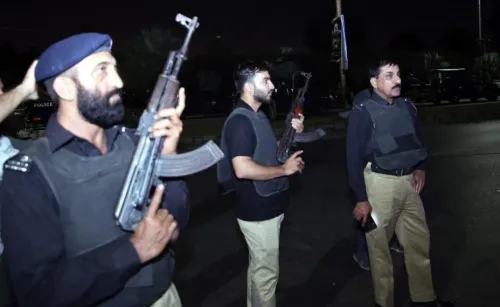
KP police have staged protests in Bannu , accusing the Pakistan Army and ISI of shielding terrorists and obstructing counterterrorism operations.
The Pakistan administration transferred seven police officials , a move condemned as an attempt to weaken security operations in the region.
The Bannu Police Peace Committee warned that continued army interference will worsen conditions in Bannu and Lakki Marwat .
KP Chief Minister Ali Amin Gandapur had previously accused the army and ISI of intervening each time police arrested terror suspects.
Officials allege a similar pattern of army-backed militant activity in Balochistan and Pakistan-occupied Kashmir (PoK) .
An Intelligence Bureau official alleged that the ISI has directly facilitated the movement of terrorists into peaceful areas of KP.
A serious institutional standoff between the Pakistan Army and the Khyber Pakhtunkhwa (KP) police has intensified, with law enforcement officials publicly accusing the military of shielding terrorists and actively obstructing counterterrorism operations across the province. The confrontation, which has drawn significant public support for the police, reflects a deepening crisis in one of Pakistan's most volatile regions.
Key Developments
Police in KP have been staging protests, alleging that the army is not merely passive in its approach to terrorism but is reportedly facilitating the movement of militants into protected areas. According to officials, the Pakistan Army has been deploying its own operatives into KP to engage outfits such as the Tehreek-e-Taliban Pakistan (TTP), rather than supporting civilian law enforcement in neutralising them.
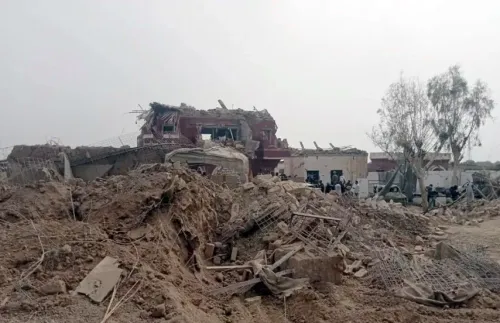
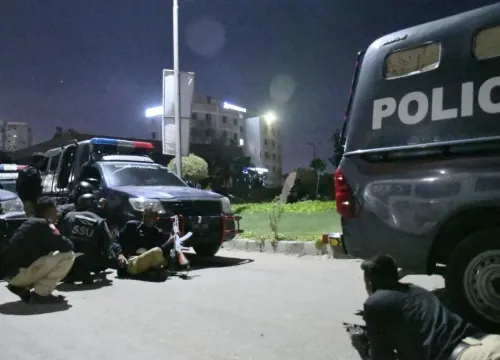
The situation has been further inflamed by the transfer of seven police officials by the Pakistan administration — a move that both the police and the public have condemned as a deliberate attempt to weaken counterterrorism capacity in the region. Protests are currently concentrated in the Bannu area, where terrorist incidents have been reported with alarming frequency.
What the Police and Officials Said
The Bannu Police Peace Committee, which is leading the protests, has accused the army of excessive interference in law enforcement operations. According to the committee, whenever local police detain suspected militants, the army reportedly orders their immediate release, claiming the detainees are military personnel on official duty in the region.
An Intelligence Bureau official, speaking on condition of anonymity, said that KP has remained in turmoil primarily because the army is preventing the district administration from functioning independently. The official also alleged that the army and the Inter-Services Intelligence (ISI) have personally facilitated the entry of terrorists into otherwise peaceful localities, where they are then reportedly directed to carry out attacks on civilians.
The official further noted that the Pakistan Army has repeatedly accused the Afghan Taliban of backing the TTP without presenting verifiable evidence — an allegation that has complicated diplomatic and security calculations in the region.
A Pattern Across Pakistan's Troubled Regions
This is not an isolated phenomenon. Officials say a similar pattern of army interference has been observed in Balochistan, where the military has reportedly used groups including Lashkar-e-Taiba and the Islamic State to counter the Balochistan Liberation Army (BLA). In Pakistan-occupied Kashmir (PoK), the ISI allegedly deployed militants to inflame peaceful protests and engineer violence.
Notably, KP Chief Minister Ali Amin Gandapur had last year publicly accused the army and ISI of interfering each time local police arrested terror suspects — a charge that was not formally rebutted by the military establishment at the time.
What Happens Next
Officials warn that the ongoing protests and the public's open alignment with the police against the army could escalate into a broader confrontation between KP's civilian administration and the Pakistani military establishment. The deteriorating situation in Bannu and Lakki Marwat is expected to worsen if officer transfers continue and the army's alleged protection of militants remains unchecked. The morale of the KP police, who are reportedly battling militants that the establishment itself is accused of backing, has taken a significant hit.
Point of View
Backed by civilian protesters, openly accuses the army of running militants, the credibility of Pakistan's counterterrorism posture collapses from within. What is striking is the pattern: Balochistan, PoK, and now KP all follow the same alleged script of ISI-engineered instability. The Pakistani establishment's strategy of using non-state actors as instruments of internal control is now generating a backlash it cannot easily suppress — because this time, the accusers wear uniforms.
NationPress
26 Aug 2026
Frequently Asked Questions
Why are KP police protesting against the Pakistan Army?
KP police are protesting because they allege the Pakistan Army is shielding terrorists, ordering the release of arrested militants, and transferring officers who are effective at counterterrorism. The protests are centred in Bannu, where terrorist incidents have been frequent and the army's alleged interference most acute.
What is the role of the ISI in the KP crisis, according to officials?
According to officials, the ISI has allegedly facilitated the entry of militants into peaceful areas of KP and ordered their release after police arrests. The agency is also accused of deploying terrorists to incite violence during protests in Pakistan-occupied Kashmir.
Who is the Bannu Police Peace Committee?
The Bannu Police Peace Committee is a police-led body in Bannu, Khyber Pakhtunkhwa, that is leading the current protests against army interference. It has warned that continued officer transfers and militant protection by the army will further destabilise Bannu and Lakki Marwat.
Has KP's Chief Minister spoken out against the army before?
Yes. KP Chief Minister Ali Amin Gandapur had last year publicly accused the army and ISI of interfering each time local police arrested terror suspects — a charge the military establishment did not formally rebut at the time.
Is this pattern of army interference limited to KP?
No. Officials allege similar conduct in Balochistan, where the army has reportedly used Lashkar-e-Taiba and the Islamic State against the Balochistan Liberation Army, and in Pakistan-occupied Kashmir, where the ISI allegedly sent militants to inflame peaceful protests.