Pakistan Army deploys terror proxies to guard KP mineral wealth
Synopsis
With KP under Governor's Rule and the PTI sidelined, the Pakistan Army is reportedly using Jaish-e-Mohammad, Lashkar-e-Taiba, and Hizbul Mujahideen not just as counter-TTP fighters but as mine security guards — effectively deploying proscribed terror outfits as instruments of economic extraction, while inviting international players to develop the province's mineral assets.
Key Takeaways
The Pakistan Army has reportedly deployed Jaish-e-Mohammad , Lashkar-e-Taiba , and Hizbul Mujahideen to guard mines and minerals in Khyber Pakhtunkhwa (KP) .
Governor's Rule was imposed on KP reportedly to oust the PTI government and give the establishment direct control over the province's resources.
The TTP and Haqqani Network , previously the army's primary proxies in the region, have turned against or distanced from the establishment, leaving it reliant on the three remaining loyal outfits.
Dedicated units have reportedly been set up within these terror groups specifically to protect mining projects and associated infrastructure.
Residents of KP allege that resource revenues are diverted to Islamabad , Rawalpindi , Lahore , and Karachi rather than spent on local development.
Protests are ongoing across KP and other regions following the imposition of emergency and Governor's Rule .
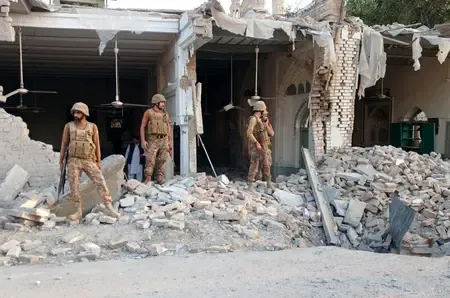
The Pakistan Army has reportedly deployed three of its most loyal militant proxies — Jaish-e-Mohammad, Lashkar-e-Taiba, and Hizbul Mujahideen — to serve as additional security layers around mines and mineral projects in Khyber Pakhtunkhwa (KP), according to intelligence officials. The move comes amid Governor's Rule imposed on the province following the removal of the Pakistan Tehreek-e-Insaf (PTI)-led elected government, giving the military establishment direct control over the region's resource base.
Governor's Rule and the Resource Motive
According to officials cited in reports, the imposition of emergency and Governor's Rule in KP served a dual purpose: undermining Imran Khan's PTI — which had governed the province — and seizing unimpeded access to the region's mines and minerals. With no elected government in place, the Pakistan Army and establishment are said to have full control over the province's resource extraction, which was reportedly not the case under civilian rule.
Protests have erupted across KP and other parts of Pakistan following the decision, which critics within the country have widely condemned. The PTI has been described as 'up in arms' against the establishment over the move. Residents of KP have long alleged that wealth extracted from their land is diverted to Islamabad, Rawalpindi, Lahore, and Karachi, with little returning in the form of development or basic amenities.
Why These Three Proxies
The Pakistan Army's traditional militant network in KP has fractured significantly in recent years. The Tehreek-e-Taliban Pakistan (TTP), originally nurtured within what officials call the 'terror factories' of KP, has turned against the establishment and now poses its most severe internal threat. The Haqqani Network, once a prized strategic asset, shares a 'complex relationship' with Islamabad following the Taliban's return to power in Afghanistan — a development that analysts say has driven Pakistan-Afghanistan ties to a historic low with no near-term thaw in sight.
This reportedly leaves the establishment with limited options. Jaish-e-Mohammad, Lashkar-e-Taiba, and Hizbul Mujahideen — all operating under close ISI and Pakistan Army oversight — have used KP as a regrouping ground for several years. According to an Intelligence Bureau official, there is 'plenty of activity' within these networks, particularly around Lashkar-e-Taiba, which has mobilised troops in large numbers in the region.
Dedicated Units for Mine Security
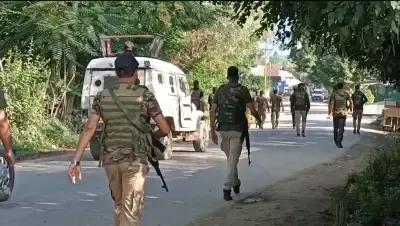
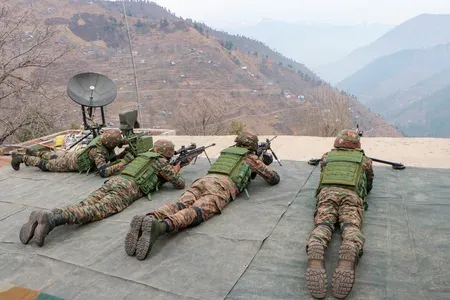
Reports indicate that the army has set up dedicated units within these three outfits specifically to guard mines, minerals, and associated infrastructure projects. Conventional security forces are also being deployed in significant numbers, with the Governor — now the province's de facto authority — tasked with determining troop deployment levels across KP.
The strategy, according to officials, is to use these proxy groups as a buffer against the TTP. The logic, as described, is that by the time the TTP can reach regular army units, it will have been weakened by engagement with the three proxy groups. This comes after the Pakistan Army acknowledged suffering significant losses in direct confrontations with the TTP, leaving troop morale badly dented.
Broader Strategic Implications
The reported strategy has wide implications for regional security. International investors and foreign entities are reportedly being invited to develop KP's mineral assets, with the army's multi-layered security arrangement — blending conventional forces with proscribed militant groups — forming the operational backbone of that protection. Critics argue this institutionalises the use of terror outfits as instruments of economic statecraft, a pattern observers say Pakistan has long employed but rarely this explicitly in an internal resource-extraction context.
This is also the latest chapter in a long-running tension between the federal establishment and KP's population, who have historically viewed Islamabad's interventions as extractive rather than developmental. How the situation evolves will depend in large part on whether the PTI-led resistance — and the public protests it has galvanised — can sustain pressure on the establishment.
Point of View
Against both a domestic political rival (PTI) and the province's own population. The fracturing of the Haqqani and TTP relationships has left the establishment with a shrinking toolkit, forcing it to lean harder on the three groups it still controls. For international investors being courted into KP's mineral sector, the implicit security guarantor is not the state but its proxies — a liability that no due-diligence framework is equipped to price.
NationPress
17 Oct 2026
Frequently Asked Questions
Why has the Pakistan Army deployed terror proxies in Khyber Pakhtunkhwa?
According to intelligence officials cited in reports, the army deployed Jaish-e-Mohammad, Lashkar-e-Taiba, and Hizbul Mujahideen to provide additional security layers for mines, minerals, and related infrastructure projects in KP. The move follows the imposition of Governor's Rule, which gave the military establishment direct control over the province's resources.
What is Governor's Rule in KP and why was it imposed?
Governor's Rule is a constitutional mechanism that replaces elected provincial governance with a centrally appointed Governor. Officials cited in reports say it was imposed in KP to remove the PTI-led government and to allow the establishment to gain 'absolute control' over the province's mineral wealth, with protests erupting in response across KP and other regions.
Why can't Pakistan rely on the TTP or Haqqani Network for this role?
The TTP, originally nurtured by the Pakistan establishment in KP, has turned against it and now poses the army's most severe internal security threat. The Haqqani Network's relationship with Islamabad became complicated after the Taliban's return to power in Afghanistan, which drove Pakistan-Afghanistan ties to a historic low. This reportedly left the establishment dependent on Jaish-e-Mohammad, Lashkar-e-Taiba, and Hizbul Mujahideen as its three remaining loyal proxies.
What do the people of KP say about their province's mineral resources?
Residents of KP have long alleged that wealth extracted from their land is diverted to Islamabad, Rawalpindi, Lahore, and Karachi, with little reinvested in local development or basic amenities. The imposition of Governor's Rule has intensified these grievances, triggering ongoing protests across the province.
Are international companies expected to invest in KP's mineral projects?
According to reports, the Pakistan Army intends to bring in international players to develop KP's mines and minerals, with the multi-layered security arrangement — combining conventional forces and proxy groups — designed to provide the protection those projects would require. No specific international entities were named in the available reports.