Pakistan's currency devaluations fail to fix structural economic weaknesses: Report
Synopsis
Despite repeated rounds of currency devaluation, Pakistan's export performance and economic growth have not sustainably improved — because the underlying ailments of fiscal indiscipline, governance failure and low productivity remain untreated. The Friday Times analysis lays out why the rupee's weakness is a symptom, not a lever, and warns of a self-reinforcing cycle that no exchange rate fix can break.
Key Takeaways
The Friday Times analysis finds Pakistan's recurring currency devaluations have failed to deliver lasting export or economic gains.
The report identifies four structural pillars as consistently weak: macroeconomic stability, foreign exchange flows, governance and economic freedom, and productivity and competitiveness.
Import dependence on fuel, machinery and industrial inputs neutralises the export-competitiveness benefits of a weaker rupee by raising production costs.
Governance failures — including corruption, regulatory hurdles and bureaucratic delays — discourage investment and reduce economic efficiency.
Repeated devaluations trigger higher inflation , raise foreign-debt servicing costs and erode purchasing power, hitting lower-income households hardest.
The report warns Pakistan risks a self-reinforcing cycle of weak productivity, external imbalances, devaluation, inflation and slower growth.
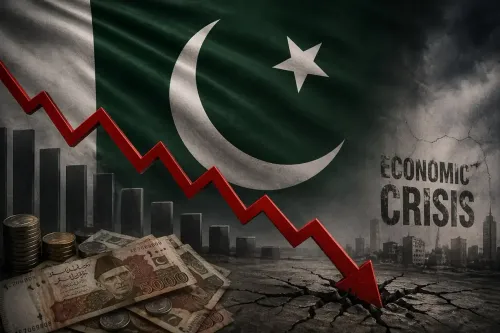
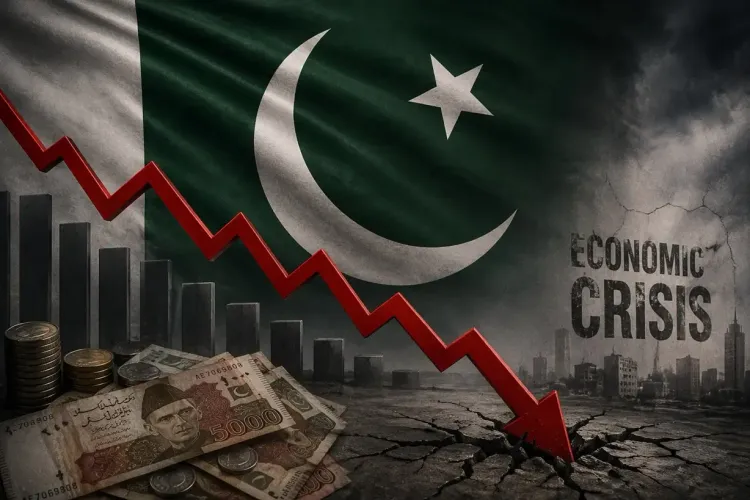
Pakistan's recurring currency devaluations have failed to deliver lasting improvements in exports or broader economic performance, according to an analysis by The Friday Times, which argues that exchange rate adjustments alone cannot resolve the country's deep-rooted structural problems.
The Four Pillars Framework
The report describes Pakistan's economy as a vehicle whose performance rests on four key pillars: macroeconomic stability, foreign exchange flows, governance and economic freedom, and productivity and competitiveness. It contends that weaknesses across all four pillars have systematically neutralised the benefits that devaluation is conventionally expected to deliver.
Persistent fiscal deficits, high inflation, excessive government borrowing and weak tax collection have, according to the analysis, undermined macroeconomic stability and placed continuing downward pressure on the Pakistani rupee.
Why Devaluation Has Not Boosted Exports
A weaker currency is typically expected to make a country's exports more price-competitive in global markets. However, the report highlights that Pakistan's heavy dependence on imported fuel, machinery and industrial inputs significantly erodes that advantage. When the rupee falls, production costs rise in tandem because raw materials and energy must be purchased in foreign currency — offsetting much of the intended export benefit.
Simultaneously, weaknesses in export generation, inward investment and foreign exchange earnings have constrained the foreign exchange flows that a healthier external account would normally provide.
Governance and Productivity Constraints
The analysis also identifies governance as a critical drag on economic efficiency. Regulatory hurdles, corruption, weak institutions, bureaucratic delays and an uncertain business environment, the report says, discourage both domestic and foreign investment.
Productivity gaps compound the problem. Shortfalls in education quality, technology adoption, infrastructure development, energy reliability and industrial efficiency have weakened Pakistan's international competitiveness, making it difficult for businesses to capitalise on exchange rate movements even when devaluation does occur.
Social and Debt Costs of Repeated Devaluations
The report warns that repeated devaluations carry significant collateral damage. Each episode tends to trigger higher inflation, increase the burden of servicing foreign-currency debt and erode household purchasing power — with lower-income groups bearing a disproportionate share of the pain in an import-dependent economy.
The analysis cautions that Pakistan risks being trapped in a self-reinforcing cycle: weak productivity and governance create external imbalances, which eventually force devaluation, which in turn stokes inflation and slows growth, before renewed pressure builds on the currency once more.
The Core Argument
'The strength of the rupee should therefore be an outcome of sound economic management, not an objective pursued through arbitrary controls,' The Friday Times concluded in its analysis. The report's central message is that until structural reforms address fiscal discipline, governance quality and productivity, currency adjustments will remain a symptom-management tool rather than a path to durable economic recovery.
Point of View
Not a reform programme. Pakistan has leaned on exchange rate adjustment repeatedly without addressing the fiscal and governance fundamentals that drive external imbalances in the first place. What is striking is the import-dependency trap — devaluation raises production costs almost as fast as it improves export pricing, leaving manufacturers no better off. Until Pakistan builds a tax base that reduces deficit financing, cleans up its regulatory environment and invests seriously in energy and education, the rupee will keep reflecting the economy's weaknesses rather than catalysing its recovery.
NationPress
5 Nov 2026
Frequently Asked Questions
Why have Pakistan's currency devaluations failed to improve exports?
According to The Friday Times report, Pakistan's heavy reliance on imported fuel, machinery and industrial inputs means that when the rupee falls, production costs rise sharply, offsetting the price-competitiveness gains that a weaker currency is meant to provide to exporters. Structural weaknesses in governance and productivity further limit the economy's ability to capitalise on exchange rate changes.
What are the four economic pillars identified in the report?
The analysis describes Pakistan's economy as dependent on four pillars: macroeconomic stability, foreign exchange flows, governance and economic freedom, and productivity and competitiveness. The report argues that persistent weaknesses across all four have undermined the effectiveness of devaluation as a policy tool.
How does repeated devaluation affect ordinary Pakistanis?
The report warns that each devaluation episode tends to push inflation higher, increase the cost of servicing foreign-currency debt and erode household purchasing power. Lower-income groups are disproportionately affected because Pakistan's economy is heavily import-dependent, meaning everyday goods become more expensive as the rupee weakens.
What cycle does the report warn Pakistan is at risk of?
The Friday Times analysis cautions that Pakistan risks being trapped in a self-reinforcing cycle where weak productivity and governance create external imbalances, forcing devaluation, which then stokes inflation and slows growth, before renewed pressure on the currency builds again — without structural reforms breaking the loop.
What does the report say the rupee's value should reflect?
The report concludes that 'the strength of the rupee should be an outcome of sound economic management, not an objective pursued through arbitrary controls.' It argues that only sustained structural reforms — covering fiscal discipline, governance, and productivity — can produce a durably stable currency.