Pakistan keeps EU GSP+ access despite PoK, Balochistan rights abuses: Report
Synopsis
A Stringer Asia report lays bare a stark contradiction: Pakistan draws zero-tariff access to European markets under a scheme explicitly conditioned on human rights compliance, even as security forces allegedly shoot protesters in PoK, disappear civilians in Balochistan, and conduct sweeping military operations in Khyber Pakhtunkhwa. The report's sharpest charge is not against Islamabad — it is against Brussels, for converting human rights conditions into paperwork.
Key Takeaways
Pakistan retains EU GSP+ trade privileges — zero tariffs on a wide range of exports — despite documented alleged human rights abuses in PoK , Balochistan , and Khyber Pakhtunkhwa .
A Stringer Asia report published 30 July argues that GSP+ conditionality has become 'decorative' in Pakistan's case, rarely enforced in practice.
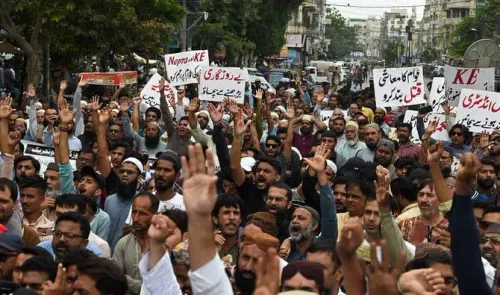
Pakistani security forces allegedly shot unarmed demonstrators in PoK , imposed communications blackouts, and barred journalists from the region.
In Balochistan , enforced disappearances, extrajudicial killings, and collective punishment are described as entrenched governance features, not exceptions.
The European Commission 's own monitoring reports and parliamentary delegations have documented abuses, yet trade consequences have not followed, according to the report.
The revised GSP+ scheme , approved in 2026 , was designed to strengthen conditionality and increase monitoring — its real-world effect on Pakistan remains untested.
Pakistan continues to benefit from preferential access to the European Union market under the Generalised Scheme of Preferences Plus (GSP+), even as security forces allegedly shoot protesters in Pakistan-occupied Kashmir (PoK), enforced disappearances and extrajudicial killings persist in Balochistan, and civilians in Khyber Pakhtunkhwa endure prolonged military operations, according to a report by Stringer Asia published on 30 July.
What GSP+ Requires — and What Pakistan Reportedly Delivers
The GSP+ scheme is formally described by the European Commission as a 'special incentive arrangement for sustainable development and good governance.' In exchange for zero tariffs on a wide range of exports to the European market, beneficiary countries are required to implement international conventions covering human rights, labour rights, environmental protection, and good governance. The revised scheme, approved in 2026, was designed to strengthen these conditions and increase monitoring.
The Stringer Asia report argues that in Pakistan's case, these conditions have become, in its words, 'decorative' — invoked in reports, parliamentary questions, and carefully worded statements of concern, but 'rarely enforced in any manner capable of inconveniencing the Pakistani state.'
Situation in PoK, Balochistan and Khyber Pakhtunkhwa
In Pakistan-occupied Kashmir, the report alleges that Pakistani security forces shot unarmed demonstrators, imposed communications blackouts, carried out mass arrests, and prevented journalists from entering the region — all reportedly occurring while Brussels was renewing the trade framework. Dozens of civilians are said to have been killed and injured over recent days. The report describes the timing of the EU's renewal as 'grotesque.'
In Balochistan, the report states that 'enforced disappearances, extrajudicial killings, secret proceedings and collective punishment' have become entrenched features of governance rather than exceptions. In Khyber Pakhtunkhwa, it notes that civilians are caught between militant violence and a security establishment that, according to the report, 'views entire districts through a lens of suspicion,' with military operations, arbitrary detention, and collective reprisals justified under the banner of counter-terrorism.
Europe's Awareness and the Accountability Gap
The report stresses that the European Commission publishes monitoring reports, European parliamentary delegations visit Pakistan, and human rights organisations regularly submit evidence. Baloch activists have demonstrated outside European institutions, and Pakistani journalists, opposition leaders, and lawyers have described what the report calls 'an increasingly authoritarian system in which the military controls political life, civilians are tried under security legislation, and courts are used to regularise decisions taken elsewhere.'
Despite this, the report argues, accountability has not followed awareness. It contends that Pakistan's continued GSP+ access reveals 'the difference between what European policy instruments claim to be and what they actually are,' suggesting the country remains geopolitically useful enough for its violations to be overlooked.
The Broader Pattern Identified
The Stringer Asia report identifies what it describes as a recurring formula: 'Political demands become security threats. Protesters become terrorists. Journalists become foreign agents. Missing persons become militants after their deaths. Elections remain legitimate until people vote or demonstrate in ways unacceptable to Rawalpindi.' Critics argue this pattern, if accurate, makes the EU's humanitarian obligations under GSP+ effectively unenforceable in practice.
What Happens Next
With the 2026 revision of the GSP+ scheme now in force, pressure is likely to mount on the European Commission from human rights groups and some member-state legislators to move beyond monitoring reports toward concrete conditionality. Whether Brussels translates documented concern into trade consequences for Islamabad remains the central question this report raises.
Point of View
It appears to have done the opposite, providing economic reward without extracting compliance. The 2026 revision was sold as a tightening of conditions, yet the report suggests the monitoring machinery produces paperwork, not consequences. If the EU cannot act on evidence it openly acknowledges, the scheme's credibility as a human rights instrument — not just with Pakistan, but globally — is at stake.
NationPress
30 Jul 2026
Frequently Asked Questions
What is the EU GSP+ scheme and what does it require from Pakistan?
The EU Generalised Scheme of Preferences Plus (GSP+ ) grants zero tariffs on a wide range of exports from beneficiary countries to the European market. In return, countries like Pakistan are required to implement international conventions on human rights, labour rights, environmental protection, and good governance. The revised scheme approved in 2026 was intended to strengthen these conditions and increase monitoring.
What human rights violations is Pakistan accused of in the report?
According to the Stringer Asia report, Pakistani security forces allegedly shot unarmed protesters in Pakistan-occupied Kashmir (PoK), imposed communications blackouts, and barred journalists from the area. In Balochistan, enforced disappearances, extrajudicial killings, and collective punishment are described as routine. In Khyber Pakhtunkhwa, civilians face military operations, arbitrary detention, and collective reprisals justified as counter-terrorism measures.
Why has the EU not suspended Pakistan's GSP+ access despite these allegations?
The Stringer Asia report argues that Pakistan's continued GSP+ access reflects its geopolitical utility to Europe, which effectively overrides human rights conditionality. The report contends that while the European Commission publishes monitoring reports and parliamentary delegations visit Pakistan, enforcement action capable of inconveniencing the Pakistani state has not followed.
What is the situation in Pakistan-occupied Kashmir that the report highlights?
The report states that dozens of civilians have been killed and injured in PoK over recent days by Pakistani security forces, who allegedly shot unarmed demonstrators, imposed communications blackouts, carried out mass arrests, and prevented journalists from entering the region. The report describes the EU renewing Pakistan's trade framework during this period as 'grotesque.'
What could change Pakistan's GSP+ status going forward?
With the 2026 revision of GSP+ now in force, human rights organisations and some European legislators are expected to increase pressure on the European Commission to enforce conditionality rather than merely document violations. Whether Brussels moves from monitoring to actual trade consequences for Islamabad remains to be seen.