Baloch activist: Pakistan a 'guest' in Balochistan for few more years
Synopsis
Baloch human rights defender Mir Yar Baloch has declared Pakistan a temporary 'guest' in Balochistan, accused China of bankrolling what he calls a 70-year genocide to secure CPEC and rare earth resources, and warned that Beijing stands to lose 90% of its energy supply routes the day Balochistan achieves self-sufficiency. The remarks, posted on X, directly link the India-Pakistan IWT dispute to the wider Baloch independence movement.
Key Takeaways
Baloch activist Mir Yar Baloch declared on 1 July that Pakistan is only a 'guest in Balochistan for a few more years'.
He accused China of investing $70 billion in Balochistan against the wishes of its people, calling both China and Pakistan 'illegal and unlawful' occupiers.
Mir alleged that China fulfils nearly 90 per cent of its oil and energy needs through Balochistan's sea routes, including Gwadar port .
He claimed China has supplied Pakistan's military and ISI with drones, technology, and intelligence, contributing to rights abuses in the region.
The remarks were made in the context of India's suspension of the Indus Waters Treaty (IWT) following the Pahalgam terror attack .
PM Shehbaz Sharif was accused of attempting to lure US President Donald Trump's administration with Balochistan's rare earth minerals.
Baloch human rights defender Mir Yar Baloch has sharply criticised China for deploying Pakistan as a 'diplomatic gun' against India over New Delhi's suspension of the Indus Waters Treaty (IWT) — a move that followed the Pahalgam terror attack carried out by Pakistan-backed militants. In a pointed assertion about ground realities, Mir also declared that Pakistan is now merely a 'guest in Balochistan for a few more years'.
China's Role in Balochistan: What Mir Alleged
In a post on X, Mir stated that both China and Pakistan are 'illegal and unlawful' occupiers of Balochistan and demanded their immediate withdrawal from 'Baloch sea and surface'. He argued that Beijing has no legal basis — under any international framework — to partner with Islamabad in what he described as a 'Baloch genocide' spanning 70 years, carried out, in his characterisation, to plunder CPEC resources, mineral wealth, and rare earth deposits.
'China is fully aware that Balochistan has never been a part of Pakistan. Nevertheless, as a permanent member of the United Nations Security Council, it is investing 70 billion dollars in Balochistan against the will and wishes of the Baloch people through the use of guns, tanks, artillery, and fighter aircraft, while the benefits of these investments are illegal and unlawful,' Mir wrote.
Allegations of Military and Intelligence Support
Mir alleged that China has been supplying Pakistan's military and the Inter-Services Intelligence (ISI) with advanced drones, surveillance technology, and intelligence-sharing capabilities. He claimed this assistance has directly contributed to state violence, gross human rights abuses, and the economic exploitation of the region. He argued that Beijing has thereby made itself a 'direct participant in the genocide, ethnic cleansing, and slaughter of the Baloch people'.
He further contended that China fulfils nearly 90 per cent of its oil and energy requirements through sea routes and ports in Balochistan, including Gwadar port — a dependency he framed as Beijing's strategic vulnerability.
The Gwadar Warning and Pakistan's Military Setbacks
'The day Balochistan stands on its own feet militarily, defensively, and economically, China will no longer be able to meet 90 per cent of its oil and energy requirements through sea and land routes, and it will also lose access to Gwadar port,' Mir stated. He also claimed that Pakistan's military has already suffered what he described as a 'severe defeat on the ground' at the hands of Baloch armed groups — an assertion that could not be independently verified.
Pakistan's Disinformation Campaign and the IWT Context
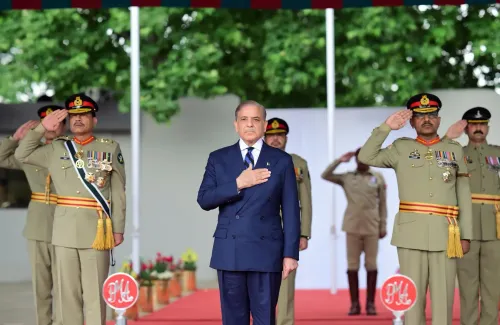
Mir alleged that the Pakistani military and the ISI are actively distorting ground realities in Balochistan through diplomatic channels, paid media, and orchestrated seminars. He also took aim at Prime Minister Shehbaz Sharif, accusing him and the military establishment of attempting to attract investment from the administration of US President Donald Trump by dangling the prospect of Balochistan's rare earth minerals.
'Pakistan's military and its puppet Prime Minister, Shehbaz Sharif, also attempted to entice the administration of US President Donald Trump into investing in Balochistan by presenting it with the dream of Balochistan's rare earth minerals. However, the realities on the ground indicate that Pakistan is now only a guest in Balochistan for a few more years,' Mir asserted.
The remarks come amid heightened tensions between India and Pakistan following the Pahalgam terror attack, after which New Delhi suspended the decades-old Indus Waters Treaty. According to Mir, the Baloch people have resolved to launch a global campaign to expose what he called 'the terrorism of Pakistan and China' in response to attempts by both governments to spread disinformation over the IWT suspension.
Broader Significance
Mir Yar Baloch's remarks represent one of the more direct public interventions by a Baloch activist linking the India-Pakistan IWT dispute to the broader question of Balochistan's political status. While his claims about military defeats and genocide require independent verification, they reflect a growing international advocacy effort by the Baloch diaspora to internationalise the conflict. How Beijing and Islamabad respond to this escalating narrative — particularly on multilateral platforms — will be worth watching in the weeks ahead.
Point of View
And Beijing will not ignore it. The 90%-energy-dependency warning directed at China is the sharpest pressure point: it signals that Baloch groups understand China's strategic calculus and are willing to weaponise it diplomatically. Whether this translates into concrete international traction — at the UN or in Western capitals — remains the central question mainstream coverage is not asking.
NationPress
1 Jul 2026
Frequently Asked Questions
Who is Mir Yar Baloch and what did he say?
Mir Yar Baloch is a leading Baloch human rights defender who, in a post on X dated 1 July, accused China of using Pakistan as a 'diplomatic gun' against India and declared that Pakistan is only a 'guest in Balochistan for a few more years'. He alleged that both China and Pakistan are illegal occupiers of Balochistan and called for their immediate withdrawal.
What is the connection between the Indus Waters Treaty and Balochistan?
India suspended the Indus Waters Treaty (IWT) following the Pahalgam terror attack attributed to Pakistan-backed militants. Mir Yar Baloch argued that China's support for Pakistan's position on the IWT amounts to taking sides in what he characterises as an illegal occupation of Balochistan, and that Baloch people plan a global campaign to counter the resulting disinformation.
What did Mir Yar Baloch allege about China's role in Balochistan?
He alleged that China has invested $70 billion in Balochistan against the will of its people, supplied Pakistan's military and ISI with drones and intelligence, and made itself complicit in what he described as a 70-year genocide of the Baloch people. He also claimed China meets nearly 90 per cent of its oil and energy needs through Balochistan's sea routes, including Gwadar port.
Why did Mir Yar Baloch warn China about Gwadar port?
Mir argued that if Balochistan achieves military and economic self-sufficiency, China would lose access to Gwadar port and the sea and land routes through which it reportedly meets 90 per cent of its energy requirements. He framed this as a strategic consequence of Beijing's continued support for Pakistan's military operations in the region.
What did Mir Yar Baloch say about PM Shehbaz Sharif and the US?
He accused Pakistan's military and Prime Minister Shehbaz Sharif of attempting to attract investment from US President Donald Trump's administration by offering access to Balochistan's rare earth minerals. Mir argued this pitch contradicts ground realities, which in his assessment show Pakistan's hold on Balochistan is rapidly weakening.