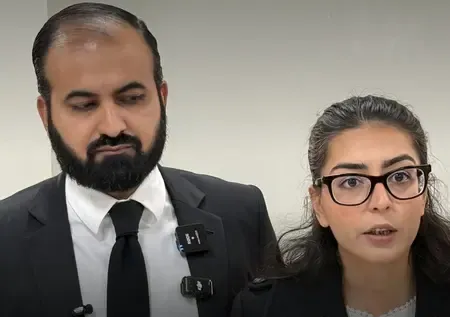
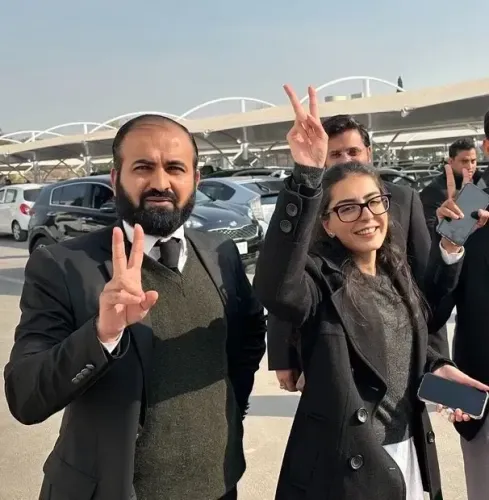
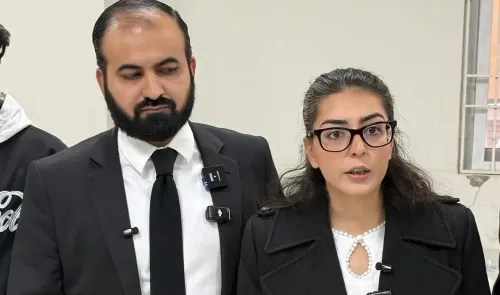
Pakistan jails rights lawyers Imaan Mazari, Hadi Chattha for 10 years
Synopsis
Two lawyers who defended victims of enforced disappearances in Pakistan are now serving 10 years each under anti-terror laws. A MEMRI report says the verdict shows how Pakistan treats dissent as terrorism. It also warns the case could raise questions about Pakistan's EU GSP+ trade benefits.
Key Takeaways
A Pakistani anti-terrorism court sentenced Imaan Zainab Mazari-Hazir and Hadi Ali Chattha to 10 years each on 29 October 2026 .
The case involved disputed allegations of removing security barricades, according to the MEMRI report.
The couple has represented victims of enforced disappearances, people accused of blasphemy and journalists facing prosecution.
The report says Pakistan's PECA law is being used to turn political expression into a criminal offence.
Freedom Network's 2026 Impunity Report found escalating legal persecution of journalists and critics.
MEMRI questioned whether Pakistan is meeting its human rights commitments under the EU's GSP+ framework.
The 10-year prison sentences handed to Pakistani human rights lawyers Imaan Zainab Mazari-Hazir and her husband Hadi Ali Chattha have exposed a deepening crackdown on dissent in Pakistan, according to a report by the US-based Middle East Media Research Institute (MEMRI). The report says the case reflects shrinking civic space in the country. It also points to a pattern of anti-terrorism and cybercrime laws being used against critics, journalists and rights defenders.
Anti-Terrorism Court Verdict
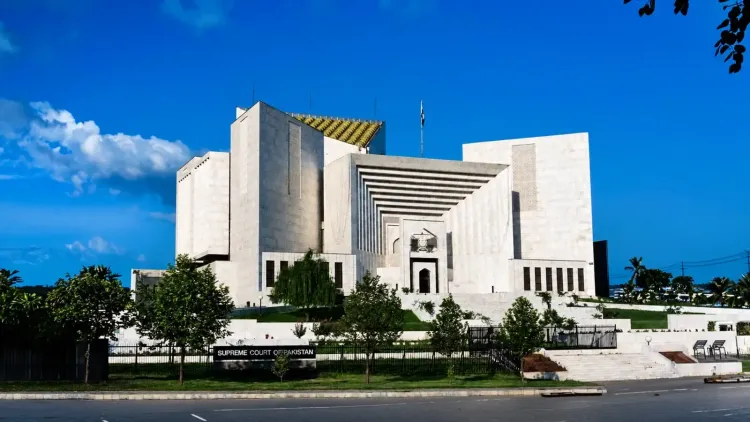
According to the report, a Pakistani anti-terrorism court sentenced the couple on 29 October 2026. It said the case was controversial from the start.
“On October 29, 2026, a Pakistani anti-terrorism court sentenced two prominent human rights lawyers, Baloch-origin Imaan Zainab Mazari-Hazir and her husband, Hadi Ali Chattha, to 10 years in prison each. The verdict marked the culmination of a case mired in controversy from the outset, involving disputed allegations of removing security barricades, proceedings criticised for their lack of transparency, and the application of anti-terrorism legislation to conduct ordinarily addressed under criminal law,” the MEMRI report stated.
The report said the length of the sentences and serious doubts about the fairness of the trial have drawn greater international attention to Pakistan's security and cybercrime laws. These include the Prevention of Electronic Crimes Act (PECA).
Who the Lawyers Represented
The report said the prosecution is especially troubling because of the work the couple has done for years. They have represented victims of enforced disappearances, people accused of blasphemy, journalists facing prosecution, and communities that allege abuses by Pakistan's security establishment.
“Their imprisonment, alongside the serious questions raised about the fairness of their trial, exposes a troubling tension between Pakistan's stated commitment to the rule of law and its treatment of human rights defenders,” the report said.
It then asked: “What happens to the rule of law when those who defend victims of alleged state abuses are themselves prosecuted under a justice system whose fairness is being questioned by international human rights organisations?”
PECA and Treating Criticism as Crime
MEMRI argued that treating political criticism as terrorism undermines a basic democratic principle. In its view, questioning the military, raising concerns about alleged abuses or supporting marginalised groups should not lead to criminal charges.
The report said the PECA proceedings showed how broad legal provisions could be used to turn political expression into a criminal offence. Critics have long warned that this would happen as the law's scope widened.
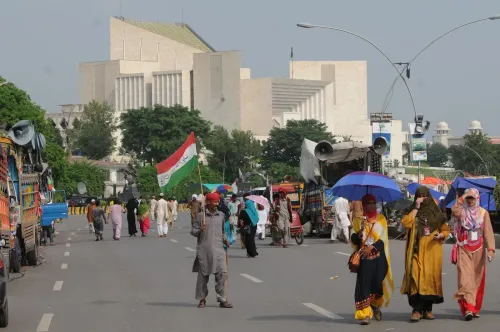
The report described a three-year trend in Pakistan. It said journalists, human rights defenders and independent media have faced a growing crackdown, driven by militarisation, systematic suppression of dissent and an expanding state surveillance system.
Freedom Network Findings and GSP+ Concerns
The report cited the 2026 Impunity Report by the Islamabad-based Freedom Network. That report found an escalating pattern of legal persecution, intimidation and the use of criminal laws as weapons against journalists and critical voices. It also warned that digital surveillance, online censorship and misuse of PECA were further weakening freedom of expression.
MEMRI also raised the issue of trade. “These developments raise serious questions about Pakistan's compliance with its international human rights commitments under the European Union's GSP+ framework. As scrutiny of Pakistan's human rights record intensifies, legislative promises and treaty ratifications alone cannot substitute for meaningful implementation,” the report noted.
What Comes Next
The GSP+ scheme gives Pakistan preferential access to the European market. That access depends on Pakistan meeting its commitments under human rights conventions. Any appeal by the two lawyers is likely to be watched closely in Pakistan and abroad.
Point of View
At most, a dispute over security barricades shows how far Pakistan's legal system has been bent toward its security establishment. The lawyers convicted are the same people who represented families of the disappeared, so the message to anyone thinking of doing that work is hard to miss. The EU's GSP+ preferences may be the only point of real pressure, since the scheme depends on meeting human rights conventions. Brussels has repeatedly chosen continued engagement over enforcement, so the key question is whether it will act this time.
NationPress
28 Nov 2026
Frequently Asked Questions
Who are Imaan Zainab Mazari-Hazir and Hadi Ali Chattha?
They are a married couple of Pakistani human rights lawyers. They have represented victims of enforced disappearances, people accused of blasphemy, journalists facing prosecution and communities alleging abuses by the security establishment.
What sentence did the Pakistani court give the two lawyers?
An anti-terrorism court sentenced each of them to 10 years in prison on 29 October 2026. According to the MEMRI report, the case involved disputed allegations of removing security barricades.
Why has the verdict been criticised?
Critics say the trial lacked transparency and used anti-terrorism laws for conduct normally handled under ordinary criminal law. The MEMRI report says this criminalises human rights advocacy and political criticism.
What is PECA in Pakistan?
PECA is the Prevention of Electronic Crimes Act, Pakistan's cybercrime law. Reports say its broad provisions are increasingly used against journalists and critics, and that it contributes to online censorship.
How could the case affect Pakistan's GSP+ status?
The MEMRI report says the case raises serious questions about whether Pakistan is meeting its human rights commitments under the EU's GSP+ framework. GSP+ trade preferences depend on implementing international rights conventions.